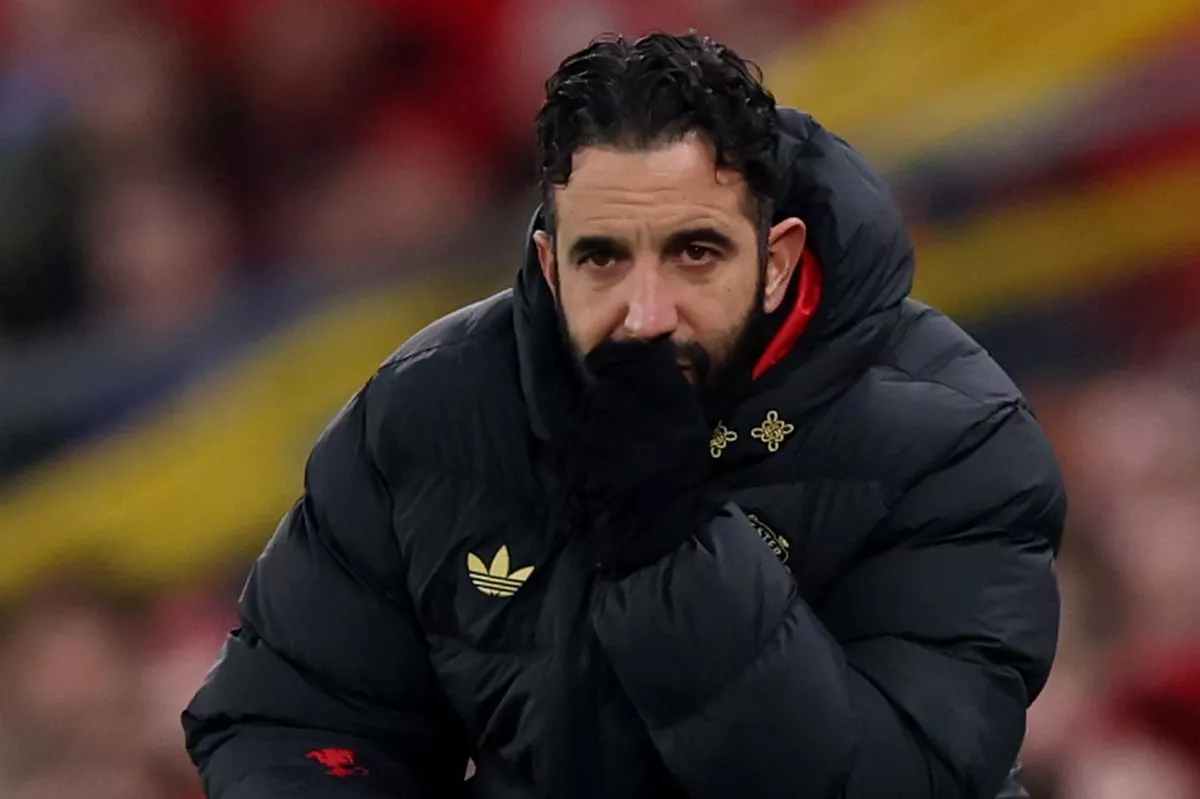
On Monday, January 5th, Manchester United made the decision to get rid of Ruben Amorim just a day after their 1-1 draw with Leeds United.
The clash saw Ruben Amorim go on a rant, insisting he was the manager, rather than head coach, a position he was appointed to by INEOS.
The minority owners, who are run by Sir Jim Ratcliffe, have now appointed their third manager in less than 18 months, attributing to the level of instability under the new leadership thus far.
From becoming the most expensive manager ever signed by a club in November 2024, here are 7 reasons why the Portuguese tactician has been shown the door 13 months later:
7. Head Coach Model Never Held Water
When Man United chose to appoint Amorim, they gave him the position of head coach. Previously, the job was managerial. The idea was for him to strictly focus on training and tactics.
Other technical team members, such as Jason Wilcox, were to handle other aspects of the managerial role, which is viewed as too big and complex.
Yet from his very first press conference, Amorim blurred those lines as quoted on The Athletic. “I am the manager, the head coach and I have to choose the players.”
From the outside in, Amorim never fully embraced the structure INEOS were trying to impose.
His insistence that he was “the manager” following their 1-1 draw with Leeds publicly contradicted the club’s ideology, exposing internal confusion.
6. Public Outbursts and Messaging Missteps
Although Amorim was viewed as a charismatic speaker by the media, his willingness to call things out for what they were deemed a liability.
He was initially praised for ending the long Marcs Rashford experiment in early January 2025. However, going on to throw the rest of the team under the bus was doing himself a huge disservice.
He described his squad as one of the worst in Manchester United history. He also admitted he was not “doing good enough”.
His explanations for Kobbie Mainoo’s limited minutes also fueled accusations that he did not trust the academy-which is famed for producing some of the greatest names to have ever graced a football pitch.
Amorim’s decision to assert his authority following their 1-1 draw with Leeds may have been the straw that broke the camel’s back.
5. Poor Results
Like Mikel Arteta when he took charge of Arsenal in 2019, Amorim needed early success to earn himself time. It never came.
He oversaw United’s worst league finish for decades, as the side finished 15th in the 2024/2025 Premier League season. They managed to get to the Europa League final,but ultimately missed out on the title to Tottenham Hotspur.
He only won 19 of his 50 games in charge of the club, which was simply not good enough for a club of Man United’s stature.
4. Tactical Inflexibility
Amorim’s decision to religiously stick to a 3-4-3 system was his ultimate downfall. He was viewed as stubborn trying to impose a system without the players needed to make it work.
Players appeared unsure of their roles. Despite regularly fielding five defenders, they were porous in that department. Amorim stressed the need to “suffer” for the short term in order to get long-term success.
His refusal to adapt, claiming “not even the pope” could make him change his tactics was a sign of even more rigidity.
For a United fanbase craving clarity and progress, it sounded like a coach trapped by his own ego.
3. Poor In-Game Management
Aside from the ceding of cheap goals, United looked slow to react when matches turned. Amorim’s tactical bravery to the media rarely translated onto the pitch, especially inhigh stakes games.
INEOS viewed the disconnect between theory and execution as impossible to ignore.
2. The ‘Mitigating Circumstances’ Argument Ran Out
Amorim was initially granted full benefit of doubt because he joined Man United mid-season.
Having no European football, a full pre-season, a revamped Carrington training ground and backing in the transfer window was seen as beneficial.
Signings like Matheus Cunha, Bryan Mbeumo and Benjamin Šeško showed that United still had pull. Sir Jim Ratcliffe even suggested Amorim might need three years to prove himself.
By the middle of the 2025/2026 season, many of the same problems remained. There was marginal improvement, and an embarrassing cup exit to Grimsby in August made the situation even more laughable.
1. A Broken System at Man United
Ultimately, Amorim became another casualty of a broken system.
INEOS executives had eloquently spoken about structure, sustainability and consistent decision making.
United however, found themselves unsure whether poor performances were the fault or the organisation around him. This ultimately also cost Erik ten Hag his job.
Parting Shot
Ruben Amorim arrived with grand ideas and a sobering reality check. His United tenure was defined by contradiction. Talked a good game, but it seldom translated on the football pitch.
It proves Man United is still far away from the modern-ran, progressive club it appears to be.