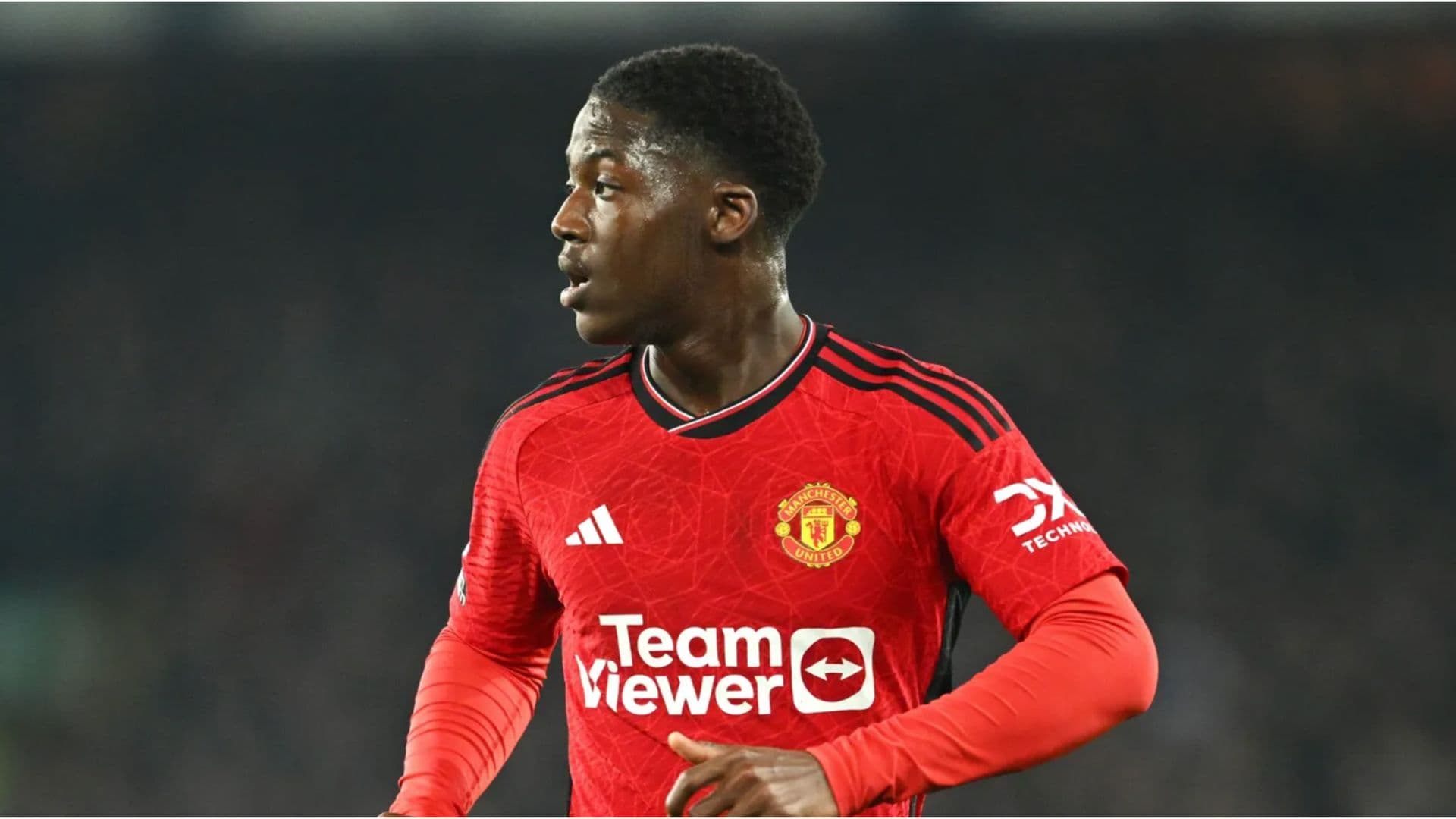
The sudden sacking of Ruben Amorim after just 14 months felt like another chaotic chapter in Manchester United’s recent history. A power struggle over transfers and tactical disagreements brought his spell to an end. But for Kobbie Mainoo, the change brought relief.
In the days after Amorim’s departure, Mainoo and members of his family openly celebrated on social media. It was a clear sign of how things had become.
Marginalized Under Amorim
Under Amorim’s rigid 3-4-3 system, Mainoo was pushed to the margins. The midfield leaned heavily on experience, with Bruno Fernandes and Casemiro preferred, while the club’s brightest academy product was reduced to short substitute appearances and even used out of position.
The frustration was visible. His half-brother, Jordan Mainoo Hames, attended a match at Old Trafford wearing a “Free Kobbie Mainoo” shirt and later shared it online. It captured the mood perfectly: a young player ready to grow, stuck in a system that did not suit him.
A Fresh Start Under Darren Fletcher
With Darren Fletcher stepping in as interim manager, the atmosphere has shifted. Fletcher knows the academy, trusts young players, and has long believed in Mainoo’s ability.
He also prefers familiar systems like 4-3-3 or 4-2-3-1, where a composed midfielder can dictate play. That role fits Mainoo naturally. Once fully fit, regular starts are expected.
United's Long Term View
Despite past interest from clubs like Napoli, Barcelona, and Tottenham, Manchester United has no intention of selling Mainoo. Inside the club, he is still seen as a key part of the future midfield.
The leadership believes his intelligence and maturity are qualities the team must build around.
What Comes Next?
The uncertainty lies with the next permanent manager. United is searching for a top-level appointment, and there is no guarantee the new coach will commit fully to building around Mainoo.
But one thing is clear for now. Kobbie Mainoo is staying. He is trusted. And despite recent turbulence, Manchester United still sees him as central to where they want to go next.