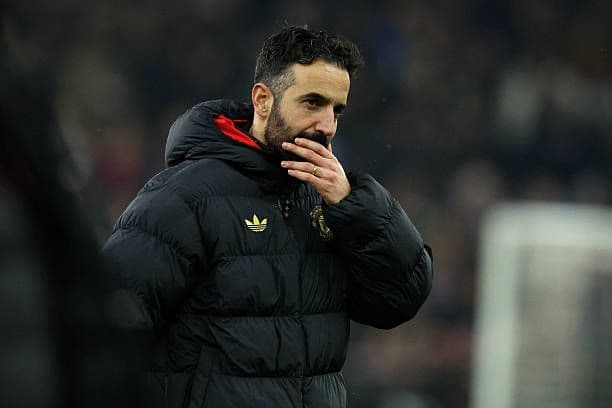
Manchester United have sacked Ruben Amorim, bringing an abrupt end to a chaotic 14-month reign at Old Trafford. His tenure promised authority and long-term vision but delivered inconsistency and internal tension. Ruben Amorim's departure marks another turbulent chapter for the club.
The Portuguese coach leaves his role following Sunday’s 1-1 draw away to Leeds United at Elland Road. This result ultimately proved to be his final match in charge of the Red Devils.
Final Match Ends in Frustration at Elland Road
United’s latest setback summed up Amorim’s time in charge. Despite controlling large spells of the game, the Red Devils once again failed to turn dominance into victory during Ruben Amorim's management.
Leeds United struck first just after the hour mark when Brenden Aaronson capitalised on an error from Ayden Heaven. However, United responded quickly. Just three minutes later, Matheus Cunha produced a clinical finish to restore parity, giving Amorim’s side hope of pushing on for all three points.
Ultimately, that breakthrough never arrived.
League Position Masks Alarming Form
Although Manchester United sit sixth in the Premier League, their league position has flattered them. Ruben Amorim's United have won just three of their last 11 league matches.
As a result, the growing gap between performance, results, and expectations continued to raise concerns within the club’s hierarchy.
According to reports, the decision was reached following a breakdown in relations between Amorim and key figures at the club.
Concerns were growing over alignment, authority, and long-term direction.
Ironically, Wilcox had previously been referenced by Amorim during his press conference comments. This highlighted just how strained the relationship had become.
Amorim’s Defiant Warning to the Board
Before his dismissal, Ruben Amorim issued a clear and public warning to Manchester United’s leadership. He insisted that he would not accept a reduced role.
Speaking after the Leeds draw, Amorim said:
“I came here to be the manager of Manchester United, not to be the head coach. I know my name is not Conte, Tuchel, Mourinho but I’m the manager of Manchester United.
“It’s going to be like this for 18 months or until the board decide to change. I’m not going to quit. I’ll do my job until another guy is coming here to replace me.”
Those comments, while defiant, appeared to underline a growing breakdown in relations behind the scenes.
Performance Frustrations Remain a Theme
Despite the disappointing result, Amorim remained convinced his side had done enough to win against Leeds.
Reflecting on the match, he added:
“In the Premier League, it is hard to find a game you are satisfied with a draw, that is why it is an amazing league.
“Overall, if you see the game we had more control. We created more chances, we controlled well, so if you look at the game you feel the frustration that we had the chance to win. It is a tough match in tough conditions.”
However, such explanations had become familiar, and patience inside Old Trafford had worn thin.
Club Statement Confirms Amorim’s Departure
Manchester United officially confirmed Ruben Amorim’s departure on Monday morning, explaining that the decision had been taken reluctantly but decisively.
The club said:
“With Manchester United sitting sixth in the Premier League, the club’s leadership has reluctantly made the decision that it is the right time to make a change. This will give the team the best opportunity of the highest possible Premier League finish.
“The club would like to thank Ruben for his contribution to the club and wishes him well for the future.”
Darren Fletcher to Take Interim Charge
Former United midfielder Darren Fletcher will step into the dugout on an interim basis. He will take charge of the team for Wednesday’s Premier League clash against Burnley.
The club is expected to move quickly as they assess their next permanent appointment.
Another Managerial Chapter Closes at Old Trafford
Ruben Amorim becomes the 10th manager to take charge of Manchester United since Sir Alex Ferguson’s retirement. This further underlines the club’s prolonged struggle for stability.
Once heralded as a modern, authoritative figure capable of restoring identity and control, Amorim departs with his vision unfulfilled. Manchester United is once again searching for answers.