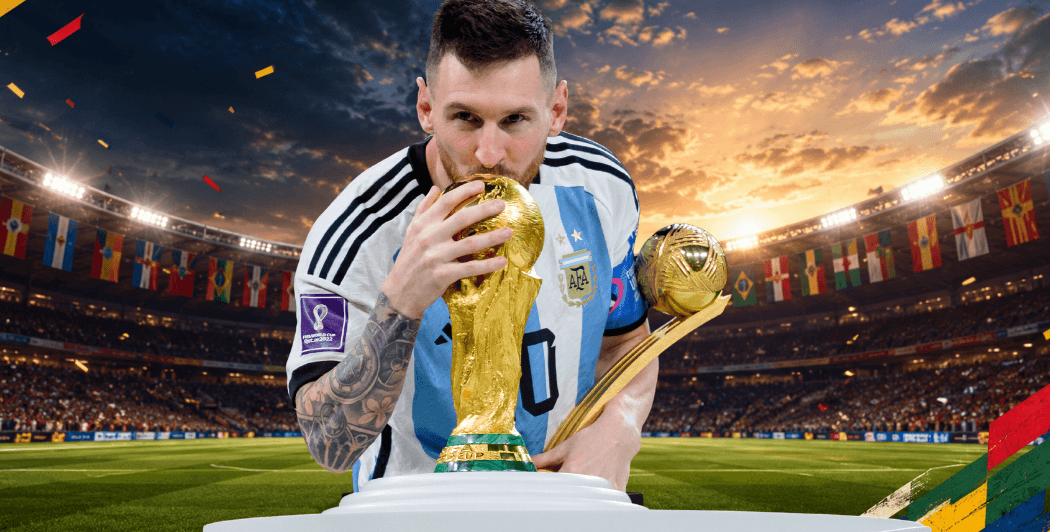

The quarterfinal stage of the 2026 FIFA World Cup wrapped up in spectacular fashion as football heavyweights Argentina and England set up a blockbuster semi-final date with each other after downing both Norway and Switzerland respectively early Sunday morning (GMT).
First, Thomas Tuchel’s England side displayed immense resilience resilience by coming from behind to ground Norway 2-1 in Miami.
Hours later, reigning champions Argentina broke down an incredibly stubborn, ten-man Switzerland block to secure a grueling 3-1 victory in Kansas City.
Striver.Football reveals the lessons learnt from such an unforgettable FIFA World Cup day 32 action.
5. Jude Bellingham Continues to Deliver in the Biggest Moments

Elite knockout matches are exhausting, messy affairs where the weight of physical fatigue takes a toll on players.
When a team looks creatively stagnant and tired, the system matters far less than having a world-class protagonist capable of manufacturing goals from pure individual brilliance. For England, that cheat code is Jude Bellingham.
After going down early to a disciplined Norwegian block via Andreas Schjelderup, the Three Lions looked completely flat. Bellingham single-handedly rewrote the narrative by pulling off a massive, high-leverage equaliser right on the stroke of halftime.
His predatory technical intelligence was highlighted once again in the 93rd minute when he anticipated a handling error from Orjan Nyland to sweep home the extra-time winner.
4. VAR Breaks Norwegian Hearts
Norway's entire tactical blueprint was engineered around using decoy runs to drag markers away and create space for Erling Haaland’s physical dominance to deform England’s center-back spacing.
That plan fractured under the harsh, technical lens of the Video Assistant Referee (VAR). Early in the second half, Norway thought they had secured a crucial lead through Torbjorn Heggem, only for a microscopic review to rule the goal out due to an internal buildup foul by Haaland on Elliot Anderson.
The marginal nature of that call caused a visible psychological drop-off in the Norwegian ranks. Haaland, completely drained from fighting narrow double-coverage all evening, was substituted out early in extra time.
3. Argentina's Bench Shows Why Squad Depth Wins Tournaments
After relying on Messi’s individual brilliance for much of their campaign, Argentina finally relied on something else to win a game for the first time in what seems an eternity as their options off the bench turned around fortunes and won the game for them against Switzerland.
While Alexis Mac Allister opened the scoring early with a brilliant header via a Lionel Messi delivery, Switzerland's Dan Ndoye equalised in the 67th minute, forcing Lionel Scaloni's men to dig deep into their reserve tanks.
The game swung on a historic VAR intervention in the 72nd minute, which saw Swiss forward Breel Embolo sent off with a second yellow card for simulation.
Facing a deep Swiss low block, Argentina weaponised their bench depth, using late-arriving substitutes to widen the pitch, exhaust the ten-man Swiss midfield, and unleash Julian Alvarez and Lautaro Martinez to secure the definitive extra-time goals. In the modern five-substitution era, success is dictated by your finishers, not your starters.
2. England Continue to Rewrite Their World Cup History
Before this campaign, England possessed an infamous, multi-decade psychological barrier: the Three Lions had not managed to win a World Cup knockout match after conceding the opening goal since the legendary 1966 final against West Germany.
This current iteration under Tuchel has completely obliterated that historical curse, pulling off the exact same come-from-behind feat twice in a span of just three games, first against DR Congo in the Round of 32 and now against Norway.
1. Midfield Control Decides Knockout Football
Both quarterfinal ties hammered home a fundamental truth of international tournament longevity: matches are won and lost in the central transitions once a game passes the 90-minute barrier.
Teams that rely too heavily on direct attacking directness or isolated target men inevitably burn out far quicker than units capable of sustaining controlled possession.
In the dying embers of extra time, England’s midfield engine completely starved Norway's secondary runners of service.
Similarly, Mac Allister and Enzo Fernandez completely suffocated Switzerland's transition options after the red card.
Retaining the ball under intense physical exhaustion acts as both a primary shield against late counter-attacks and an offensive weapon, ensuring your backline is never left exposed.
World Cup 2026: Day 32 by the Numbers
6 Goals: Bellingham's personal tournament goal count after bagging a brace against Norway.
72nd Minute: The exact match time when Swiss striker Breel Embolo received his second yellow card for simulation, completely tilting the dynamics of the Argentina vs Switzerland fixture.
3 Goals: The total number of extra-time goals scored across both match-ups on Day 32, delivered by Julian Alvarez, Lautaro Martinez, and Jude Bellingham.
60 Years: The total duration since England last broke their historic tournament curse of winning a World Cup knockout game after conceding the opening goal, which they did against DR Congo in the Round of 32 and then Norway in the quarters.