For thousands of children across the country, Monday morning wasn't an ordinary school day.
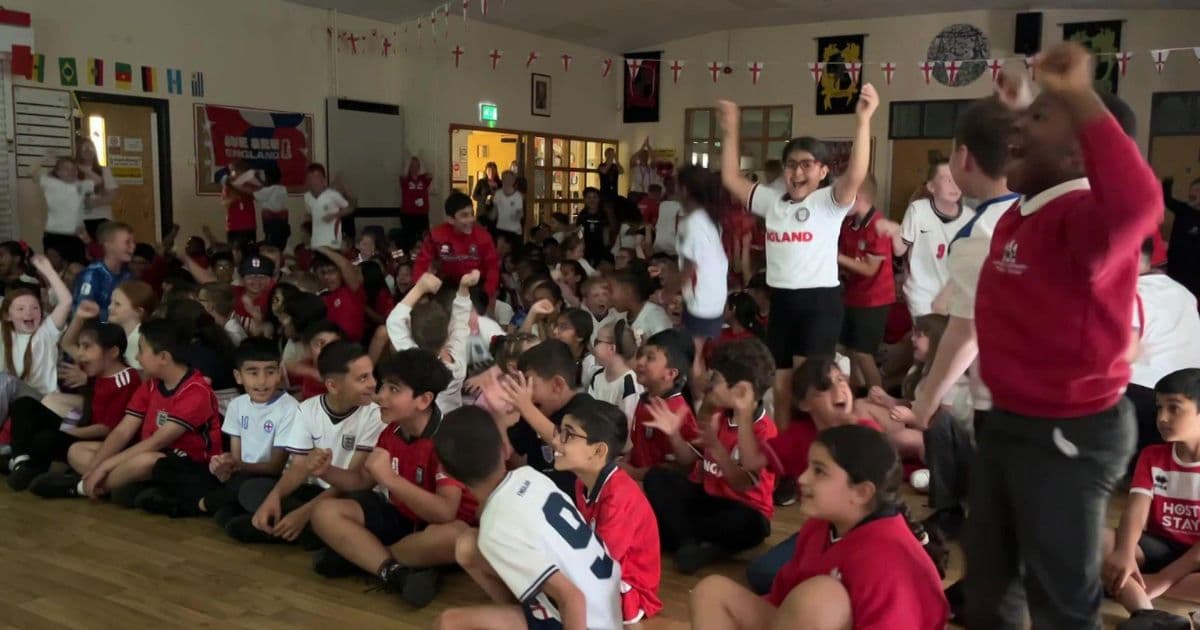
Instead of maths lessons and spelling tests, classrooms became mini football stadiums as pupils gathered together to watch England's dramatic World Cup victory over Mexico.
Many schools went one step further, asking parents not to reveal the result beforehand so every child could experience the drama as if it were happening live.
It meant every tackle, every save and every goal was met with genuine excitement.
And when Harry Kane stepped up to score England's crucial penalty, the cheers that followed could be heard well beyond the school gates.
In one neighbourhood, local residents heard the roar of hundreds of children celebrating together as Kane found the back of the net. It was a reminder of football's unique ability to bring people together, no matter where they're watching.
Schools Across England Shared the World Cup Experience
One of the best examples came from Coltishall Primary School near Norwich.
The school shared footage of pupils celebrating Jude Bellingham's opening goal, proving that even several hours after full-time, the emotion of tournament football hadn't disappeared.
Elsewhere, around 400 pupils at a school in Wiltshire watched the match together without knowing the score.
As Harry Kane stepped up to take England's crucial penalty, classrooms fell silent before exploding into celebration when the ball hit the back of the net.
For many children, it was the first time they'd experienced the tension and excitement of a major tournament alongside hundreds of classmates.
Why the Match Became More Than Just Football
For many of the children, this wasn't simply about watching a match.
It became a shared memory with classmates and teachers that they'll likely remember for years.
Rather than discovering the score on a phone or hearing about it in the playground, they experienced every moment together.
The tension.
The excitement.
The celebrations.
It's the kind of occasion that reminds us why major tournaments capture the imagination of an entire country.
The School Lesson That Didn't Need a Textbook
Schools have long recognised the power of sport to inspire young people.
Whether it's encouraging teamwork, resilience or simply creating conversations between classmates, football has a way of connecting children in a way few other subjects can.
Watching England together also gave pupils the chance to experience something many adults remember fondly from previous tournaments — classrooms stopping to watch history unfold.
Those memories often last far longer than the lesson timetable.
How Football Continues to Bring Communities Together
Results come and go.
Trophies are eventually lifted by one team.
But one of football's greatest strengths has always been its ability to unite people.
Parents gathered around televisions after work.
Friends stayed awake into the early hours.
Children packed into school halls, hoping England would find a winner.
For a few hours, everyone shared the same emotions.
The World Cup Memory These Children Will Never Forget
Years from now, many of those children probably won't remember every pass or every tackle.
But they'll remember sitting alongside their friends, holding their breath as Harry Kane prepared to take that penalty.
They'll remember the eruption of noise when the ball hit the back of the net.
And they'll remember that, for one school morning at least, football brought an entire classroom together.