From YouTube livestreams to specialist events and countless creator partnerships, FIFA have made a clear effort to expand their audience beyond traditional broadcasting methods at this World Cup.
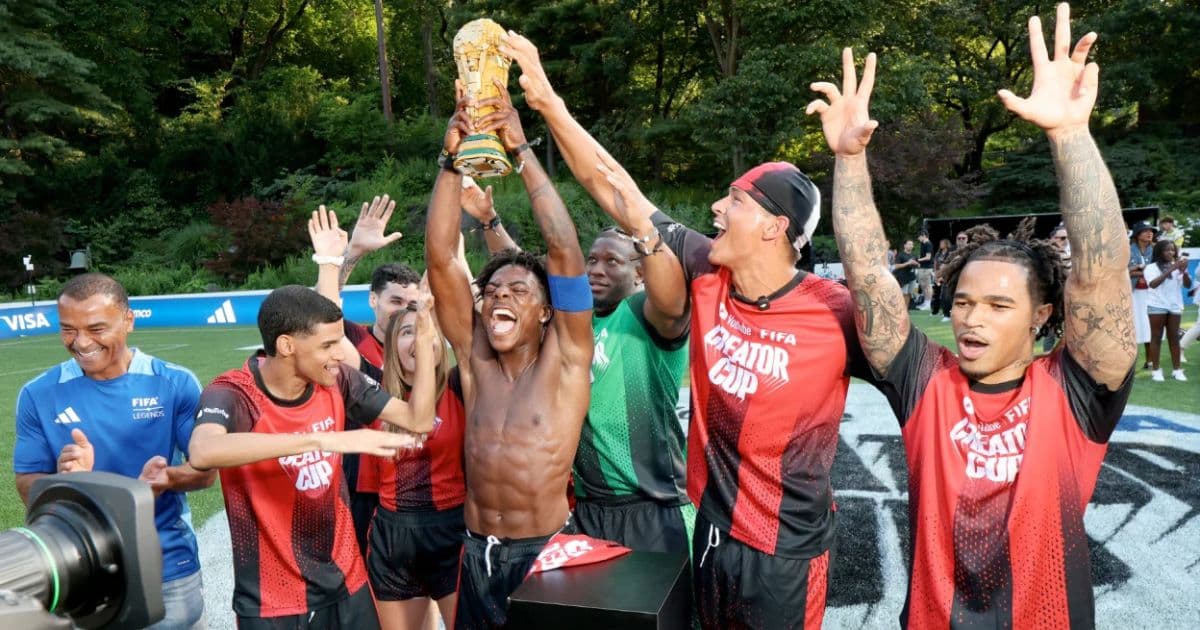
The biggest statement yet came on Sunday night, as FIFA hosted its inaugural Creator Cup — an exhibition football match in partnership with YouTube that saw some of the platform's biggest creators take to a temporary pitch in New York City's Central Park.
Leading the event was YouTuber IShowSpeed, who has amassed over 57 million subscribers on the platform and has grown into a global figure through his energetic livestreams and passionate football content, including his coverage throughout this World Cup.
Alongside YouTube creators such as Celine Dept, JasonTheWeen, Zhong and the Sidemen's TBJZL, footballing legends Cafu and Marco Materazzi featured as team coaches, while iconic referee and current FIFA Chief of Refereeing Officer Pierluigi Collina officiated the seven-a-side match.
With hundreds of fans in attendance clambering for a glimpse of their favourite creators, and millions more tuning in through Speed and YouTube's official livestream, the Creator Cup highlighted the growing influence of digital personalities.
So, why has a match featuring creators with a combined following of over 350 million become such a powerful tool for FIFA?
Why FIFA Is Investing in YouTube Creators
Creator and celebrity involvement within sport is hardly a new concept. For decades, public figures have attended and promoted sporting events, but often while maintaining a clear distance from the competition itself.
However, in the current age of social media, the lines between sport, entertainment and content creation have blurred, allowing outside personalities to become increasingly influential within the sporting landscape.
With major YouTubers now capable of shaping perceptions of events like the World Cup, offering alternative viewing experiences to traditional broadcasts and attracting audiences who may otherwise not tune in, creators have become a valuable asset in FIFA's commercial and marketing strategy.
During the Qatar 2022 World Cup, YouTube selected creators to attend matches and document their experiences across fan zones, stadiums and host cities, offering audiences a more personal perspective of the tournament.
With YouTube reporting over 600 million hours of World Cup-related viewing during the 2022 tournament, it demonstrated the growing capabilities and potential of digital content beyond traditional television coverage and match highlights.
Speaking with Mashable prior to the Creator Cup match, YouTube's Global Head of Brand Marketing Angela Courtin highlighted the importance of blending traditional and modern broadcasters rather than replacing one with the other, stating: "The broadcasters play an amazing role in bringing the game [to the people]."
"Creators just bring a different flavour. They're chatting with their fans every day. This game around the game that we've had on YouTube for the last 10 years, from clips and highlights to creators and fans, is really what we've been leaning into. We want to bring fans pitchside."
If the growth is not already evident, YouTube has revealed that World Cup-related content has already surpassed 1 billion views during the current instalment of the competition, with the figure expected to increase further as the tournament continues.
Why the FIFA Creator Cup Matters Beyond the Result
Even if the match's result would never come close to matching the importance of the main competition, IShowSpeed's team's narrow 7-6 victory over Celine Dept's side certainly provided plenty of entertainment across two 25-minute halves.
Speaking in a pre-match interview, team captain Speed said: "This is crazy! It just shows that the creator industry is evolving and bigger brands are starting to realise that. That's why we're here now. We've got a FIFA YouTube Creator Cup match, and I'm glad to be a part of that."
With the temporary field surrounded by fans, largely children and young teenagers, it was a clear example of how creators can make football feel more accessible and inviting to a younger audience.
The fact that the event was free to attend in person and available to watch online meant fans could experience the occasion without the traditional barriers often associated with elite sport, further demonstrating how creators can help bring football closer to new audiences.
Without taking the world by storm, the event has appeared to be a success, and FIFA's continued efforts to involve YouTube and its biggest names will likely see the two become increasingly intertwined at future tournaments.