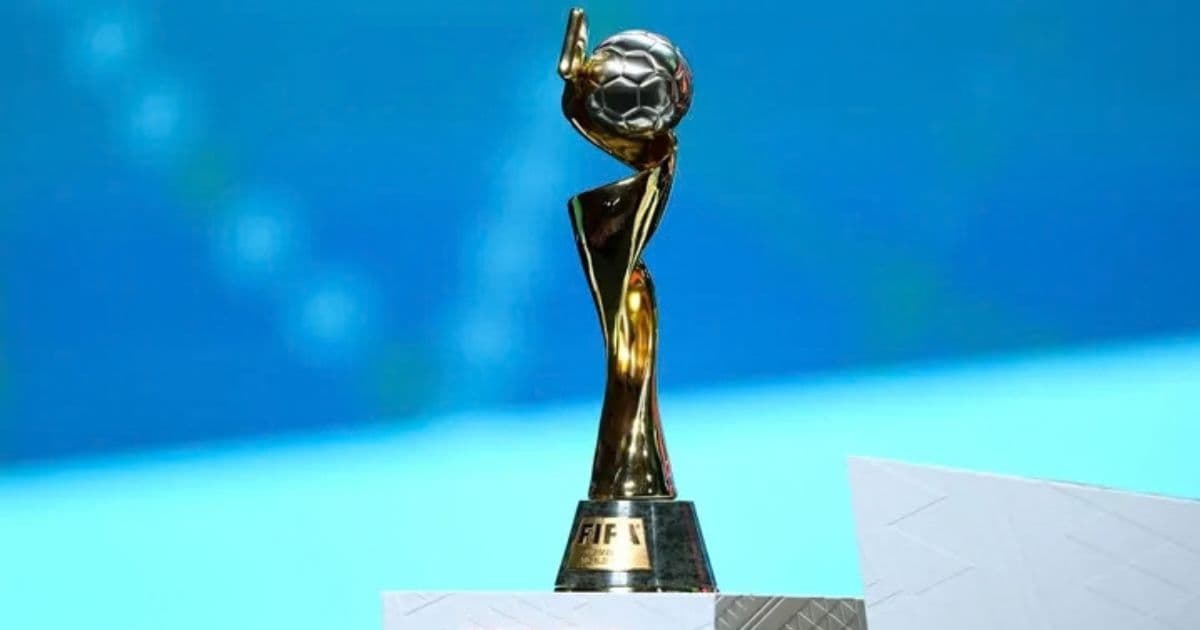

The countdown to the 2027 FIFA Women's World Cup is gathering pace, with nations set to discover their group-stage opponents when the final draw takes place in Brazil next month.
The draw will be held at the Museum of Modern Art in Rio de Janeiro on Friday, December 11, 2026, at 13:30 local time. It will determine the groups and tournament pathway for the 32 teams competing for the biggest prize in international women's football.
Representatives from the qualified nations will be joined by football legends and special guests for the ceremony, which will mark another major milestone on the road to the tournament.
The draw for the final phase of the World Cup play-off tournament will take place a day earlier, on December 10, at 11:00 local time, helping determine the route to the competition's remaining three places.
How will the FIFA Women’s World Cup 2027 draw work?
The final draw will feature four pots, each containing eight teams, with Brazil automatically placed in Pot 1 as tournament hosts and assigned to Group A.
The remaining teams will be allocated to the pots according to the FIFA Women's World Ranking, which is scheduled to be published on December 7.
The seven highest-ranked qualified teams will join Brazil in Pot 1, while the next eight will be placed in Pot 2. The following eight will enter Pot 3, with the five remaining qualified nations and three play-off placeholders completing Pot 4.
The draw will begin with Brazil before the remaining teams are drawn in sequence, starting with Pot 1 and finishing with Pot 4.
The process will establish the group-stage fixtures and give the competing nations a clearer picture of the challenge ahead as they prepare for next summer's tournament.
FIFA Women’s World Cup 2027 draw: Group restrictions explained
FIFA will also apply a number of restrictions to maintain geographical diversity and competitive balance across the eight groups.
Where possible, no group will contain more than one nation from the same confederation. However, UEFA is the exception, given Europe's expected representation of at least 11 teams, potentially rising to 12 depending on the play-off results.
As a result, every group will contain at least one UEFA nation, with no more than two drawn into the same group.
There will also be specific arrangements for the four highest-ranked teams in the FIFA Women's World Ranking.
The top two nations will be placed on opposite sides of the tournament pathway, while the third- and fourth-ranked teams will also be separated.
This means that, should the four highest-ranked teams win their respective groups, they cannot meet before the semi-finals, with the top two only able to face each other in the final.
How will the final three Women's World Cup 2027 places be decided?
Although 28 nations will have secured their places by the time of the final draw, three spots will remain available for the 2027 tournament.
The FIFA Women's World Cup 2027 Play-Off Tournament will determine those final participants, with its preliminary phase scheduled to take place in Rabat, Morocco, from November 28 to December 5, 2026.
Chinese Taipei, Uzbekistan, South Africa, Papua New Guinea, Ghana and Ecuador will compete for two places in the final phase.
They will join four nations who have qualified directly for that stage: two from Concacaf, Venezuela from CONMEBOL and one from UEFA.
The final phase will then take place during the women's international match window between February 23 and March 6, 2027. Single-match ties will decide the three remaining World Cup places, with each winner securing qualification.
With the final draw taking place before those last three spots are confirmed, the teams will initially be represented by play-off placeholders in Pot 4.
Brazil 2027: A historic first Women's World Cup in South America
The 2027 FIFA Women's World Cup will run from June 24 to July 25, marking the tenth edition of the competition.
It will also be a historic occasion for South American football, with Brazil becoming the first country from the continent to host the Women's World Cup.
Matches will be staged across eight host cities, giving Brazil the opportunity to showcase its football culture to a global audience while welcoming the best international teams.
For the competing nations, the December draw will be an important first step in understanding the route to the final. With 32 teams set to compete and three places still to be decided, anticipation will continue to build as the tournament moves closer.