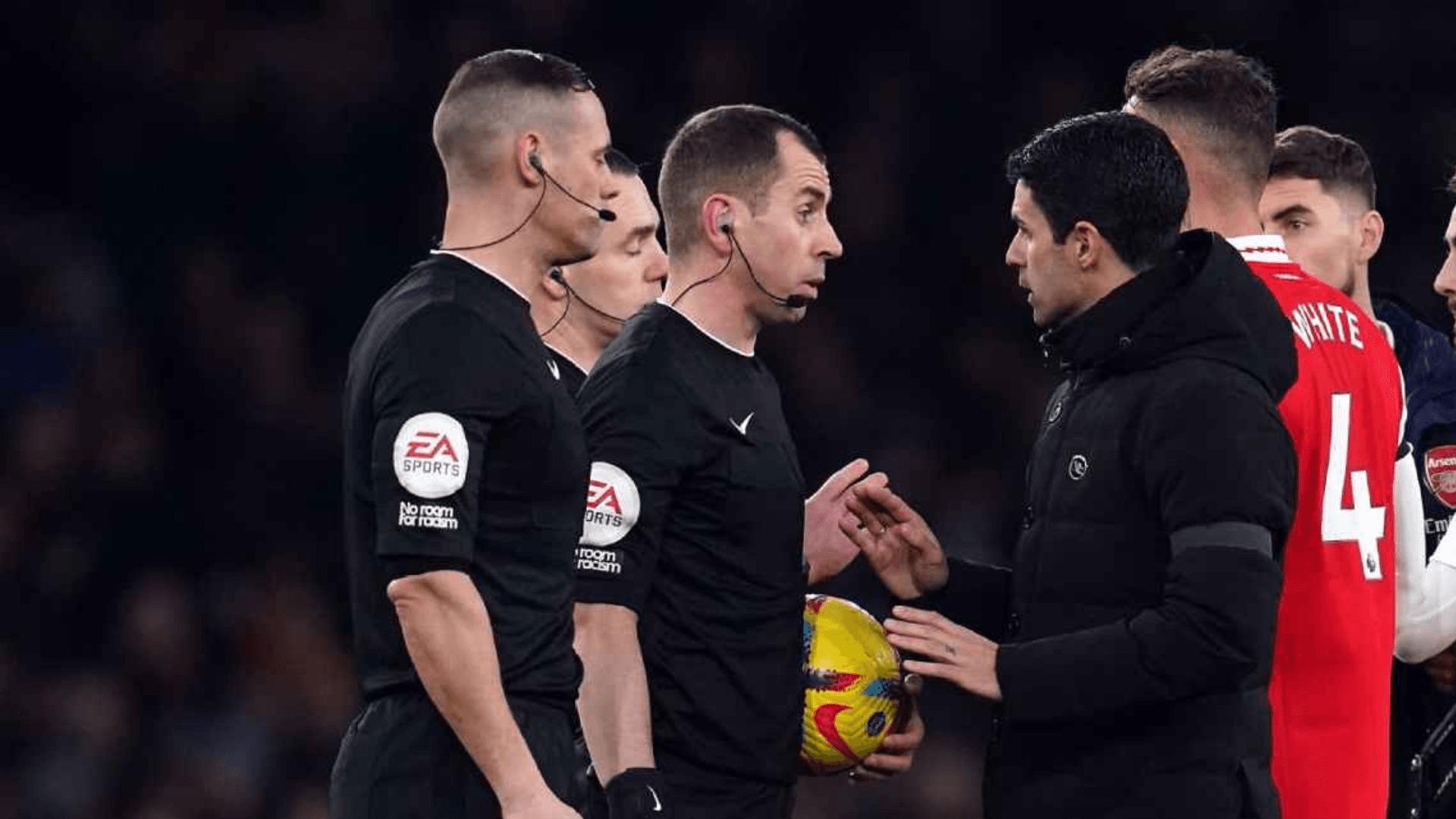
Mikel Arteta has been described as the most difficult manager to deal with by a former Premier League referee, who has opened up about his experiences with the Arsenal boss.
The Spaniard's animated touchline presence has regularly attracted attention, with his passion and reactions to decisions often making him a prominent figure during matches.
Now, former top-flight official Graham Scott has offered his own insight into what it was like dealing with Arteta, speaking during an appearance on Refsplaining.
Scott explains difficult relationship with Arteta
Discussing which manager was the hardest to deal with, Scott singled out Arteta and described the Arsenal head coach as a constant challenge on the touchline.
“He was just hard work. Really, really hard work all the time,” Scott said.
The former referee also suggested that Arteta has sometimes been allowed too much freedom in his interactions with officials, calling for referees to take a firmer approach.
“He does get away with rather too much and the officials do need to be a bit tighter.”
Arteta is known for his animated presence in the technical area, regularly showing his emotions throughout matches as he attempts to influence proceedings from the sidelines.
Scott's comments offer an insight into how the Arsenal manager's touchline behaviour was perceived by one of the officials responsible for overseeing Premier League fixtures.
Arteta's touchline presence under scrutiny
Arteta's passion on the touchline has often attracted attention throughout his time in charge of Arsenal.
The 44-year-old is regularly vocal during matches, communicating with his players and reacting to decisions as they unfold.
While that intensity is part of his approach to management, Scott's comments suggest it could also make interactions with match officials particularly challenging.
His criticism also raises a wider question about the relationship between managers and referees, particularly when it comes to how much freedom those in the technical area should be given to challenge decisions.
For Arsenal, the focus will remain on what happens on the pitch, but Scott's assessment provides another perspective on the personality and intensity of their manager.