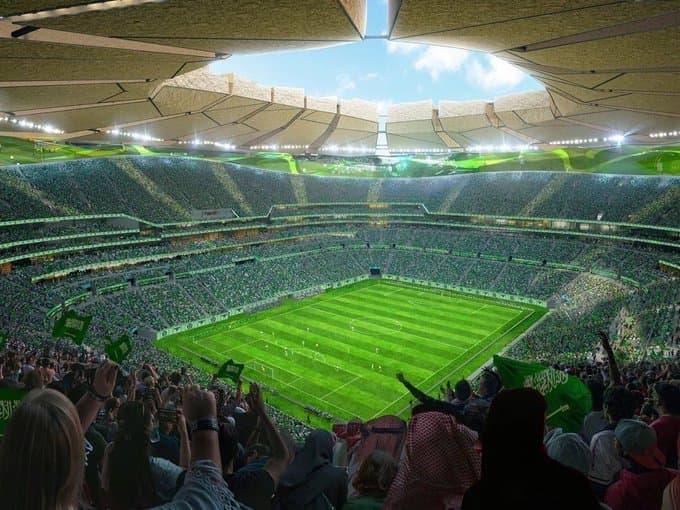
A stadium that hasn't even been built is already being billed as one of the world's biggest. King Salman International Stadium, chosen to stage both the opening match and the 2034 World Cup final, will anchor a $26 billion development north of Riyadh.
Eight years from kickoff, the site is still mostly desert and cranes. Yet the figures attached to the project already make Qatar's 2022 spending look almost restrained by comparison.
The $26bn Masterplan Behind Saudi Arabia’s Showpiece Stadium
The stadium itself will hold more than 92,000 people once finished, putting it in range of Barcelona's Camp Nou and just behind the biggest arenas in world football. That capacity alone doesn't explain the price tag.
The $26 billion figure covers a full masterplan wrapped around the stadium, not just the bowl of seats and the pitch. The wider development includes an Olympic-sized aquatics centre, a separate athletics stadium, training pitches, commercial buildings and parkland linking the site with neighbouring King Abdulaziz Park.
Populous, the firm behind the design, says the concept draws inspiration from Saudi Arabia's mountainous landscape rather than the conventional bowl-shaped stadium familiar to most fans.
Construction crews are working toward a completion date in late 2029, giving Saudi organisers roughly five years before the tournament actually kicks off.
Five years sounds generous until you remember Qatar spent over a decade building for 2022, and even then finished several venues with matches already scheduled.

Why King Salman Stadium Was Chosen To Host The 2034 World Cup Final
Saudi Arabia's World Cup bid features 15 stadiums across five cities, but 11 of them are still to be built. Even so, there was never much doubt about which venue would stage the final. King Salman Stadium emerged as the clear favourite from the beginning.
The stadium's location played the biggest role, located along King Salman Road in northern Riyadh. The stadium sits at the heart of a capital that will host eight of the tournament's 15 venues, more than any other city in the country.
Size mattered too. The planned 92,000-seat capacity makes King Salman Stadium the biggest venue in Saudi Arabia's bid, comfortably ahead of the renovated King Fahd Sports City Stadium nearby.
Rather than becoming another stadium remembered only for hosting a major event, King Salman Stadium is intended to serve as the long-term home of the Saudi national team.
Brazil's Maracana and South Africa's Soccer City both faced years of underuse after their tournaments ended. And Saudi Arabia is trying to avoid that outcome by design rather than by luck.
What Happens To King Salman Stadium After The 2034 World Cup?
Once the last ball is kicked in 2034, King Salman Stadium is expected to remain at the heart of Saudi football. Under the post-tournament plans, it will become the permanent home of the national team while also staging Saudi Pro League matches and international friendlies for years to come.
The surrounding masterplan is built with that long life in mind; commercial space and recreational facilities aren't tournament add-ons; they're meant to keep the site busy on a random Tuesday in 2040, not just during a World Cup month.
Whether $26 billion buys a stadium that actually gets used that way is the real test Saudi Arabia is signing up for, and it won't have an answer for years yet.