
Netherlands will be taking on 2022 FIFA World Cup semi-finalists Morocco at the NRG Stadium in Houston, Texas on Monday afternoon hoping with a clear eye on making it to the round of 16.
Both nations safely navigated complex group-stage opponents to book their places in the knockout rounds.
For Ronald Koeman's squad, the Netherlands knows that leveraging their sophisticated positional play and inside-drifting overloads will be essential to breaking down their opponents.
Morocco, executing their game plan with immense tactical discipline, relies on an entirely different competitive philosophy.
The Atlas Lions enter the tie boasting a structurally rigid defensive block that specialises in denying space between the lines, waiting to pounce on sloppy possession turnovers with rapid transitions.
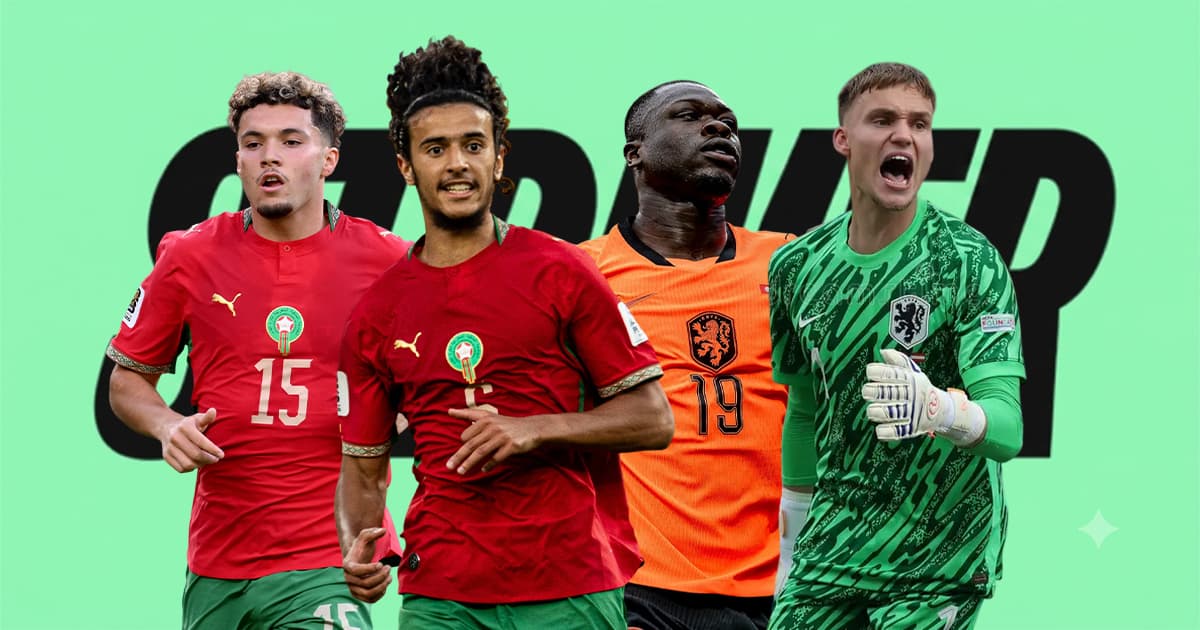
Striver.Football highlights six of the players that could prove important to helping their respective sides achieve the specific targets of making it to the round of 16 of the 2026 World Cup .
Netherlands' Generational Core
Jorrel Hato: The Deep Structural Anchor
Three-Match Tournament Tracking: Unused sub
Tactical Profile: The highly rated young defender represents the absolute future of the Dutch backline. Known for his exceptional positional flexibility and superb composure on the ball, Hato is equally comfortable functioning as a progressive left sided centre-back or an inverted fullback.
His tracking metrics highlight an elite capability to read transition threats early, and even though he has not tasted any action so far, he could help keep the Oranje balanced when they commit numbers forward to break down Morocco’s defensive blocks if given a chance.
Bart Verbruggen: The Press-Resistant Goal Guardian
Three-Match Tournament Tracking: 2 Games Started, 270 Minutes Played, 2 Clean Sheets,
Tactical Profile: The commanding young goalkeeper provides the absolute structural balance required to execute the Netherlands' modern build-out philosophy from deep.
Verbruggen behaves like a pure sweep-keeper, remaining completely unfazed by aggressive front-line presses and using his precise distribution to launch immediate attacking sequences. His aerial command inside the penalty area will be tested heavily when claiming high deliveries during transitional phases.
Brian Brobbey: The Physical Target Spearhead
Three-Match Tournament Tracking: 3 Games Played (3 Starts), 161 Minutes Played, 3 Goals Shots on Target.
Tactical Profile: Operating as a dynamic focal point, the physical striker offers the Netherlands immense direct gravity inside the opposition penalty area.
Brobbey excels at using his upper-body strength to shield possession under heavy pressure and drag centre-backs out of position.
His primary function against a low block is to create structural disruptions, executing quick lay-offs to opening runners and turning localised crosses into instant scoring chances.
Netherlands' Generational CoreNetherlands' Generational Core
Gessime Yassine: The Transition Livewire
Three-Match Tournament Tracking: 1 Cameo, 20 Minutes Played, 1 Goal, 2 Progressive Carries
Tactical Profile: The vibrant young talent offers exceptional pace and progressive carrying abilities on the flank.
Yassine’s ability to transition from a deep defensive shape into a high-speed counter-attack makes him Morocco’s primary vertical outlet. He treats isolated 1v1 situations as an absolute invitation to drive at fullbacks, forcing backlines to collapse and generating high-value space for late midfield arrivals.
Ayyoub Bouaddi: The Press-Resistant Metronome
Three-Match Tournament Tracking: 2 Games Started, 180 Minutes Played, 6 Interceptions, 90.5% Pass Accuracy.
Tactical Profile: The highly technical midfield engine provides the absolute structural balance required to let Morocco's attacking front line stay fluid.
Bouaddi behaves like a pure defensive screen with playmaker instincts, effortlessly picking up loose balls and stepping out to break intermediate passing lanes. He absorbs heavy physical pressure from oncoming presses, smoothly turning out of trouble to preserve technical continuity in transition.
Samir El Mourabet: The Pocket-Cracking Phenom
Three-Match Tournament Tracking: 3 Sub Appearances, 48 Minutes Played, 0.7 Key Passes Per 90
Tactical Profile: Utilised as a highly creative structural wildcard, El Mourabet brings a velvet, one-touch geometric passing profile onto the pitch.
Operating inside the half-spaces, his primary responsibility is to link up with central creators and unlock stubborn blocks during the closing stages. His game is built around tight-space gravity, intentionally slowing the tempo down to bait defenders closer before unleashing reverse passes into the box.
Three Definitive Tactical Dimensions
Brobbey's Gravity vs. The Moroccan Centre-Back Screen: The primary structural battle revolves around whether Morocco's central defensive unit can cleanly handle Brian Brobbey's physical hold-up play.
If Brobbey is allowed to establish depth and turn inside the box, Morocco's double-pivot will be forced to collapse, opening up dangerous turning lanes for incoming Dutch midfielders.
Managing the Transitional Flanks: With Morocco deploying exceptionally fast, direct wide options like Gessime Yassine, the Oranje fullbacks must maintain immaculate rest-defence spacing. The team that manages its defensive positioning more efficiently during sudden possession turnovers will completely dictate the structural height of the game.
The Midfield Squeeze: Because the Netherlands will seek to dominate possession through horizontal sequences, Ayyoub Bouaddi's tracking and spatial discipline will be vital. If Bouaddi can cleanly deny the Dutch central creators their favourite distribution angles, Morocco will systematically isolate the Netherlands' attack and establish quick counters.