
Premier League clubs have historically been a force in European competitions. Last season saw Arsenal come close to overcoming Paris Saint-Germain in the Champions League final, while Aston Villa and Crystal Palace claimed the Europa League and Conference League titles respectively.
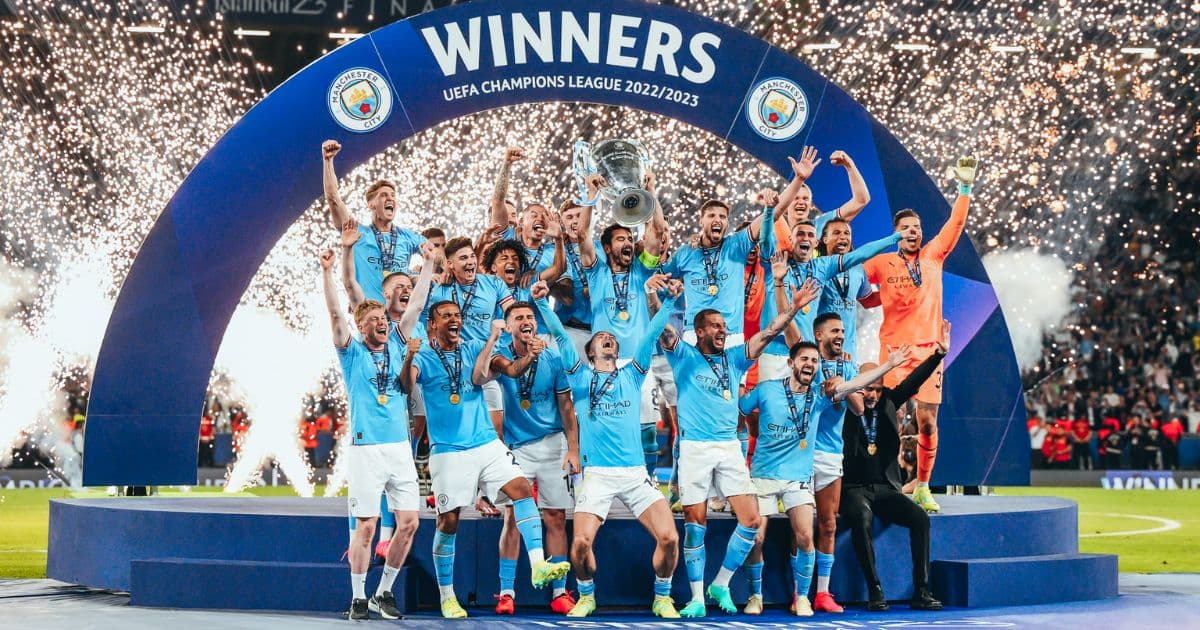
Over the last 20 years, Manchester United (2007-08), Chelsea (2011-12, 2020-21), Liverpool (2018-19) and Manchester City (2022-23) are the only English clubs to have lifted the coveted Champions League trophy, accounting for five of the 20 Champions League titles awarded during that period.
However, Manchester City’s ongoing Premier League financial case has raised questions over potential sanctions, including points deductions and even relegation. Any future punishment could also raise questions over the club’s participation in European competition, although a further Champions League triumph would complicate matters.
City previously overturned a two-year UEFA competition ban in 2020 after successfully appealing against the sanction at the Court of Arbitration for Sport. Nevertheless, renewed questions remain over whether UEFA could pursue separate disciplinary action and what that could mean for the club’s European future.
If an English club were unable to participate in a future season, the impact on qualification would depend on UEFA's regulations and the circumstances.
Despite this, questions remain over whether other English sides can challenge for European football’s biggest prize, keep England at the top of UEFA’s coefficient rankings, and maintain the Premier League’s reputation as the strongest league in the world.
Can Liverpool and Other Premier League Clubs Challenge Arsenal and Manchester City?
| Season | 1st Place | 2nd Place |
|---|---|---|
| 2025-26 | Arsenal | Manchester City |
| 2024-25 | Liverpool | Arsenal |
| 2023-24 | Manchester City | Arsenal |
| 2022-23 | Manchester City | Arsenal |
| 2021-22 | Manchester City | Liverpool |
Manchester City and Arsenal are arguably the two dominant forces in English football at present. They have finished in the Premier League’s top two in three of the last five seasons and are both leading the pack early in the current campaign.
Despite facing waves of criticism and controversy, City comfortably defeated Liverpool, the only other club to finish in the top two during that period, 3-0 at the weekend. The result further highlighted the gap between the Manchester club and their once neck-and-neck title rivals on the pitch.
Neither City nor Arsenal has an extensive record of European success, with one Champions League title and three final appearances between them. Nevertheless, both could be considered among the favourites for this season’s trophy, although City’s prospects may depend on the outcome of their ongoing financial case.
Based on their European record, Liverpool remain one of the strongest candidates to challenge Arsenal and Manchester City. However, as their defeat at the weekend showed, Andoni Iraola still has work to do to fully implement his vision and guide the Reds through what remains a transitional period.
Liverpool’s six UCL titles and four further final appearances underline their European pedigree. They beat fellow English side Tottenham Hotspur in the 2019 final but lost to Real Madrid in 2018 and 2022, and still have an expectation to really push in Europe.
But, outside of those, can anyone step up to the plate?
Manchester United, Chelsea and Tottenham Face Different European Challenges
The traditional ‘big six’ are increasingly outdated as a clear group of England’s elite clubs, with the gap between them becoming less consistent. While two or three may pull away for several years, others can quickly fall behind.
Manchester United’s initial optimism under Michael Carrick has begun to fade, with the Red Devils enduring their worst league start in 40 years. Despite a comfortable 4-0 UCL opening win over Azerbaijani newcomers Sabah, a damning 2-0 defeat away to Atletico Madrid has raised further doubts over the team’s performances.
However, they have only reached the knockouts of the Champions League four times - not once past the quarter-finals - since Sir Alex Ferguson departed in 2013, and aren't really expected to reach the latter stages of the tournament this year.
Chelsea are arguably in the strongest position of the three, having improved under new boss Xabi Alonso and boasting the strongest recent European pedigree, with two Champions League titles in the last 20 years.
Nevertheless, the money invested in the project under Todd Boehly, alongside a disappointing 10th-place finish that left them without European football this season, raises questions about how sustainable their progress will be.
Finally, Tottenham have really struggled in domestic competitions in recent seasons, but their 2025 Europa League triumph under Ange Postecoglou and subsequent run to the UCL round of 16 showed that even sides lower down the Premier League table can compete in Europe.
However, these clubs have historically been regarded as some of England’s best, with the commercial power and financial backing to reflect that, even when their league form has not always matched their reputation.
So, what happens when less established clubs begin to qualify for the UCL more regularly?
Can Newcastle and Aston Villa Become Champions League Contenders?
Outside the traditional ‘big six’, Newcastle and Aston Villa have established themselves near the top of the Premier League and built respectable European records.
Newcastle have reached the UCL twice in three years, while Villa have reached the UCL quarter-finals, the Conference League semi-finals and won the Europa League in recent campaigns. Their growth under Unai Emery was underlined by their recent 6-0 win over Fenerbahce.
Newcastle, however, are absent from Europe this season, with an inconsistent start under new boss Matthias Jaissle raising doubts over their top-four prospects. Meanwhile, Brighton, Bournemouth and Brentford have regularly overachieved despite operating with far smaller financial resources than the traditional elite, often achieving results that belie their financial limitations.
However, qualifying for the UCL is one thing; competing with Europe’s best is another. Much of Villa and Newcastle’s success has come outside the competition, leaving questions over whether they could consistently reach the latter stages.
The same applies to England’s emerging clubs. Reaching the last 16 would represent progress, but consistently advancing beyond that stage would be a stronger indication that these clubs can challenge Europe's established elite. Arsenal therefore remain one of England’s clearest hopes of mounting a serious UCL title challenge.
Conclusion: Can Premier League Clubs Continue to Dominate the Champions League?
Premier League clubs have the financial resources, squad depth and competitive intensity to remain major contenders in the Champions League, but continued dominance is far from guaranteed.
European rivals such as Real Madrid, Barcelona, Bayern Munich and Paris Saint-Germain have the quality and experience to challenge them, particularly across the knockout stages.
Ultimately, Premier League sides can continue to set the pace, but turning that strength into trophies will depend on tactical adaptability, player availability and their ability to deliver under pressure when the stakes are highest.