

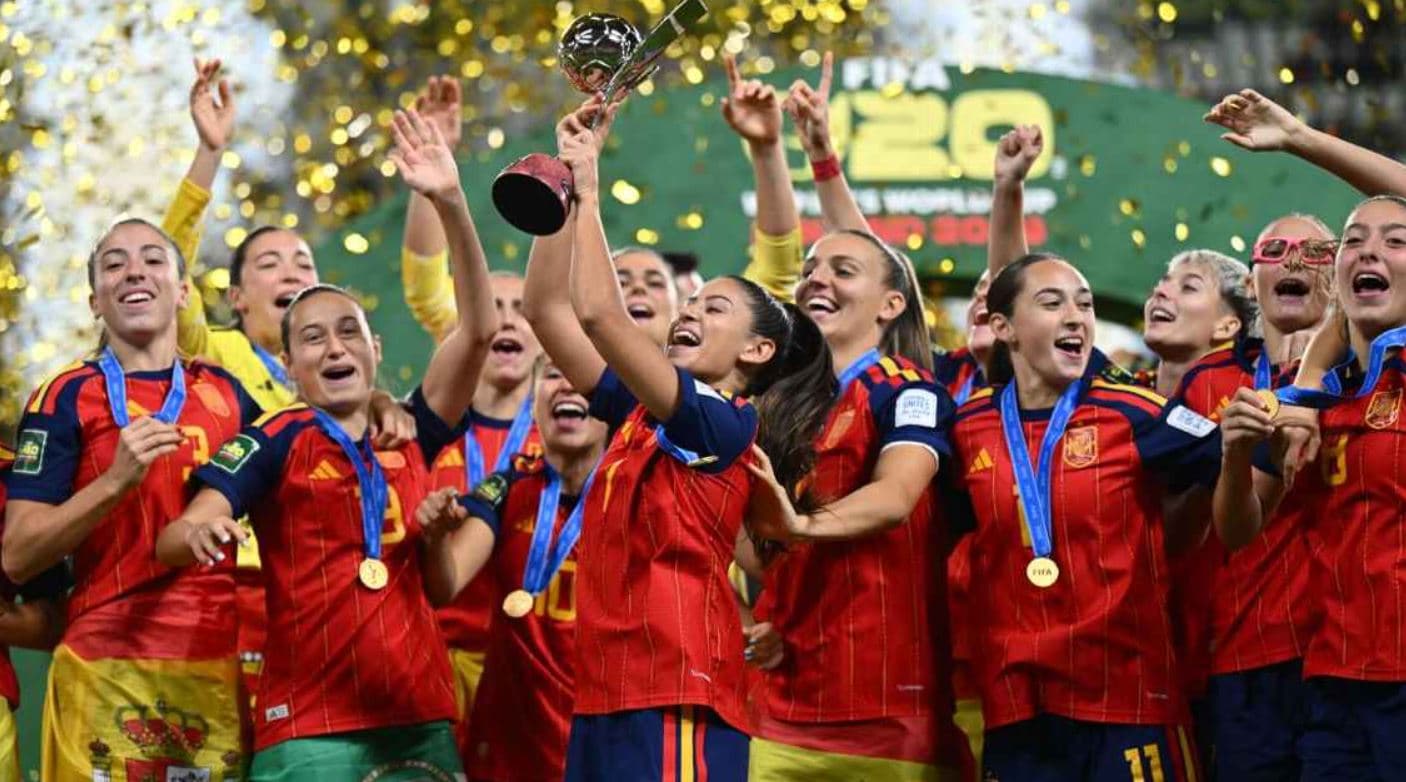
The dust has settled in Lodz, and Spanish football has once again underlined its strength on the global stage. Spain's tense, dramatic penalty-shootout victory over North Korea in the 2026 FIFA U-20 Women's World Cup final was the culmination of another impressive tournament run and a tightly contested final.
Spain secured their second title by defeating defending champions DPR Korea 4-3 in a dramatic penalty shootout.
The fiercely contested match remained deadlocked at 0-0 through both regulation and extra time before Spain ultimately triumphed from the spot.
Striver.Football profiles key takeaways from the final and Spain’s historic unbeaten run to glory.
1. Spain's Dominance Across Women's Youth Football
Spain has consolidated a complete, undisputed monopoly over international football. Their triumph in Poland marks their second FIFA U-20 Women's World Cup title after their 2022 victory in Costa Rica.
Over the past decade, the Spanish development pipeline has produced an astonishing haul of trophies:
They have won two FIFA U-17 Women's World Cups (2018, 2022), two FIFA U-20 Women's World Cups (2022, 2026), the Senior Women's World Cup (2023) and the Senior Men's World Cup (won by Luis de la Fuente's side in July 2026)
This absolute dominance across age brackets and genders highlights the strength of Spain's player-development system across multiple age groups.
2. DPR Korea's Historic Defensive Record
North Korea relinquished their crown in heartbreaking fashion, but they left Poland having rewritten the history books.
They became the first team ever in the history of the FIFA U-20 Women’s World Cup to complete an entire tournament without conceding a single goal during standard and extra time.
They kept seven consecutive clean sheets throughout the tournament, underlining the strength of their defensive organisation.
Their visible heartbreak at the final whistle reflected the agonising nature of football; as a proud coach Han Chol-Hak noted: "All of our players were crying and that really broke my heart... I think that they all did their best. So I'm very proud of them."
3. Spain's 2024 Final Defeat Fuels a Different Outcome
The final was also a rematch of the 2024 FIFA U-17 Women's World Cup final, where DPR Korea defeated Spain on penalties.
An incredible 18 out of the 21 players on the North Korean roster were holdovers from that U-17 squad, while Spain brought seven foundational players who had tasted that bitter defeat two years prior.
For those seven Spanish players, the victory provided a different outcome after their 2024 final defeat, demonstrating how youth failure can be channeled into championship-level resilience.
4. Spain Sweep the Individual Tournament Awards
Spain collected all three major individual awards, underlining the quality within their squad. Laia Lopez was awarded the Best Goalkeeper honor after her dual shootout saves and crucial first-half match-saving intervention.
Rosalia Dominguez earned the adidas Golden Ball as the tournament's best player, playing a key creative role for Spain.
Pau Comendador claimed the Golden Boot as the tournament's top scorer, racking up six goals across the campaign.
Spain's Road to the 2026 U-20 Women's World Cup Final
Spain's road to lifting the trophy at the 2026 FIFA U-20 Women's World Cup was a clinic in tournament management, balancing explosive offensive outputs with gritty knockout victories:
Group Stage — Nigeria (2-0 Win): Set a commanding, disciplined tone for Group F right out of the gate.
Group Stage — New Caledonia (11-0 Win): A dominant attacking display as Spain scored 11 goals.
Group Stage — China (3-1 Win): Secured top spot in the group cleanly with controlled possession.
Round of 16 — Portugal (2-0 Win): A controlled defensive performance that limited Portugal's attacking threat.
Quarter-Final — Brazil (1-0 Win): A tightly contested quarter-final decided by Pau Comendador's first-half goal.
Semi-Final — Italy (2-0 Win): Dominated tempo from start to finish to punch their ticket to Lodz.
The Final — North Korea (0-0, 4-3 Pens): Successfully overcame history's sturdiest youth defense through nerves of steel in the shootout.
What Spain's U-20 World Cup Win Shows
Yesterday's final proved that while tactical organisation and defensive structure can make a team that was historically difficult to break down in open play—as DPR Korea was—true champion status requires the psychological steel to triumph when a game shrinks down to twelve yards.
Spain's latest youth title further underlines the strength of their current women's development pathway. For comprehensive coverage of the tournament, you can view the complete match logs on the Official FIFA Tournament Hub.


