Czechia's FIFA World Cup 2026 campaign ended with a group-stage exit. A few hours later came another significant development for the national team.
Patrik Schick announced his retirement from international football.
The Bayer Leverkusen striker leaves the national team after making 56 appearances and scoring 26 goals, ending a decade-long international career that began with a goal on his debut against Malta in 2016.
Yet Schick's farewell was about more than stepping away.
In his retirement statement, he wrote: "I leave proud of what I achieved in the national team shirt. But at the same time, I feel Czech football is capable of much, much more than it has shown in recent years. We need to face the truth and change things that haven't been working for a long time."
Those words transformed his retirement into something more than a goodbye. Every international retirement creates a vacancy. Every departure opens a pathway. And somewhere in Czech football, a young forward is now looking at the national team picture and seeing an opportunity that did not exist before.
For many supporters, the immediate reaction will be to look back at what Schick achieved in a Czech shirt. But the more important question may be what happens next.
The Standard Schick Leaves Behind
Schick's impact on Czech football went beyond statistics.
He was the focal point of the attack for much of the past decade and often carried the responsibility that comes with being a nation's primary goalscorer.
His finest international tournament came at Euro 2020, where he finished among the competition's top scorers with five goals.
The tournament produced one of the most memorable moments of his career when he scored from near the halfway line against Scotland, a goal that quickly became one of the defining images of the championship.
Czechia reached the quarter-finals at that tournament, with Schick playing a central role in the run.
Yet perhaps his biggest contribution was setting a benchmark for future Czech forwards.
International football demands consistency, resilience and the ability to perform under pressure.
For years, Schick provided exactly that. Those standards do not disappear when a player retires. They become the target for those who follow.
A New Opportunity for Czech Football
National teams are constantly evolving.
One generation emerges while another gradually steps aside. The transition can feel sudden, especially when an established player announces his retirement immediately after a major tournament.
For coaches, it creates a challenge. For young players, it creates a chance.
The search for Czechia's next leading striker will now become one of the key storylines surrounding the national team. Minutes that once belonged to Schick are now available. Roles within the squad are suddenly more open. Young players who may have previously viewed international football as a distant goal can now see a clearer pathway.
Competition for places often accelerates development. Players know opportunities are available and understand that strong performances at club level can quickly attract national-team attention.
The next chapter of Czech football will not be built around one player replacing Schick overnight.
More likely, it will involve several young forwards attempting to prove they belong at the highest level.
Who Could Step Forward?
The search for Schick's successor will not begin from scratch.
Czechia already have several attacking players at different stages of development, ranging from established senior internationals to emerging prospects hoping to force their way into the national-team picture.
Among the senior options is Adam Hlozek (23, Bayer Leverkusen), a player who has long been viewed as one of Czech football's brightest talents.
Having already accumulated significant international experience and competed at the highest levels of European football, he is one of the most obvious candidates to take on greater attacking responsibility.
Another familiar name is Mojmir Chytil (27, Slavia Prague). The forward announced himself with a hat-trick on his international debut in 2023 and remains a regular part of the senior setup.
Behind them is a younger generation looking to establish itself.
Matyas Vojta (22, Sparta Prague) has progressed through the Czech youth system and is among the forwards seeking to translate domestic potential into senior international opportunities.
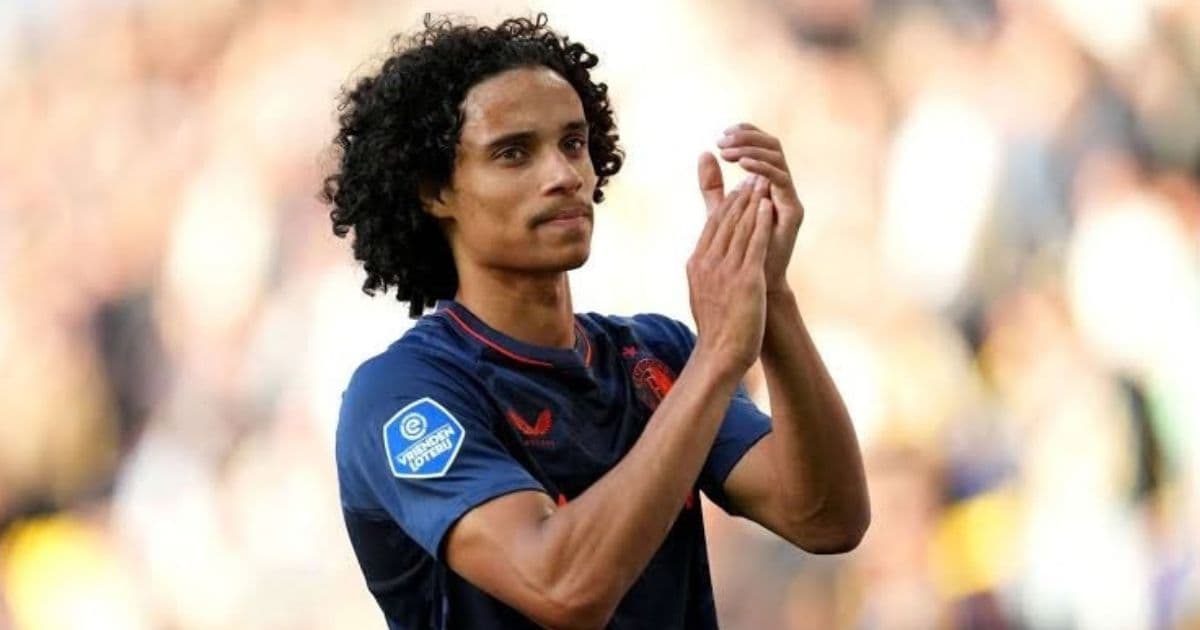
Yannick Eduardo (20, Hoffenheim) is developing in Germany and represents one of the youngest attacking prospects currently on Czechia's radar.
Radek Siler (21, Zeleziarne Podbrezova) has also featured within the U21 setup and is part of a group hoping to make the step up over the next few years.
The pool extends beyond traditional centre-forwards.
Adam Karabec (23, Lyon) is regarded as one of Czech football's most creative attacking players, while Matej Jurasek (22, Slavia Prague) continues to build his reputation as a dynamic winger.
Meanwhile, forwards such as Daniel Fila (23, Venezia) and Vasil Kusej (25, Slavia Prague) have also emerged as players capable of pushing for larger roles in the years ahead.
Not all of these players occupy the same position, and not all will become regular internationals. But Schick's retirement ensures that opportunities will now emerge across the attacking unit.
The Lessons Schick Leaves Behind
The next generation can learn plenty from Schick's journey. His international career was not defined solely by goals. It was built on patience, movement, professionalism and an ability to perform in important moments.
He developed gradually, established himself in one of Europe's top leagues and carried those experiences into the national team environment.
Young forwards often focus on finishing and statistics. Schick's career offers a reminder that international success requires much more. Positioning, decision-making, consistency and adapting to different challenges all play a role.
Those qualities remain relevant regardless of who eventually becomes Czechia's next leading striker.
The Next Chapter Starts Now
Schick ended his farewell message by making it clear that his criticism came from a place of care rather than frustration.
"I'm not saying this out of anger or disappointment," he wrote. "I'm saying it because I care about Czech football."
His international career has come to an end, but the questions he leaves behind remain.
Who will score the next important goal for Czechia? Who will become the next player young supporters look up to? And who will prove that Czech football is capable of reaching the level Schick believes it can?
Those answers will not arrive overnight.
But for the next generation of Czech footballers, the opportunity has already begun.