FIFA’s Disciplinary Committee is now reviewing the match reports from Argentina’s World Cup semi-final win over England, after Downing Street backed UK ministers’ calls for an investigation into the Falklands banner displayed after full-time.
Striver.Football previously covered the moment on Wednesday, when Lisandro Martinez and unused substitute Giovani Lo Celso held up a sign reading “Las Malvinas son Argentinas” (“The Falklands are Argentine”) during Argentina’s on‑pitch celebrations
Thursday brought the first direct intervention from the Prime Minister's office, shifting the issue from a dispute between football authorities to an explicit stance taken by the UK government itself.
FIFA And Downing Street Respond To Falklands Banner
FIFA confirmed it was reviewing the incident directly, stating: "As is standard procedure, FIFA's independent Disciplinary Committee is currently assessing the match reports and considering the relevant circumstances before deciding on potential further steps based on the FIFA Disciplinary Code."
FIFA’s stadium code of conduct explicitly bans “banners, flags, flyers, apparel and other paraphernalia that are of a political, offensive, and/or discriminatory nature,” which is the rule any disciplinary ruling would have to be grounded in.
Business Secretary Peter Kyle went beyond FIFA’s neutral wording, describing the incident as an “egregious violation” of those rules and urging the organisation to investigate the matter “thoroughly.”
Downing Street backed that position directly. A spokesperson said: "The World Cup might not be ours, but the Falkland Islands definitely are. Our commitment to the Falklands will never waver," stressing that "self-determination rests with the islanders."
Asked whether the Prime Minister personally shared Kyle's view, his office replied: "I would echo that position," while maintaining that any actual disciplinary outcome remains "a matter for FIFA."
The Falkland Islands government also wrote to FIFA, saying it was "disappointed, though regrettably not surprised" by the players' conduct.
"The Falkland Islands Government is disappointed – though regrettably not surprised – that the Argentine football team decided to tarnish the result of last night’s World Cup football semi-final – a game that did not in any case involve the Falkland Islands.
"That said, it is hardly news to anyone that the people of the Islands were victims of an aggressive invasion in 1982, which left many traumatised. The banner displayed by Argentina last night, therefore, was particularly insensitive for many people in the Falklands."
Why The Falklands Banner Has Sparked A Political Dispute
Tension around the game was already high before a ball was kicked. Argentina's Vice President, Victoria Villarruel, had added to it by referring to the English as "usurping pirates" in comments made ahead of Wednesday's match.
The fallout continued after full time. Argentina’s foreign minister, Pablo Quirno, lodged a formal protest this week over the British warship HMS Medway, claiming its passage through what Argentina regards as its territorial waters was “unconsulted and illegal.”
Martinez later explained why he held the banner despite playing his club football in England for Manchester United, saying: “We couldn’t let the Argentine people down.”
Within a week, a post-match celebration had escalated into a three-front dispute: a political stadium banner, a formal letter from the UK government, and a naval protest involving HMS Medway. All stemmed from the long-running sovereignty dispute over the Falkland Islands.
What Punishment Could FIFA Give Argentina?
FIFA has already dealt with this exact issue once before. In 2014, it fined the Argentine Football Association 30,000 Swiss francs (around £20,000) after national-team players posed with a “Las Malvinas son Argentinas” banner before a friendly against Slovenia, just days before that year’s World Cup.
That earlier case makes a financial penalty the likeliest outcome again, since it shows how FIFA treated the identical wording when it previously appeared inside a stadium under its jurisdiction.
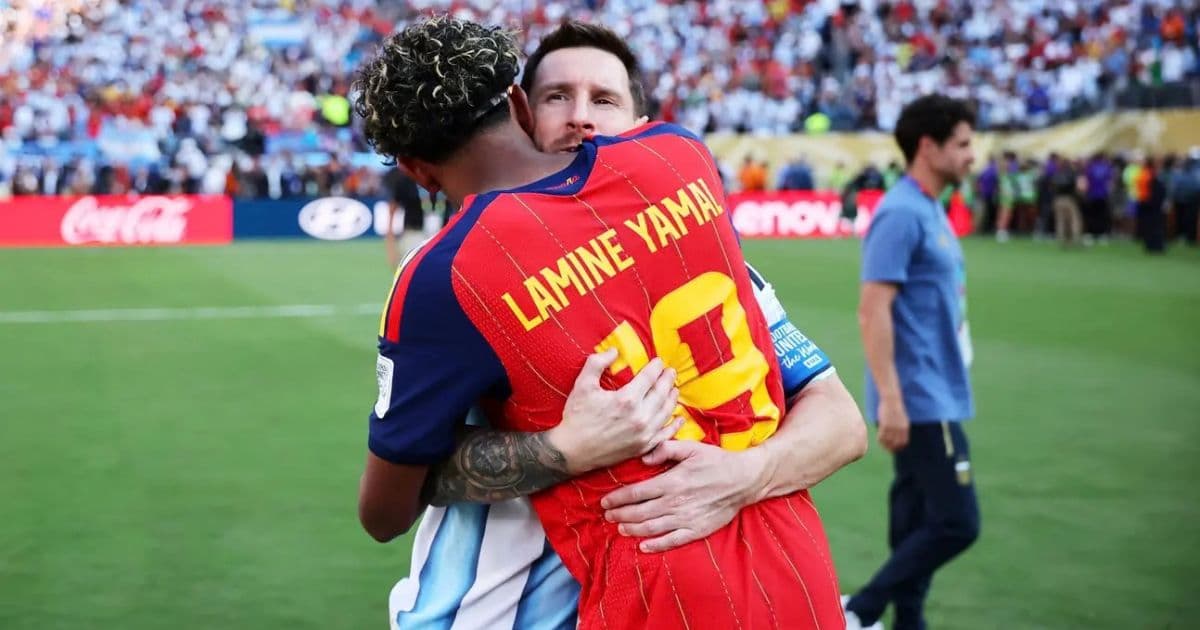
Argentina’s place in Sunday’s final against Spain is already guaranteed, so whatever FIFA decides will come only after the World Cup has finished and a champion has been crowned. Meaning it cannot affect the outcome of Sunday's final.