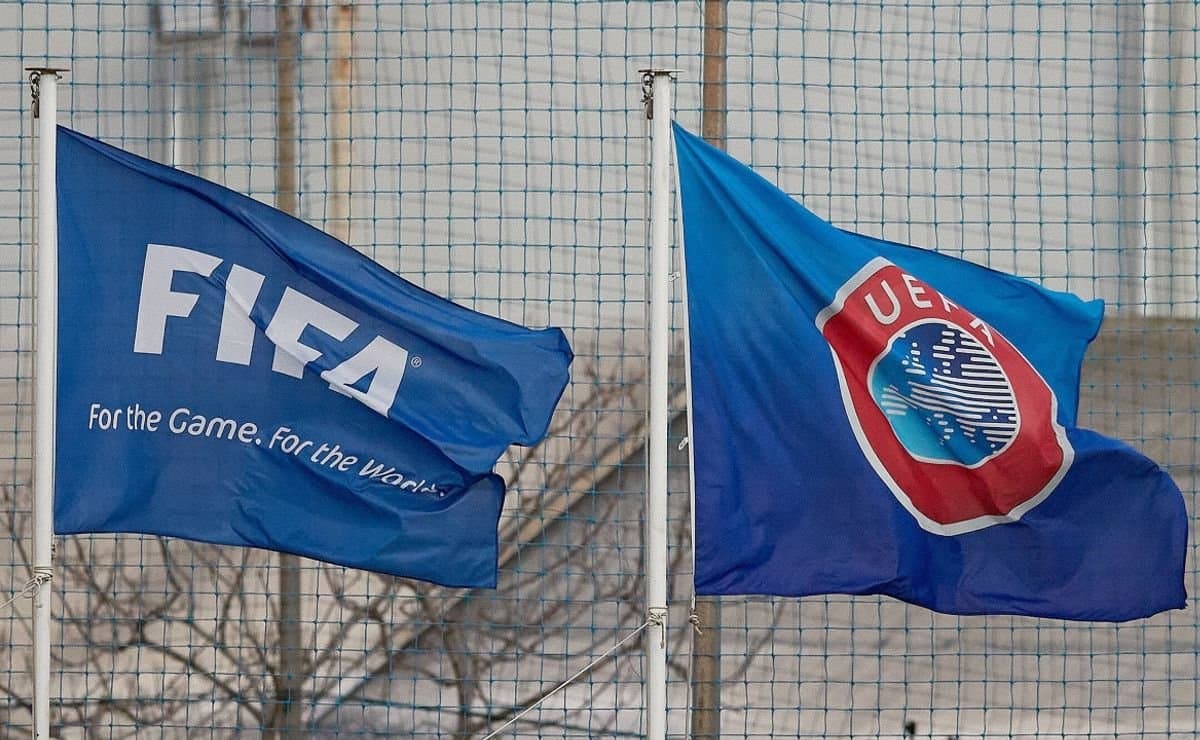
Football’s governing body FIFA has backtracked on its policy of banning fans from bringing reusable bottles into stadiums at the upcoming World Cup in North America, now allowing spectators to carry one transparent, empty, soft-plastic bottle of up to 590ml.
Previously, ticket holders were permitted to bring in a bottle of up to 1 litre. However, in a sharp U-turn earlier this week, FIFA announced that all reusable water bottles would be banned from stadiums due to safety concerns.
The updated policy, especially so close to the start of the tournament, sparked outrage online and drew criticism from fan groups and health organisations alike. Prime Minister Sir Keir Starmer also condemned the move, describing it as “wrong” and suggesting it was “about making money”.
Responding to the backlash, FIFA has now partly rescinded its heavy-handed policy, with a statement confirming: “All fans will be permitted to bring in one soft plastic, 20-ounce (590ml), factory-sealed disposable water bottle into any FIFA World Cup 2026 match in the USA and Canada.”
Why FIFA Introduced The Water Bottle Ban
On Tuesday 2nd June, a change in FIFA’s stadium code of conduct was reportedly put in place and publicly announced on Thursday, which prohibited fans from bringing any form of water bottle into stadiums. FIFA said the decision was made to “prevent risk and injury to players and attendees.”
Although not referenced, some have pointed to recent incidents in international football, including one in October when UAE fans threw plastic bottles and cups at police and players during their team’s defeat to Qatar in a World Cup qualifier in Doha.
The major concern behind the announcement was the expected extreme heat across several host cities, with temperatures forecast to reach around 26-28°C (79–82°F) in some venues.
The decision raised concerns among supporters and health experts about coping with conditions, with access to drinking water inside stadiums also an issue.
FIFA also said: “FIFA works closely with each host city committee and local authorities on heat mitigation factors for fans travelling to the stadium, which can include resources such as misting stations, fans, hydration stations, cooling tents and more around the stadium footprint.
“Inside the stadium footprint, pricing for water bottles for the FIFA World Cup 2026 will remain consistent with other events held at each stadium.”
Amid worldwide backlash, fan group The Free Lions England labelled the decision a “strange, late change” and “just the latest money-grab”, claiming that FIFA had previously vowed that fans would have free access to water and would be allowed to bring their own bottles.
FIFA's U-Turn Fails To Silence Critics
In reaction to the hysteria, FIFA World Cup 2026 chief operating officer Heimo Schirgi responded: "Each spectator can bring with them one 20 ounce (560ml) soft, plastic disposable factory-sealed water bottle into the stadium."
"What is not allowed are hard-sided resealable water containers, which could pose a safety and security risk."
Even with the amended policy, critics have continued to question FIFA’s handling of the situation, with fan groups warning of “serious health risks” in extreme heat, while others mocked the original decision, stating: "We hope the water fountains in stadiums will still be free, hopefully you aren't charged in the queue."
Comparatively, last summer at FIFA’s Club World Cup in the United States, fans were allowed to bring reusable plastic water bottles up to 1 litre into stadiums, while bottles inside venues were priced between $4 and $6.
Alongside wider concerns around the tournament - including steep ticket prices, player and fan welfare, and growing commercialisation - FIFA has faced accusations of prioritising revenue over supporter experience.
Speaking on the issue, Keir Starmer told LBC: "So you can't bring plastic bottles in, but you can buy a bottle of water when you get in the crowd? And then it'll be expensive.
"The ticket sales are too high. And this is the wrong policy. They're already spending a fortune getting there. They've got to pay a lot for tickets, too much in my book.
"Don't impose further costs on them."