Argentina arrived at the FIFA World Cup 2026 carrying the weight of history.
As defending champions, they were chasing something football had not seen since Brazil in 1962 - back-to-back World Cup titles. Lionel Messi was bidding farewell to the sport's biggest stage, while Lionel Scaloni's side hoped to cement their place among the greatest international teams ever assembled.
On paper, they came close.
La Albiceleste reached a second consecutive World Cup final, won six of their eight matches and once again demonstrated the resilience that had defined their golden era.
Yet when the tournament ended, conversation centred less on their football than on everything surrounding it.
Their increasingly physical approach divided opinion. Their disciplinary record prompted debate. Their conduct in defeat drew widespread criticism. Across Latin America, many neutral supporters found themselves cheering for Spain rather than the region's traditional powerhouse.
For a team that arrived in North America with the chance to strengthen one of football's greatest legacies, Argentina instead left behind one of the tournament's most complicated stories.
They may have finished as runners-up.
But by the final whistle, many believed they had lost far more than the World Cup.
How Argentina's Win-At-All-Costs Mentality Divided Opinion
Argentina have never apologised for doing whatever it takes to win.
Under Scaloni, their success has been built on far more than Lionel Messi's brilliance. Defensive organisation, relentless intensity and a willingness to disrupt opponents have been hallmarks of one of the most successful international sides of the modern era.
World Cup 2026 followed the same blueprint.
Cristian Romero, Rodrigo De Paul, Nicolas Tagliafico, Enzo Fernandez and Leandro Paredes regularly broke up attacks with tactical fouls, slowed the tempo whenever opponents gathered momentum and ensured matches were played on Argentina's terms.
It was an approach that had already delivered the Copa America, the Finalissima and the 2022 FIFA World Cup.
But while many admired Argentina's competitive edge, others increasingly questioned whether the balance had shifted too far.
As the tournament progressed, the conversation surrounding the defending champions became less about their football and more about the fine line between aggression and gamesmanship.
By the knockout stages, that debate was following Argentina almost as closely as their pursuit of another World Cup title.
The Statistics Behind Argentina's Physical Approach
The statistics offer an interesting insight into why Argentina's approach attracted so much scrutiny.
No team committed more fouls than the defending champions, finishing the tournament with 109 fouls across eight matches.
Among the tournament's five most physical teams, the numbers looked like this:
| Team | Fouls Committed | Times Fouled |
|---|---|---|
| Argentina | 109 | 100 |
| Spain | 97 | 89 |
| Switzerland | 81 | 89 |
| France | 80 | 73 |
| England | 76 | 116 |
England's figures stand out. While the Three Lions committed only 76 fouls themselves, they were fouled a tournament-high 116 times. Argentina, meanwhile, committed considerably more fouls than they suffered, suggesting many of the fouls they won came from relatively minor contact.
Despite leading the World Cup in fouls committed, Argentina received only 13 yellow cards and one red card.
The numbers do not prove officiating bias, but they explain why questions continued to follow La Albiceleste throughout the tournament. For many supporters, it wasn't simply how often they fouled; it was how often they escaped heavier punishment.
How Spain Exposed Argentina In The World Cup Final
For all their resilience throughout the tournament, Argentina simply could not impose themselves on the biggest game of all.
Spain dominated possession from the opening whistle, forcing Scaloni's side to spend long spells chasing shadows. The defending champions struggled to build attacks, resorting instead to breaking up play whenever Spain threatened to find a rhythm.
The frustration became increasingly obvious.
Enzo Fernandez's dismissal late in normal time after a reckless challenge on Pau Cubarsi summed up Argentina's afternoon. With Spain controlling both possession and territory, the holders were running out of answers.
The statistics reflected that imbalance.
Argentina failed to register a single shot during the 90 minutes of the final - the first team ever to do so in a men's FIFA World Cup final. Their first and only attempt arrived from Messi in the 117th minute, long after Ferran Torres had already put Spain ahead.
By then, the result felt inevitable.
The aggression that had helped Argentina navigate difficult moments throughout the tournament could not compensate for the simple fact that Spain were the better football team.
Why Argentina's Conduct After The Final Drew Criticism
Defeat alone would have hurt.
What followed ensured Argentina's final lasting image would not be of a team gracious in defeat.
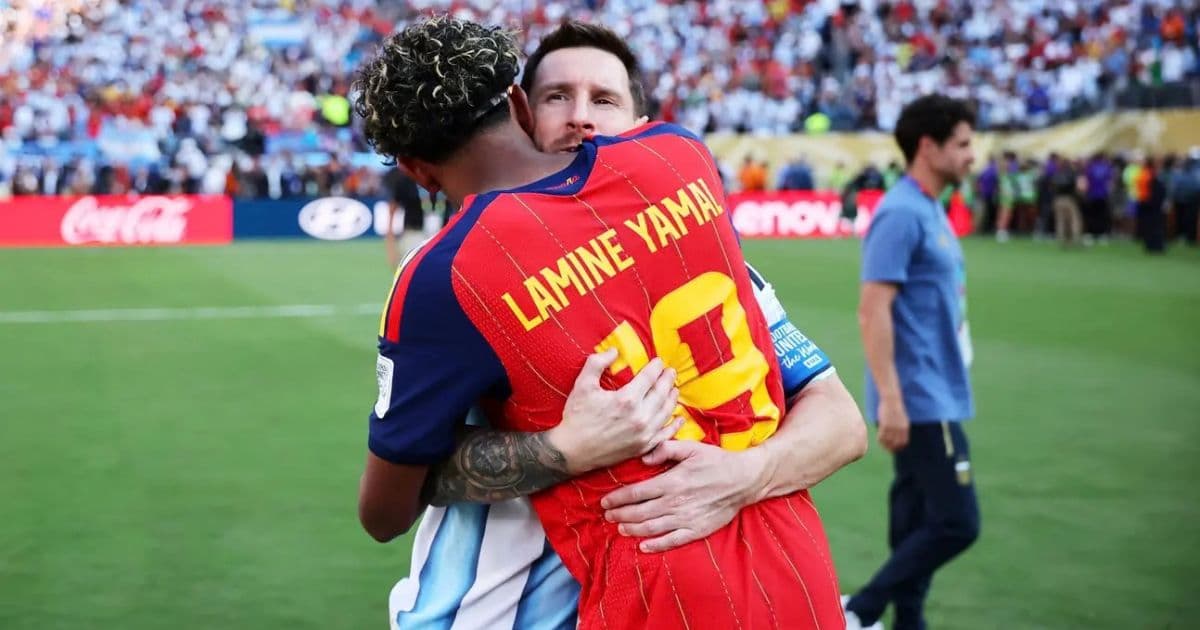
As La Roja celebrated becoming world champions, several Argentina players became involved in heated confrontations on the pitch. Tempers flared almost immediately after the final whistle, overshadowing what should have been Spain's moment.
The runners-up also declined to remain on the podium to applaud the newly crowned champions, instead walking away after collecting their silver medals. It stood in stark contrast to Spain, whose players had applauded Argentina moments earlier as they received their runners-up medals.
The scenes drew widespread criticism across football.
Losing a World Cup final is one of the sport's cruellest experiences, and emotions inevitably run high. But many felt Argentina crossed a line between understandable frustration and poor sportsmanship.
For a squad built around one of football's greatest-ever players, the final whistle did not simply mark the end of their title defence.
It marked the moment their conduct became as memorable as their football.
Why Many Neutral Fans Backed Spain
Traditionally, when one South American nation goes deep into the FIFA World Cup, much of the continent rallies behind them.
That wasn't the case in 2026.
Across Brazil, Mexico, Colombia and Chile, many neutrals openly backed Spain in the final. Social media was flooded with memes supporting La Roja, while several journalists and public figures questioned Argentina's conduct throughout the tournament rather than celebrating another Latin American finalist.
The reasons varied.
Some pointed to Argentina's increasingly combative style on the pitch. Others criticised repeated flashpoints involving players and supporters in recent years, arguing that the defending champions had developed an image that made them difficult to support as neutrals.
It marked a noticeable shift in perception.
Rather than representing South America against Europe, Argentina often found themselves cast as the tournament's antagonists. By the time the final arrived, much of the continent that might once have stood behind them was instead hoping Spain would bring their reign to an end.
For a nation with one of football's richest histories, it was an unusual position to occupy, and one that reflected how dramatically public opinion had shifted over the course of the tournament.
Can Argentina Restore Their Reputation?
Argentina will remain one of football's great nations.
A World Cup title in 2022, two Copa America triumphs and consecutive appearances in the 2026 final ensure that Scaloni's team will be remembered as one of the defining international sides of this era.
But tournaments shape reputations as much as they shape legacies.
For much of the past decade, Argentina were admired for their resilience and togetherness. In North America, however, those qualities were increasingly overshadowed by debates over their physicality, discipline and behaviour when matches turned against them.
That should not erase everything this generation has achieved.
Nor should it diminish Lionel Messi's extraordinary international career, which ends with one World Cup title, two Copa America trophies and a place among football's greatest players.
Yet when supporters look back on World Cup 2026, they are unlikely to remember La Albiceleste for the quality of their football alone.
Instead, many will remember a team that spent too much time arguing, fouling and losing control when the pressure reached its highest point.
For the defending champions, that may prove to be the tournament's most enduring legacy.
How World Cup 2026 Changed Argentina's Legacy
Argentina reached another World Cup final, but the memories of their 2026 campaign will extend beyond Messi's farewell.
Questions about their conduct followed them throughout the knockout rounds and intensified after the final whistle in New Jersey.
By the end of the tournament, the last nine cards shown at the 2026 FIFA World Cup had all been issued to Argentina players - three against England in the semi-final and six against Spain in the final. It was a fitting illustration of how quickly frustration replaced composure as the tournament slipped away.
Their performance in the final also extended an unwanted record. Argentina have now failed to register a shot on target in three different World Cup finals; against West Germany in 1990, Germany in 2014 and Spain in 2026. For a nation defined by attacking icons from Diego Maradona to Lionel Messi, it is an extraordinary statistic.
None of this erases what Argentina achieved. Reaching consecutive World Cup finals is an accomplishment few nations manage, and Messi's international career remains one of the greatest football has ever witnessed.
But World Cup 2026 also served as a reminder that success alone does not shape how teams are remembered.
Spain will be remembered for their control, composure and historic defensive record.
Argentina, rightly or wrongly, leave the tournament with a far more complicated legacy.