While everyone’s eyes across the globe were fixated on what was going on in the United States in June and July during the recently-concluded FIFA World Cup, creative agency ATB Europe took a very different tour.
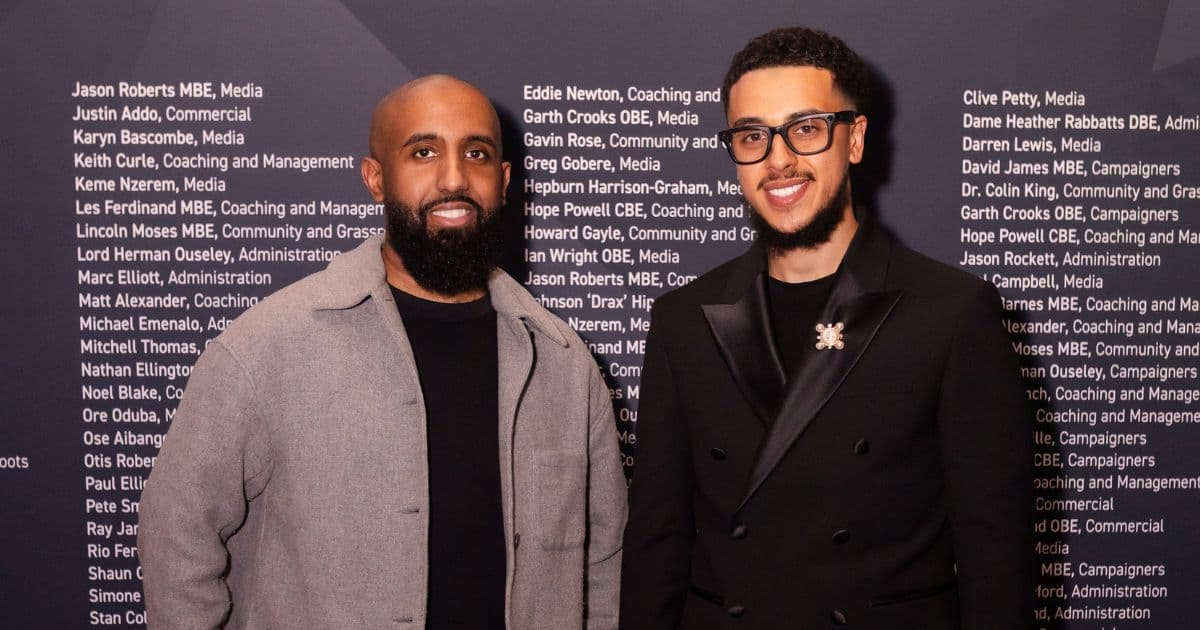
Co-founders Adam Tazi and Saeed Yaslem packed their bags and headed straight to Morocco, a fast-rising footballing nation. What was originally intended as an exploratory trip evolved into a two-month deep dive into the heartbeat of North African football, laying the foundation for their latest initiative, ATB Africa.
Speaking exclusively to Striver.Football, co-founders Adam Tazi and Saeed Yaslem explained why Africa has become the agency's next major focus and how ATB Africa aims to connect global brands with the continent's football culture.
Having built a formidable reputation in Europe by crafting authentic, culturally aligned digital marketing and talent campaigns for major brands like Nike, Adidas, New Balance, and Sports Direct, ATB is now turning its lens toward a continent long overlooked by global sportswear strategy.
Read More: FIFA Plans to Sell World Cup? The Pros and Cons of Gianni Infantino’s Latest Proposal
Why Morocco Became The Starting Point For ATB Africa
During their time in Morocco, ATB have encountered an environment where the people have a pure passion for the game, compared to Europe, where every element of the sport has become commercialised, including the youth setups.
"In the Western world, everything has become very organised and transactional by the age of 14 or 15," explains Saeed Yaslem, who is half-East African.
"In Morocco, you take a five-minute walk through a neighborhood or along the beach, and you see mind-blowing skill and raw talent. People play out of pure love for the game. Talent in Africa is never the issue—visibility and access are."
Morocco’s meteoric rise on the pitch, from ranking 82nd in the world back in 2014 to reaching a historic World Cup semi-final in 2022 and soaring to a record 6th place in rankings in 2026 has been remarkable.
Since King Mohammed VI’s bold move to make football a national priority, they have become the point of reference in Africa. They are now hosting tournaments regularly, including the ongoing WAFCON 2026 tournament, as well as the 2025 AFCON, and are now preparing to co-host the 2030 FIFA World Cup.
They have solidified their status as the sporting gateway to Africa. Yet, according to ATB, the grassroots reality reveals stark structural disconnects.
The Sponsorship Gap Holding Back Moroccan Footballers
During their stay, ATB documented moments that highlight both the extreme resilience of African footballers and the systemic lack of grassroots support.
While hosting an impromptu, unpromoted 3v3 street football tournament on a mountain pitch in Safi, which attracted over 100 local players and 20 teams within hours, the team witnessed elite talent playing in conditions that would shock Western academy players.
"We had top ballers turn up without a proper kit. One player’s boot was completely split open, separated from the sole, and held together entirely with duct tape on both feet," recalls Saeed. "Yet he played with incredible quality. Zero excuses."
The issue extends to the highest levels of the domestic game. During an on-camera interview with a reserve goalkeeper for Moroccan powerhouse Raja CA, ATB uncovered a reality unheard of in European football: "An average player in Morocco has to figure out how to source basic gear just to play, before they can even think about performance," says Adam Tazi, himself of Moroccan descent.
"The overwhelming majority of professional players in the domestic league do not even have individual boot deals. In England, a 13-year-old academy kid gets three pairs of boots sent to them. Out here, top-flight professionals are buying their own boots out of pocket."
Indeed, even Hakim Ziyech, who spent the 2025-2026 season at Wydad Casablanca, no longer has a boot sponsor.
Ziyech won the 2020-2021 UEFA Champions League with Chelsea and was a Ballon d’Or nominee in 2019 having played a key role in helping that famous Erik ten Hag-coached Ajax side reach the semi-finals of Europe’s elite competition.

Why European Brands Still Undervalue African Football
Before the 2025 AFCON, ATB actually pitched ideas to European brands on how to maximise the continent’s visibility during the tournament, but they were blatantly shut down.
AFCON itself has famously been disregarded by some of the game’s most influential figures. Liverpool legends Jurgen Klopp and Jamie Carragher have both dismissed it as a “small tournament” in the past, earning backlash in the process, and according to Tazi, brands also have a similar perception.
"We spent months pitching non-stop to brand departments across Europe," Tazi reveals. "The responses were shockingly brutal. 'We don't care about AFCON; our main audience is Europe, and there’s no return on investment (ROI).' But when you look at the broadcast viewership, the sold-out elite product drops in Casablanca stores, and the cultural passion—the stats prove otherwise."
According to Saeed, even when European brands enter the African market, they tend to view the continent as a charitable corporate social responsibility (CSR) cause rather than a profitable one.
"They approach Africa with a 'CSR' mindset—doing a couple of one-off activations without lasting infrastructure or ROI expectations," Saeed argues.
"Africa is treated as an afterthought due to laziness or lack of education. But the world's attention is turning. Look at Cape Verde's rise (dream World Cup run), Morocco's global runs, and top players prioritizing their motherlands. Brands need to invest now rather than jumping on the bandwagon five years down the line."
How ATB Africa Plans To Change The Narrative
Rather than waiting for corporate giants to change their strategy, ATB Africa is building localised bridges directly with regional talent, filmmakers, and content creators.
From bringing grassroot tournament winners from Safi to Casablanca for Nike-backed community events, to partnering with high-reach African creators (including Nigerian digital figures boasting 14+ million followers), ATB aims to keep the production ecosystem local and sustainable.
"We aren't coming in with a savior complex to say we're changing everything," Saeed concludes.
"Our goal is visibility and respect. We want to tell authentic stories, who these players are, what they endure, and give them the platform they deserve. If we can shift how the world views African football and creative culture, even in a small way, that is something to be immensely proud of."
With Morocco now bracing itself to host more major continental and international tournaments over the next decade, the footballing world can no longer afford to treat Africa as a passive talent exporter.
Through ATB Africa, Adam Tazi and Saeed Yaslem are demonstrating that when local authenticity meets global strategy, the potential for African football culture is limitless.