
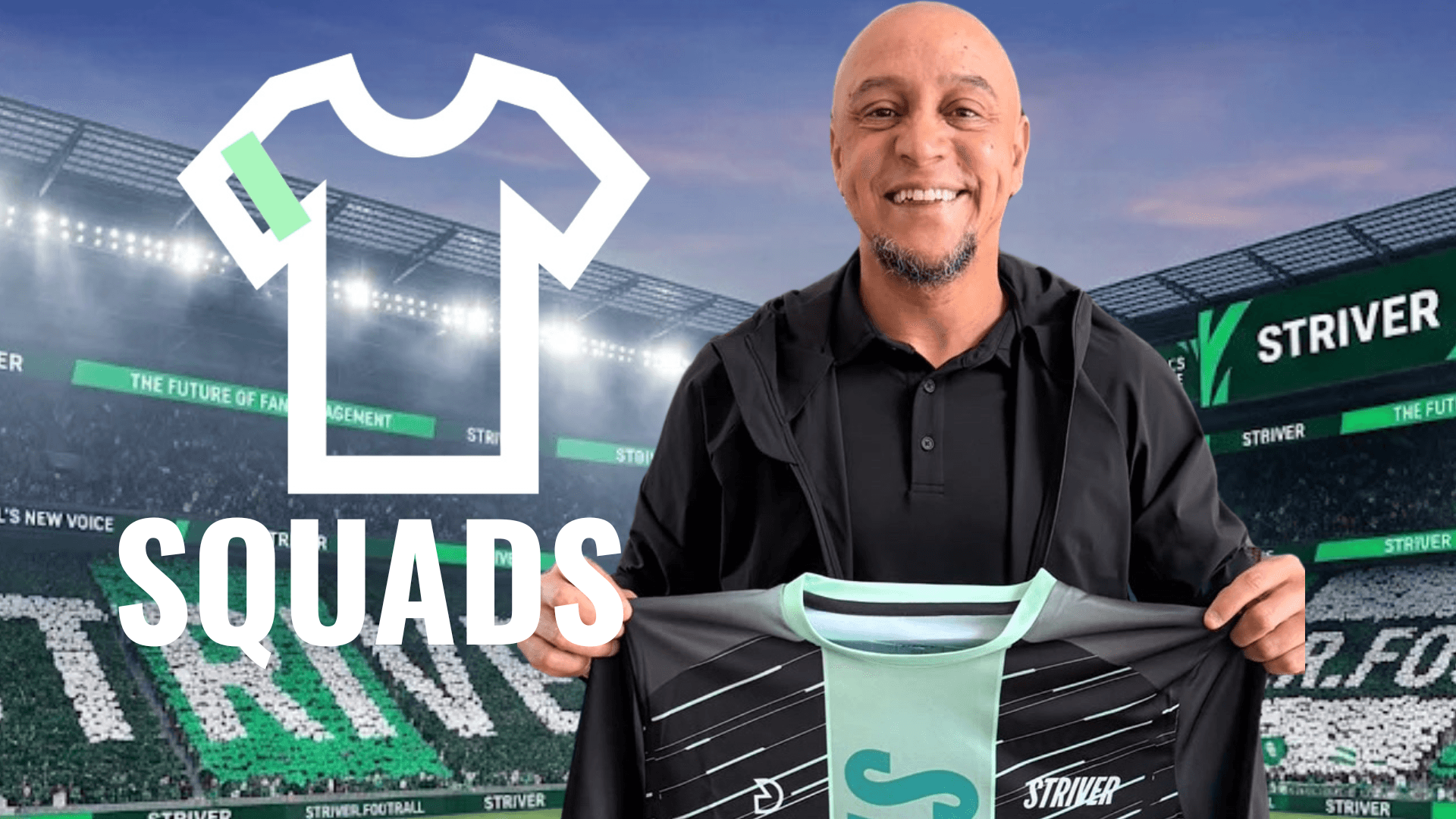
Striver has launched Mentor Squads, a new free feature designed to give young footballers direct access to advice and experiences from some of the biggest names in the game.
The platform brings together footballing legends including World Cup winners Gilberto Silva and Roberto Carlos, former Arsenal striker Jérémie Aliadière, alongside sports psychologists and nutritionists, creating a space where players can ask questions, share experiences and learn about the realities of pursuing a career in football.
But Mentor Squads is about more than improving a player's technique.
Speaking about the launch, Striver founder Tim Chase was keen to emphasise the importance of helping young players understand the mental side of the game — something he believes can ultimately determine whether a talented footballer makes it or doesn't.
Learning from Those who have Been There
One of the most powerful aspects of Mentor Squads is the opportunity for young players to hear directly from people who have experienced those challenges themselves.
Mentor Squads is designed to give young players access to those stories — and, importantly, the lessons that came with them.
Tim said: “Everyone starts at the same place, but where they end up is very different. Every single footballer I've ever met who has played professionally will tell you it's all mental.”
That philosophy sits at the heart of Mentor Squads.
For every player who eventually makes it to the professional game, thousands of others with similar levels of talent don't. They might suffer an injury, lose confidence, struggle with rejection or simply find themselves unable to deal with the pressure that comes with trying to make it.
Gilberto Silva's own journey is a perfect example.
Today, he is remembered as a World Cup winner, Premier League champion, Invincible and one of the most respected midfielders of his generation. But his path to the top was far from straightforward.
As a teenager in Brazil, Gilberto was forced to step away from football and work in a factory packing sweets to help support his family.
When his mother recovered from illness, he decided to give football one final chance at the age of 19.
He didn't have elite facilities, expensive equipment or a team of coaches around him. Instead, he prepared himself alone for a month, knowing that when his opportunity arrived, he had to be ready.
"I had to do preparation for a month alone," Gilberto remembered. I didn't have trainers or the best football boots, but when I get there I need to be in a good physical condition, otherwise they won't take me."
It is the sort of story that can easily be forgotten when looking back at a player's career.
The trophies are remembered. The big matches are remembered. The setbacks that came before them often aren't.
“It's great being talented, but there are so many talented kids that don't make it. It's the mental aspect—how you overcome adversity—that makes the difference."
Helping Players Cut Through the Noise
The challenges facing young footballers have also changed a lot in this modern era of the game.
For today's academy players, football doesn't stop when they leave the training ground.
Social media means they are constantly surrounded by highlight reels, statistics, opinions and comparisons with other young players. There is pressure not only to perform but to be seen performing.
Real Madrid legend Roberto Carlos believes that can make it harder for young athletes to stay focused on what actually matters.
"When I was young, we only thought about studying and playing football," he explained. "Nowadays there are many social networks."
The Legendary full-back believes that what happens off the pitch can be as important as what you show on it.
Mentor Squads aims to provide a different environment — one where young players can concentrate on learning, asking questions and developing both as footballers and people.
The Challenges of Youth Football
Then there is the side of football that young players don't necessarily see coming: the business.
For academy players and their families, decisions around contracts, agents, trials and potential transfers can become incredibly complicated at a very young age.
Jérémie Aliadière experienced that pressure first-hand.
The former Arsenal striker attracted interest from major European clubs as a youngster in France, meaning his family suddenly had to navigate decisions that could have a significant impact on his future.
Aliadière remembers being told by people around him not to sign anything too early because the situation could change and a better opportunity could potentially come along.
"Do not sign anything before the end because so much can happen and you could have got a lot more," he remembers being told.
It is a reminder that making it in football isn't simply about what happens for 90 minutes on a Saturday.
Young players can find themselves dealing with enormous decisions while still trying to understand the game themselves.
Having someone who has already been through those experiences can provide a valuable sounding board.
Mentor Squads allows players and parents to learn from people who have already navigated those situations, whether that means dealing with contracts, recovering from a long-term injury or handling the disappointment of being left out of a team.
Giving the Community what they Wanted
Mentor Squads wasn't originally part of Striver's plans.
The idea came directly from the platform's users.
During a recent feedback session, members told Striver that they wanted smaller communities where they could ask questions, share videos and have open conversations without the negativity and abuse that can sometimes dominate online football discussions.
"Six months ago, we hadn't even considered building squads," Chase admitted.
But the feedback changed the our thinking.
"They said they wanted to be part of smaller groups with like-minded people where conversations could feel safer," he explained. "We are standing behind our promise to build products for the fans."
That community element could ultimately prove to be one of the most important parts of Mentor Squads.
Football can be a lonely journey for young players. They are competing for places, dealing with setbacks and constantly questioning whether they are good enough.
Having somewhere to ask a question or hear from somebody who has experienced the same situation can make that journey feel a little less isolating.
More than Being a Professional
Mentor Squads isn't promising to turn every young player into the next Gilberto Silva or Roberto Carlos.
The reality is that most young footballers will never become professionals. But that doesn't mean the lessons they learn through football aren't valuable.
A grassroots player might simply want to improve their free-kicks. An academy prospect might be trying to earn a scholarship. Another player might be recovering from an injury and struggling with confidence.
Their ambitions might be completely different, but the challenges they face can be remarkably similar.
Through short, bite-sized videos, Mentor Squads gives players access to advice from experienced footballers, psychologists and nutritionists all for free.
For Chase, the underlying principle is simple: everyone should have something to contribute.
"Everyone is treated equally on our platform," he said. "Whether you've won three Champions Leagues or Most Improved Player in 1988, everyone's voice is valid, and we can all learn from each other."
Football has always focused on the finished product — the trophies, the goals, the contracts and the players standing underneath the floodlights.
But the journey to get there is rarely so straightforward.
There are setbacks, injuries, rejection, doubt and difficult decisions along the way.
Mentor Squads is an attempt to shine a light on that side of the game.
Because while talent might get you noticed, knowing how to deal with everything that comes afterwards could be what keeps you moving forward. And most values from football can be applied to any aspect in life so there is something for everyone.