
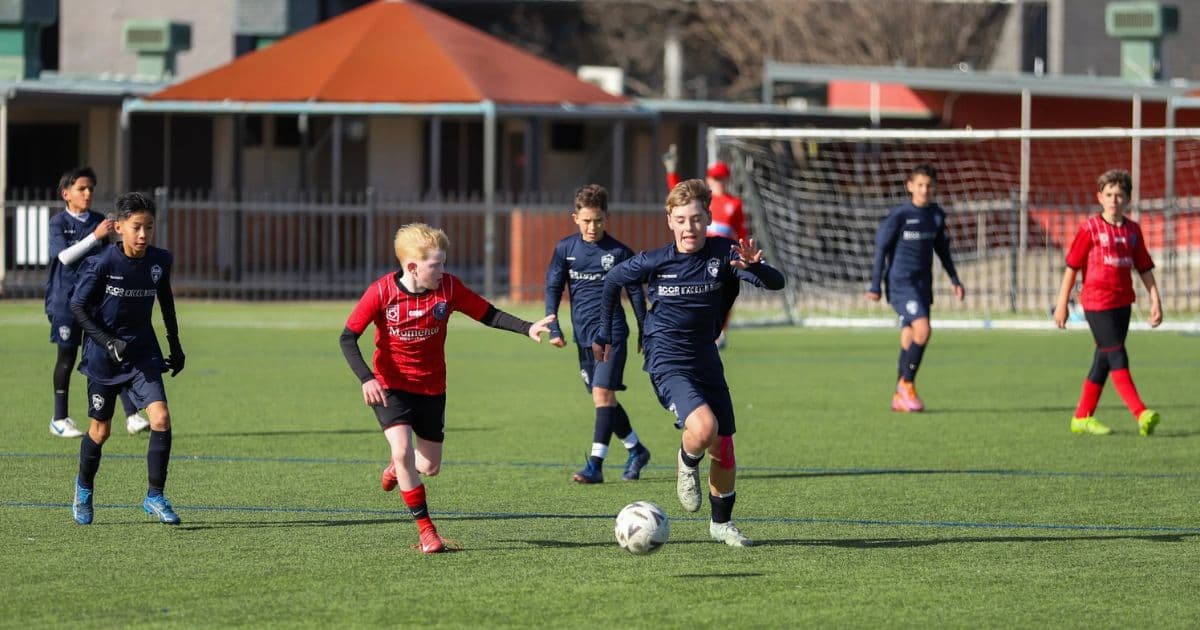
Every July, thousands of young footballers descend on Australia's capital with one shared ambition—to compete, improve and create memories that will last a lifetime.
From 13-17 July, the Kanga Cup returns to Canberra for another edition of what has become Australia's largest international youth football tournament. But while trophies will undoubtedly be lifted by the end of the week, the real success of the competition stretches far beyond the final scorelines.
For many players, the Kanga Cup represents something much bigger than football.
Why The Kanga Cup Is More Than Just A Tournament
Since its inception in 1991, the Kanga Cup has grown into one of the Southern Hemisphere's premier youth football events.
Each year, teams from across Australia and around the world travel to Canberra to compete in hundreds of matches across multiple age groups. The scale of the tournament is impressive, but its greatest strength lies in the experiences it creates.
For many young players, it's their first opportunity to travel with teammates, experience tournament football and test themselves against unfamiliar opposition.
It's football in its purest form, five days of learning, competing and enjoying the game.
How Tournament Football Accelerates Player Development
One of the biggest benefits of tournaments like the Kanga Cup is the opportunity to play multiple competitive matches in a short space of time.
Players are constantly adapting.
One day they may face a possession-based side. The next, a team that presses aggressively or relies on physicality and pace.
That variety accelerates development.
Instead of spending weeks preparing for a single opponent, young footballers must think quickly, solve problems and make decisions under pressure—valuable experiences that simply can't be replicated in training.
Every match becomes another lesson.
Developing Confidence Beyond Football
Football development isn't only about technical ability.
Events like the Kanga Cup also help young people grow as individuals.
Travelling with teammates, staying away from home, supporting one another through wins and losses and representing their club all contribute to personal development.
Confidence grows.
Communication improves.
Friendships become stronger.
For many players, these are the moments they remember most long after the medals have been put away.
How Football Connects Communities And Cultures
One of the defining features of the Kanga Cup is its international flavour.
Teams from different regions, cultures and countries come together through a shared love of football, creating friendships that often continue well beyond the tournament.
While languages, backgrounds and playing styles may differ, football provides a universal connection.
That cultural exchange is one of youth sport's greatest strengths.
It reminds players that football isn't just about competition, it's about community.
The Experiences Young Players Never Forget
Ask any player who has attended a major youth tournament, and they'll often remember the moments away from the pitch just as vividly as those on it.
The team dinners.
The long bus journeys.
Supporting teammates after difficult defeats.
Celebrating hard-earned victories together.
Those shared experiences help shape young people just as much as the football itself.
Whether a team lifts a trophy or not, every player leaves having gained something valuable.
Why The Kanga Cup Matters For The Future Of Youth Football
At Striver.Football, we believe youth football is about more than producing elite players.
It's about creating environments where children can challenge themselves, build confidence and develop a lifelong love of the game.
The Kanga Cup does exactly that.
Yes, there will be goals, saves and dramatic matches throughout the week.
But perhaps the tournament's greatest achievement is giving thousands of young footballers the opportunity to experience everything that makes the game special—teamwork, resilience, friendship and joy.
Because long after the final whistle blows in Canberra, those lessons will travel home with every player.