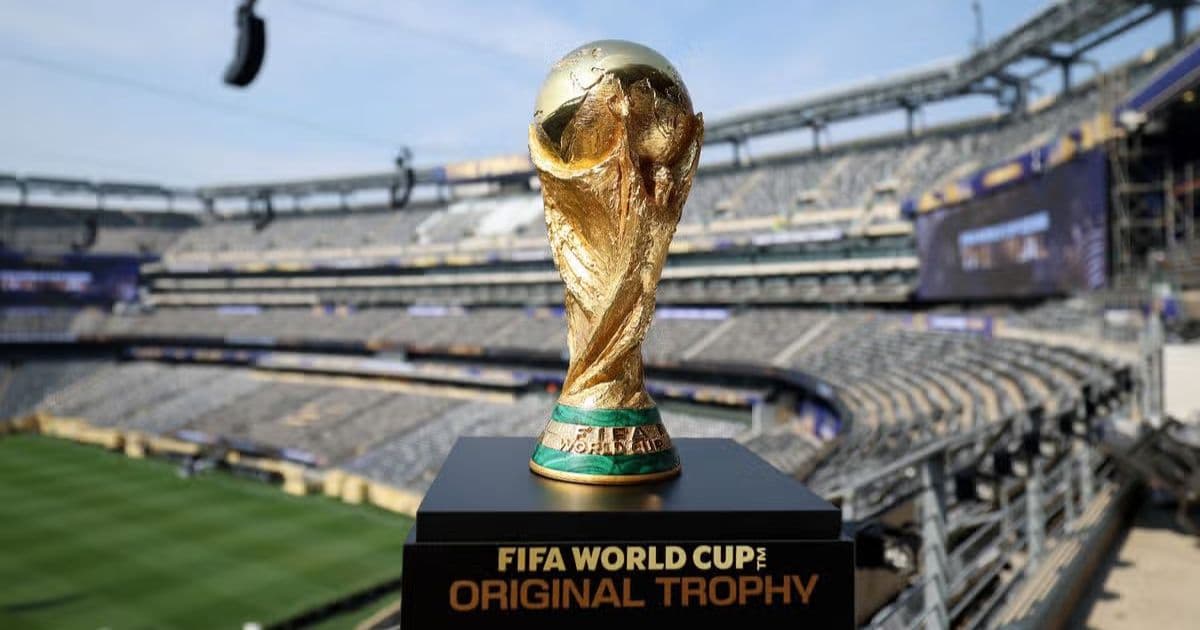
After three unforgettable weeks, the FIFA World Cup 2026 has its final 32. From record-breaking goals to unforgettable underdogs and last-gasp drama, the expanded tournament has already produced a group stage to remember.
How the FIFA World Cup 2026 Group Stage Delivered
There was curiosity before the tournament began. A 48-team FIFA World Cup promised more matches, more nations and more opportunities, but it also raised questions. Would there be too many one-sided games? Would qualification become too easy? Would the group stage lose its edge?
Three weeks later, those doubts have largely been replaced by excitement.
The first phase of the FIFA World Cup 2026 produced goals, shocks, breakout stars and one of the most dramatic qualification finales in recent memory.
Established powers underlined their credentials, emerging nations announced themselves on the biggest stage, while the expanded format ensured more teams remained in contention until the very end.
The final twist came on Saturday night.
Austria and Algeria appeared destined to play out a draw that would send them both through. Instead, stoppage time produced two goals and complete chaos.
Algeria struck first to make it 3-2, a result that would have sent Iran into the Round of 32. Moments later, Sasa Kalajdzic rescued Austria with a dramatic equaliser to make it 3-3, ensuring both Austria and Algeria advanced while Iran were eliminated in heartbreaking fashion.
It was a fitting conclusion to a group stage that rarely stopped delivering.
The Biggest Stories From the FIFA World Cup 2026 Group Stage
There were standout performances across the tournament. Argentina, France and co-hosts Mexico all completed perfect group-stage campaigns, with Mexico also finishing the opening phase without conceding a single goal.
Brazil, Spain, England, Germany, the Netherlands and Colombia all progressed comfortably, while Portugal, despite finishing second behind Colombia in Group K, remain among the contenders heading into the knockout rounds.
The tournament has also belonged to football's biggest names.
Lionel Messi once again reminded the world why he remains one of the greatest players of all time, while Kylian Mbappe, Erling Haaland, Vinicius Junior and Ousmane Dembele all produced moments worthy of the World Cup stage.
Teenage sensation Lamine Yamal continued his remarkable rise with Spain, further strengthening his reputation as one of football's brightest young talents.
Goals have flowed throughout the competition.
Goals have been one of the defining features of the FIFA World Cup 2026 group stage. A total of 215 goals were scored across the 72 matches, an average of 2.99 goals per game; the highest group-stage scoring rate at a World Cup since 1958.
The tournament has also witnessed three hat-tricks, the most in a World Cup since 1986. Lionel Messi opened the account with a superb treble against Algeria before Jonathan David starred for Canada and Ousmane Dembele added his name to the list with a clinical three-goal performance for France.
The race for the Golden Boot is also beginning to take shape. Messi heads into the knockout rounds among the leading scorers with six, while Vinicius Jr, Dembele, Haaland and Mbappe have all enjoyed prolific starts to the tournament with four goals each. With the knockout stage still to come, the battle to finish as the competition's top scorer remains wide open.
The combination of attacking intent, expanded opportunities and the quality of the game's biggest stars has made this one of the most entertaining opening phases in recent World Cup history.
Yet statistics alone do not define this World Cup.
African football too enjoyed a historic group stage, with nine of its ten representatives progressing to the Round of 32.
Only Tunisia failed to qualify, underlining the growing strength and depth of the continent at the highest level. Morocco continued their momentum from Qatar 2022, Senegal qualified again, while DR Congo, Algeria, Egypt, Ivory Coast, Cabo Verde and South Africa all kept African hopes alive.
Cabo Verde have become one of the stories of the tournament. Appearing at their first FIFA World Cup, the island nation not only avoided defeat during the group stage but secured a remarkable place in the Round of 32, where they will now face defending champions Argentina.
Norway ended a 28-year wait to reach the World Cup knockout rounds, while DR Congo, Bosnia & Herzegovina and South Africa all celebrated qualification campaigns that few predicted before the tournament began.
The group stage has also showcased the increasingly global nature of modern football, with nations from every confederation producing memorable performances and ensuring that very few matches felt routine.
Read More: Why More Than 290 World Cup 2026 Players Represent a Country Different From Where They Were Born
Qualified Teams from Each Group
| Group A | Group B | Group C | Group D | Group E | Group F | Group G | Group H | Group I | Group J | Group K | Group L |
|---|---|---|---|---|---|---|---|---|---|---|---|
| Mexico | Switzerland | Brazil | United States of America | Germany | Netherlands | Belgium | Spain | France | Argentina | Colombia | England |
| South Africa | Canada | Morocco | Australia | Ivory Coast | Japan | Egypt | Cabo Verde | Norway | Austria | Portugal | Croatia |
| Bosnia | Paraguay | Ecuador | Sweden | Senegal | Algeria | DR Congo | Ghana |
Every FIFA World Cup 2026 Round of 32 Fixture
Sunday, June 28
South Africa vs Canada
Monday, June 29
Brazil vs Japan
Germany vs Paraguay
Netherlands vs Morocco
Tuesday, June 30
Ivory Coast vs Norway
France vs Sweden
Mexico vs Ecuador
Wednesday, July 1
England vs DR Congo
Belgium vs Senegal
United States vs Bosnia & Herzegovina
Thursday, July 2
Spain vs Austria
Portugal vs Croatia
Switzerland vs Algeria
Friday, July 3
Australia vs Egypt
Argentina vs Cabo Verde
Colombia vs Ghana
Why Everything Changes in the Knockout Stage
The beauty of the World Cup is that everything achieved over the past three weeks now guarantees nothing.
Perfect group-stage records, Golden Boot races and impressive defensive statistics count for little once the knockout rounds begin. Every match is now a winner-takes-all contest, where one mistake can end years of preparation and one moment of brilliance can become part of football history.
If the group stage has been any indication, the FIFA World Cup 2026 is only just getting started.