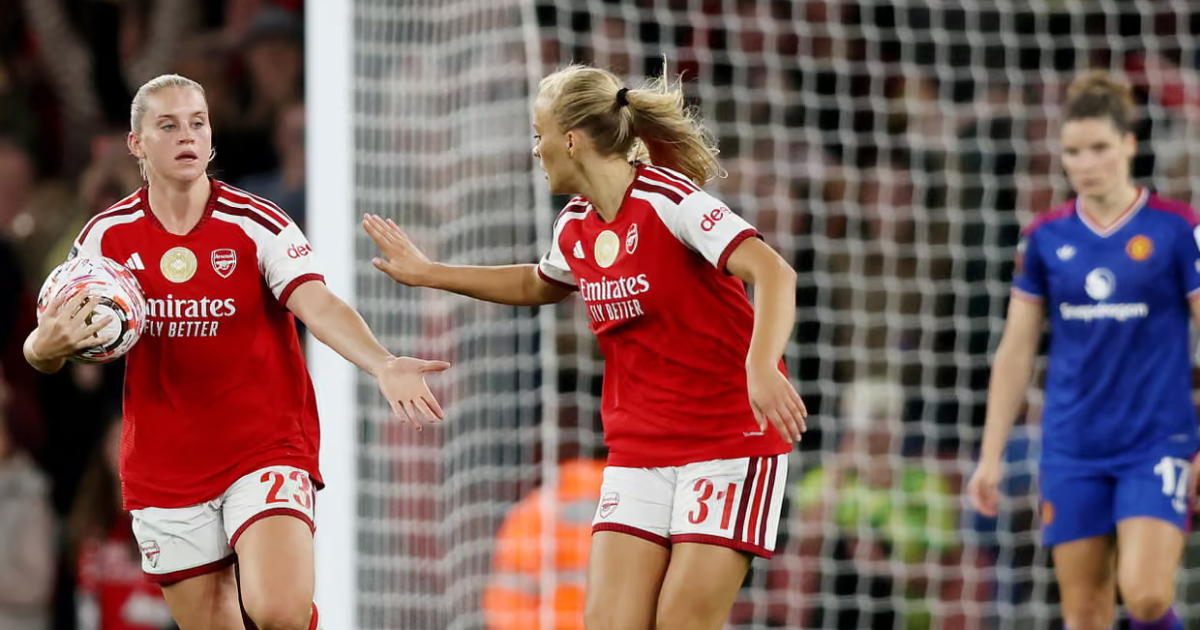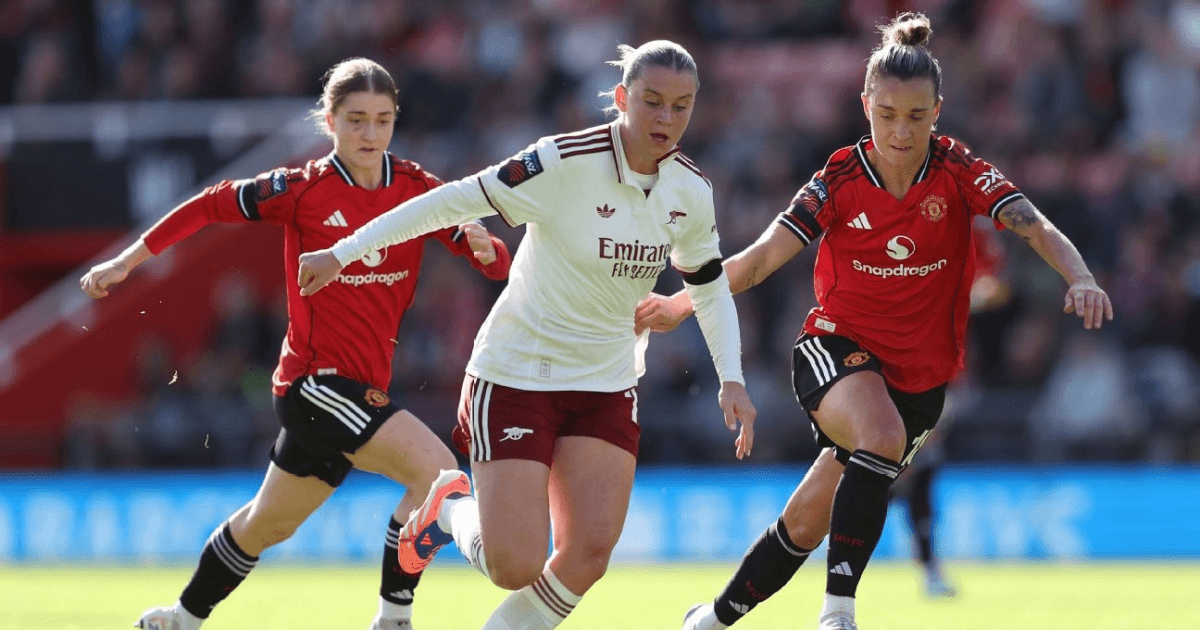
Manchester United are one of the biggest names in world football.
That brings expectation.
But does it also mean their women's team is judged by a different standard?
United have once again found themselves at the centre of scrutiny after Marc Skinner's departure, with questions over investment, recruitment, facilities and the club's wider ambition for the women's side.
Skinner's exit came just weeks before the start of the new WSL season, with the club subsequently appointing former Hearts boss Eva Olid.
The questions surrounding United are not new.
Since the women's team was relaunched as a professional outfit in 2018, expectations have been high. The club's name, history and global profile inevitably create an expectation that the women's side should be competing with England's elite.
Yet eight years on, United have won just one major trophy and finished fourth in the WSL last season.
That inevitably leads to questions.
But are those questions fair?
Why Manchester United Women Face Greater Expectations
There is an obvious difference between being a major club and being expected to operate like one.
Manchester United's women's team may be relatively young compared with some of their WSL rivals, but the badge carries enormous weight.
Chelsea, Arsenal and Manchester City have established themselves as regular contenders at the top of the women's game, while United have struggled to consistently close that gap.
Skinner's five-year tenure did bring significant progress.
United reached three consecutive FA Cup finals, won their first major trophy in 2024 and reached the Champions League quarter-finals on their first appearance in the competition.
Yet those achievements were often accompanied by questions over whether the club was doing enough to support the team.
Reports of limited investment in squad depth and facilities have repeatedly put United under the microscope, while the departures of high-profile players have added to the frustration.
That scrutiny is understandable.
But United are far from the only WSL club to face it.
Why United Aren't The Only WSL Club Under Pressure
West Ham have faced repeated criticism over investment and infrastructure.
Liverpool's women's team have experienced intense scrutiny despite being one of the league's historic powerhouses, including criticism over facilities and pitch conditions.
Tottenham have spent recent years trying to establish themselves among the WSL's stronger sides after their promotion to the top flight.
Even Chelsea, the dominant force of the modern WSL, have faced criticism over decisions surrounding stadium use and squad depth.
The difference is that Manchester United's profile makes every issue louder.
A quiet transfer window at a smaller club may be viewed as a lack of ambition.
At Manchester United, it becomes a statement about the club's commitment to women's football.
A star player leaving becomes more than a transfer.
A facility issue becomes a question about priorities.
And a managerial departure becomes part of a much bigger conversation about direction.
Is Manchester United's Investment Matching Its Ambition?
The most important issue isn't necessarily whether United should be judged more harshly.
It's whether the club's ambition matches the expectations created by its name.
That question has become even more relevant following Skinner's departure.
Reports surrounding his exit pointed towards concerns over investment, squad depth and a change in direction, with United now placing greater emphasis on developing young players rather than competing in expensive transfer battles.
That strategy isn't necessarily a bad one.
In fact, United's new manager, Eva Olid, has been appointed partly because of her record of developing young players. She arrives after leading Hearts to their first SWPL title and has spoken about the talent already within the United squad.
But development takes time.
And that creates an interesting tension.
United want to develop young players.
Their supporters want to see progress.
And the Manchester United name creates an expectation of competing for trophies.
Those three things don't always align immediately.
What Should Success Look Like Under Eva Olid?
Perhaps the better question isn't whether Manchester United should be judged differently.
It is whether they should be judged against the ambition they themselves set.
There is nothing wrong with demanding more from one of the world's biggest football clubs.
In fact, increased expectations can be a positive thing for women's football.
The danger comes when the conversation becomes solely about trophies rather than the structures required to win them.
United need the right recruitment strategy, player development pathway, coaching structure and facilities.
They need to retain their best players.
And they need a clear identity that supporters can understand.
Olid now has the opportunity to help establish that.
Her appointment represents a change in direction, with United explicitly highlighting her track record in developing young and homegrown talent.
Whether that approach can eventually close the gap to Chelsea, Arsenal and Manchester City remains to be seen.
So, Are Manchester United Judged Differently?
Yes, but perhaps that isn't necessarily unfair.
Manchester United are judged differently because they are Manchester United.
Their history creates expectations that smaller clubs simply don't face.
But scrutiny should not be confused with unfairness.
If United want their women's team to be considered among the biggest and best in the WSL, then the expectation should be that the club provides the investment, infrastructure and long-term strategy required to get there.
The new era under Eva Olid offers a chance to reset the conversation.
The question now isn't simply whether United can win more trophies.
It's whether they can build a women's team capable of matching the ambition of the badge.