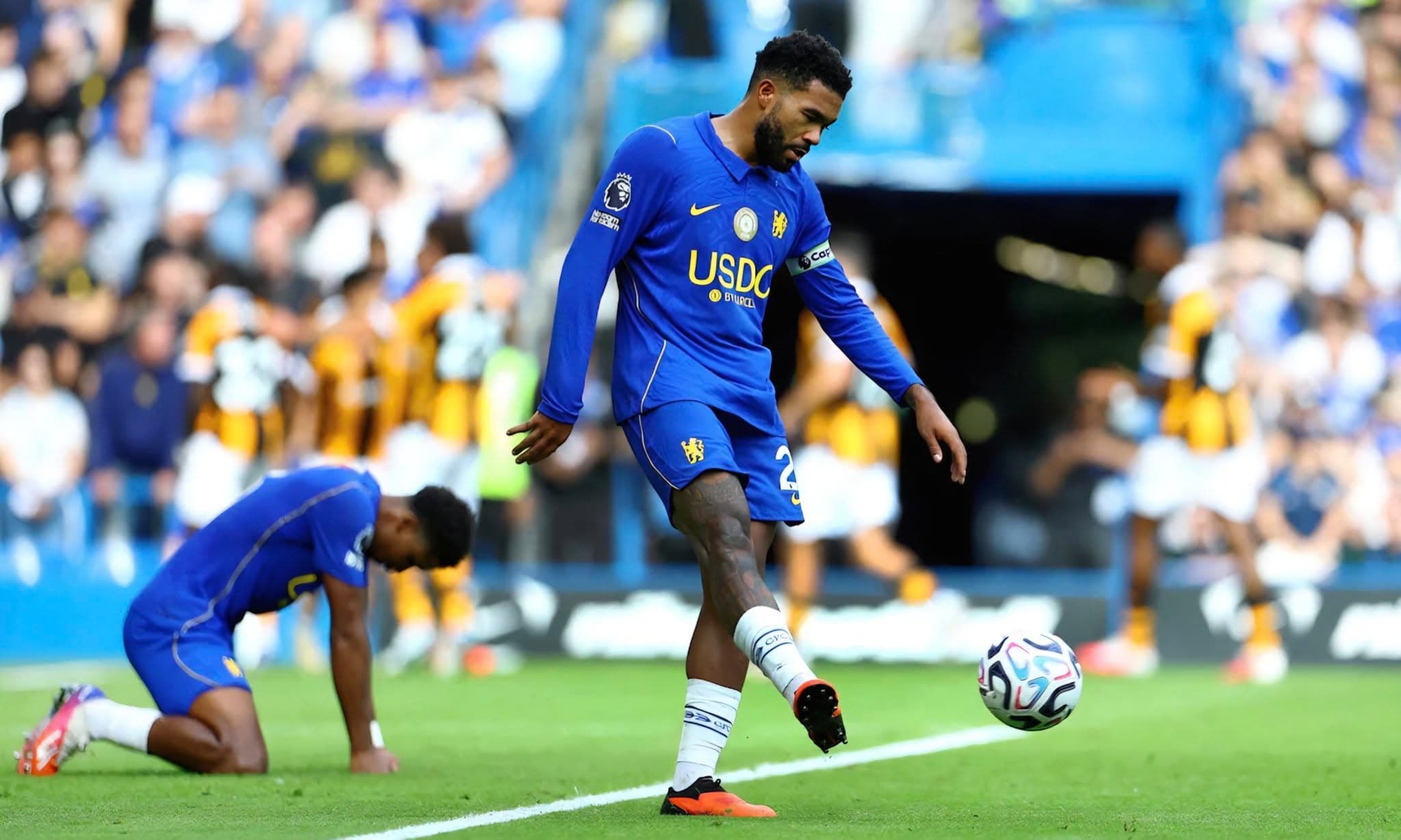

When a football legend like Graeme Souness speaks, the football world listens.
But his recent critique of Arsenal’s Declan Rice, labeling him a "center-half playing in midfield" who “wouldn't start” for Europe's elite clubs is both right and wrong considering what a typical midfielder is expexted to have in his locker and how tactical systems actually operate nowadays.
Souness views the game through the lens of a rigid, 1990s positional matrix. In his eyes, if a central midfielder drops between the center-backs during build-up or relies on powerful ball-carrying rather than microscopic, pass-first tempo dictation, they are playing out of position.
Souness is entirely correct about one undeniable truth. To be fair, Declan Rice is not a tempo-dictating metronome like Rodri, Sergio Busquets, or Andrea Pirlo. He does not "puddle-play" short 10-yard sideways passes to hypnotize an opponent’s block for 90 minutes.
This explains why Mikel Arteta played Thomas Partey in that position, before spending money to bring in Martin Zubimendi from Real Sociedad. At the moment, he is currently playing Myles Lewis-Skelly in that role.
Yet, reducing Rice to a misplaced central defender ignores the very qualities that make him considered one of the most devastating, complete midfielders in world football today.
Rice Actually Came Through at Chelsea and West Ham as a Center Back: Does it Justify Souness’ Observation?
To understand why Rice does not control games the way a Rodri or Busquets does, we have to look at how he interacts with the ball under pressure compared to elite tempo-controllers.
Players like Rodri or Busquets are pass-first orchestrators. They break lines using microscopic body feints, 360-degree scanning, and one-touch passing to manipulate an opponent’s defensive block, effortlessly receiving the ball while facing their own goal under a heavy press and turning smoothly in tight spaces.
Rice, by contrast, is carry-first. He prefers to receive the ball with space in front of him, using powerful, long-striding physical bursts to drive directly through the opposition press.
Because he is notoriously uncomfortable receiving the ball with his back to goal under heavy, suffocating pressure, asking him to orchestrate a match the way Rodri does completely neutralises his superpower.
Given his center back background at the Chelsea academy and then in his breakthrough 2016/17 season at West Ham, maybe this explains why he is at his best with the ball when the full picture is in front of him.
This justifiably explains Souness’ point on TalkSport on Friday doubling down on the statements he made on the Piers Morgan Unfiltered show, as he stated that the “easiest position to play is as a defender” given the game is “right infront of you”.
Souness said, "To play in midfield, this is what Declan doesn’t have. You have to have a radar. You have to be able to know where you are every moment of the game. You have to have total awareness all the time, and I think Declan doesn’t have that.”
As Souness noted in his critique, Rice can sometimes be found "sitting between two centre-halves... playing too deep to affect the game," but this observation mistakes tactical rest-defense duties for a lack of midfield capability.
The Evolution of the Modern Box-to-Box Disruptor
Mikel Arteta understands Rice’s limitations in deep-build orchestration and has built a tactical architecture that weaponises his actual strengths.
Rather than forcing Rice into a deep-lying playmaker mold, Arsenal uses a flexible 3-2-5 or 4-2-3-1 hybrid structure often partnering Rice alongside a controller in Zubimendi and more recently, Lewis-Skelly which frees Rice to push higher up the pitch.
With Lewis-Skelly, Arsenal have adopted this “pendulum” (one being ahead of the other rather than being side-by-side) approach, where he and Rice alternate in tandem in that double pivot role when receiving the ball between the center backs to help open different spaces.
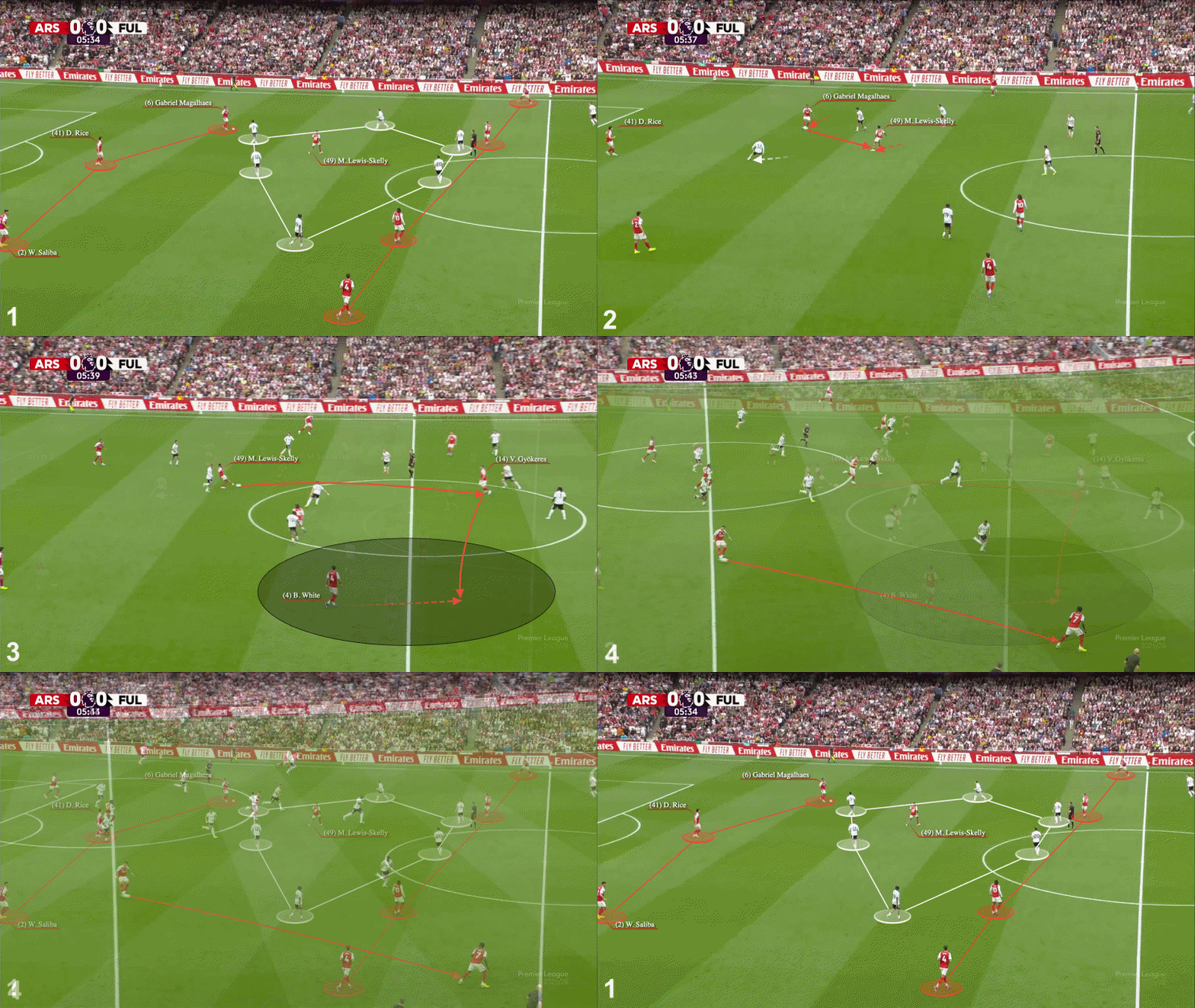
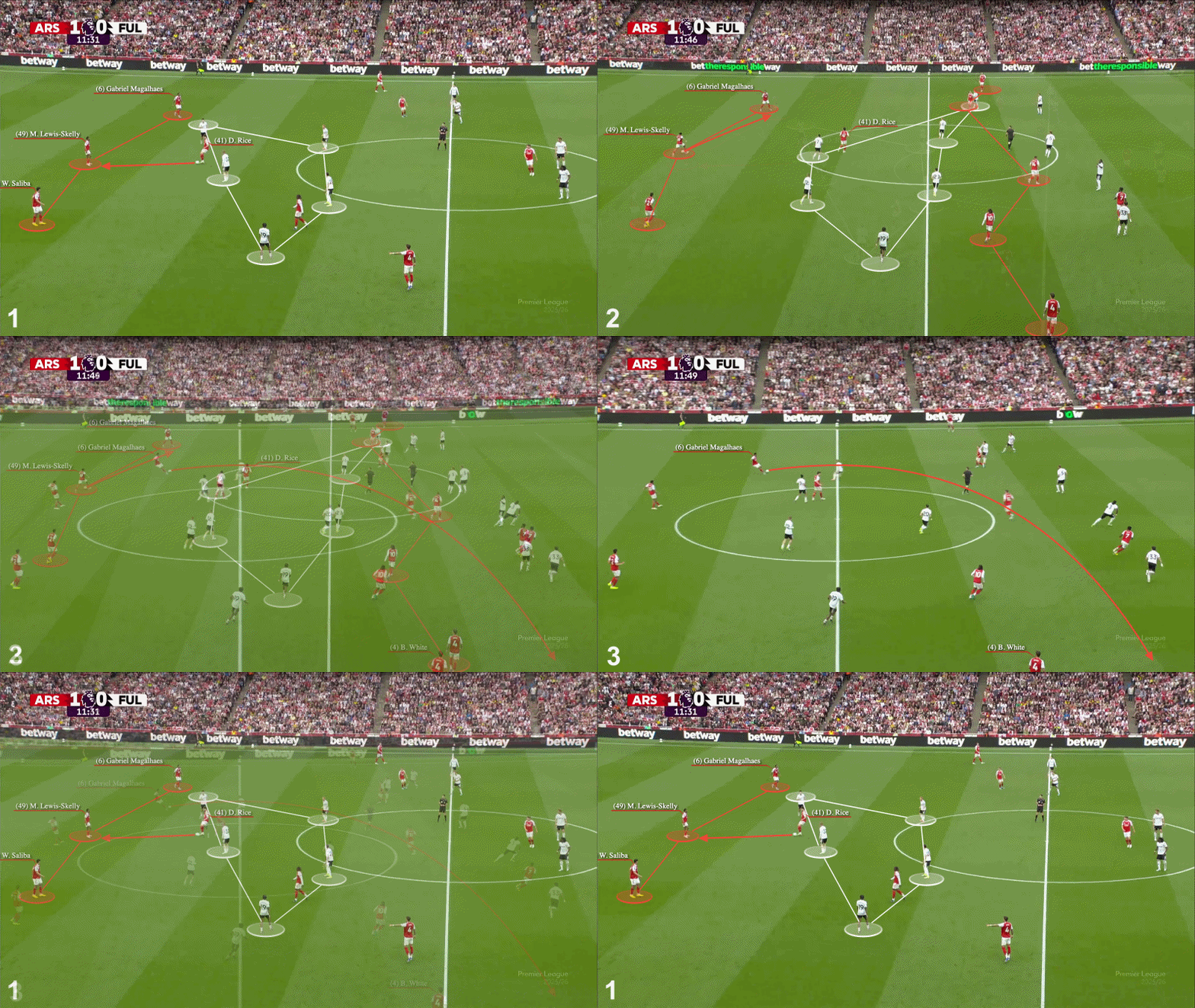
In metrics usually dominated by center-backs who have acres of space, Rice consistently tops the charts for total carry distance and line-breaking carries.
When he receives the ball facing forward, he breaks defensive structures with sheer athleticism. Furthermore, his early academy days as a center-back do manifest in his game, but not as a positional flaw. It gives him spatial awareness for "rest-defense."
His recovery pace, tackling radius, and ability to snuff out counter-attacks before they start make him arguably the best transition-killer in the Premier League, capable of covering massive distances from box to box to bail out his side during high-intensity defensive transitions.
Striver.Football Verdict
Declan Rice may not walk into Barcelona or PSG to replace press-resistant metronomes like Rodri, Pedri and Vitinha because those clubs require a specific type of possession-recycling anchor.
But claiming he is a "center-half playing in midfield" is not putting things into full context.Rice is the blueprint for the modern, high-intensity midfielder.
He combines the defensive discipline of a center-back with the lung-bursting power, ball-carrying dominance, and box-to-box threat of an elite modern all-rounder. Souness is not wrong in his analysis for what a midfielder should be like, but neither is he right given how the game has evolved from the 1980s and 1990s era.