
The wait is over.
The Premier League has unveiled its fixture list for the 2026-27 season, setting the stage for another campaign filled with new beginnings, returning rivalries and opportunities for the next generation to make their mark.
On Thursday morning, supporters across the country searched for familiar rituals: opening-day opponents, derby dates, festive fixtures and the final-day match that could define an entire season.
The 2026-27 campaign begins on Friday, 21 August, just 34 days after the FIFA World Cup final; and already promises fresh starts, returning rivalries and opportunities for football's next generation to announce themselves.
Because every season begins with the same question: who will lift the Premier League title this season?
Arsenal's Title Defence Starts Against Coventry
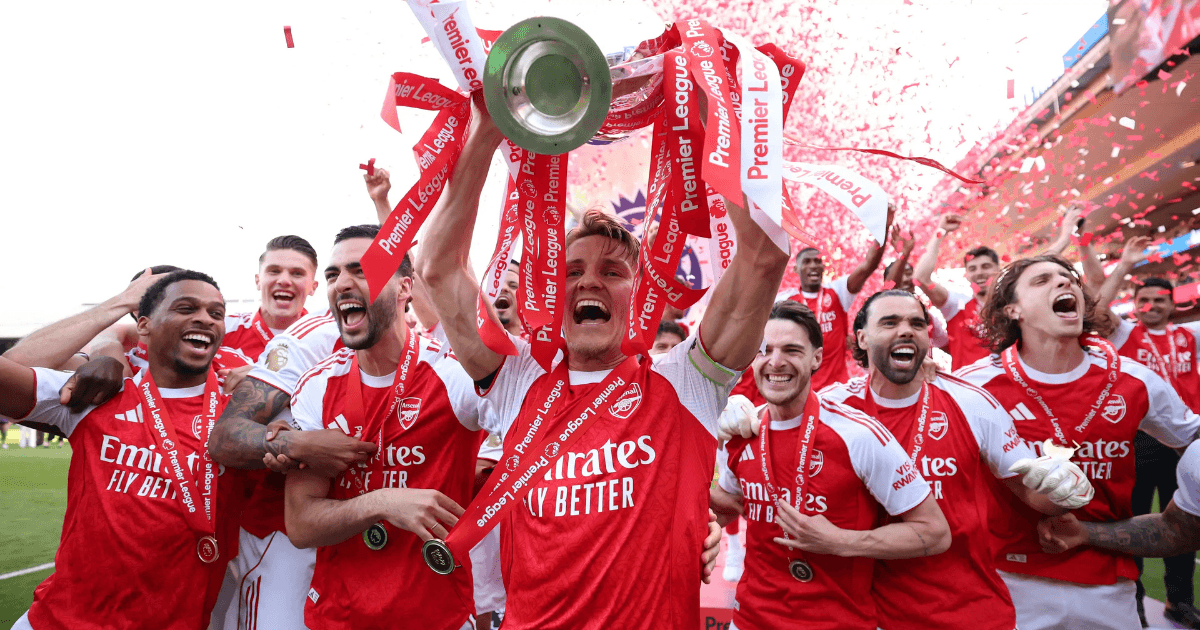
Arsenal will kick off the new campaign at home to Coventry City on Friday night as the Gunners begin their defence of a first Premier League title since 2004.
For Coventry, it marks a return to the top flight after a 25-year absence. Their journey from League Two to the Premier League has been built on patience, smart recruitment and belief in young talent.
Walking out at the Emirates for the opening match of the season is more than a fixture. It's proof of what's possible.
For Mikel Arteta's side, meanwhile, the challenge is different - Can they turn one title into the foundation of a dynasty?
New Managers Bring New Opportunities
Three of the league's biggest clubs enter the season under new leadership.
Liverpool begin life under Andoni Iraola with a demanding trip to Newcastle United.
Chelsea start the Xabi Alonso era away at Fulham on Monday Night Football.
Perhaps the biggest shift of all comes at Manchester City, where a new chapter begins following Pep Guardiola's departure. City open their campaign at home against Bournemouth, who are also adjusting to life under a new manager after Marco Rose replaced Iraola.
Managerial changes create uncertainty, but they also create opportunity.
Young players who were previously on the fringes suddenly find themselves with a clean slate.
New systems demand fresh solutions. New voices can reshape careers.
That's why the opening months of the season often reveal as much about the future as they do about the present.
The Promoted Clubs Return With Big Dreams
Coventry are joined by Hull City and Ipswich Town among this season's promoted clubs.
Hull host Manchester United in an immediate test of their Premier League credentials, while Ipswich welcome Sunderland in a meeting between two clubs hoping to establish themselves quickly.
For supporters, survival is the immediate goal. For young players, these matches are something more. They are opportunities to prove they belong at the highest level.
One strong start can change the trajectory of a career.
Read More: Premier League 2026-27 Rule Changes Explained: New Holding, Timewasting, Hair-Pulling And VAR Laws
Read More: How the Premier League’s New SCR Spending Rules Could Change English Football Forever
Opening Weekend Fixtures
Friday, 21 August
Arsenal vs Coventry City (20:00 BST)
Saturday, 22 August
Hull City vs Manchester United (12:30 BST)
Everton vs Crystal Palace (15:00 BST)
Ipswich Town vs Sunderland (15:00 BST)
Nottingham Forest vs Leeds United (15:00 BST)
Brentford vs Tottenham Hotspur (17:30 BST)
Sunday, 23 August
Brighton & Hove Albion vs Aston Villa (14:00 BST)
Manchester City vs Bournemouth (14:00 BST)
Newcastle United vs Liverpool (16:30 BST)
Monday, 24 August
Fulham vs Chelsea (20:00 BST)
The Derby Dates To Circle
Some fixtures matter differently.
The first Manchester derby takes place at Old Trafford on 12 September.
The Merseyside derby sees Liverpool travel to Everton's Hill Dickinson Stadium on 28 November before the return fixture at Anfield on 30 January.
The Tyne-Wear derby returns to the Premier League on 5 December when Newcastle host Sunderland for the first time in the top flight since 2016.
That same weekend also brings the first north London derby of the campaign as Tottenham welcome Arsenal.
Elsewhere, Coventry's return to the top flight revives a long-dormant West Midlands rivalry with Aston Villa.
Key Derby Dates
Manchester United vs Manchester City - 12 September
Everton vs Liverpool - 28 November
Tottenham Hotspur vs Arsenal - 5 December
Newcastle United vs Sunderland - 5 December
Coventry City vs Aston Villa - 12 December
Liverpool vs Everton - 30 January
Manchester City vs Manchester United - 20 March
Aston Villa vs Coventry City - 24 April
Arsenal vs Tottenham Hotspur - 1 May
Sunderland vs Newcastle United - 1 May
These fixtures are about more than points.
They're about identity, history and memories supporters carry for years.
A Final Day Full Of Possibilities
No one knows what will be at stake on 30 May 2027. That's what makes the final day special.
Arsenal host Brighton.
Manchester United welcome Fulham.
Chelsea face Brentford.
And Liverpool finish the campaign at Anfield against Bournemouth.
It's a fixture that already carries extra intrigue.
Iraola left Bournemouth this summer to take charge at Liverpool, and if his first season on Merseyside goes to plan, he could complete a title-winning campaign against the club that helped establish his Premier League reputation.
Football rarely writes scripts this neatly. But the possibility is there.
Elsewhere, Manchester City travel to Sunderland, while Coventry host Nottingham Forest and Hull entertain Newcastle United.
Final-Day Fixtures
All matches kick off at 16:00 BST on Sunday, 30 May.
Arsenal vs Brighton & Hove Albion
Aston Villa vs Tottenham Hotspur
Chelsea vs Brentford
Coventry City vs Nottingham Forest
Crystal Palace vs Leeds United
Hull City vs Newcastle United
Ipswich Town vs Everton
Liverpool vs Bournemouth
Manchester United vs Fulham
Sunderland vs Manchester City
What To Watch For
Beyond the title race, this season feels like one of transition.
Arsenal are trying to prove they can sustain success.
Liverpool, Chelsea and Manchester City are building under new leadership.
Promoted clubs are looking to establish themselves.
And across the division, young players will seek to turn opportunity into momentum.
The World Cup's late finish means clubs have had less preparation time than usual, increasing the importance of squad depth and academy pathways.
Which emerging players will step up?
Who will seize the moment created by a new manager?
Which club will become the season's surprise package?
The answers begin arriving on 21 August. The stories that define the season are still waiting to be written.