
While the world watches Real Madrid break transfer records for global superstars, the club’s academy has equally been adept at making its academy the most lethal profit-generating machine in the sport.
With over 58 academy graduates actively plying their trade across Europe's top professional leagues, Madrid smashed records by hauling in an eye-watering £184 million (€215m) in pure departure fees.
So, how do they do it? Why are clubs lining up to throw millions at teenagers who haven't even sniffed the Bernabeu first team?
Here are 5 reasons why Madrid are absolute masters at selling academy products.
1. They Build Professionals, Not Just Starters
Let's address the elephant in the room: breaking into Madrid’s starting XI is practically mission impossible.
When your dressing room houses Kylian Mbappe, Jude Bellingham, and a rotating cast of Ballon d'Or contenders, most academy kids are never going to feature week-in, week-out.
Madrid’s academy leadership embraces this head-on. La Fabrica (The Factory) as it is named is building elite, technically sound, tactically bulletproof professionals. Because clubs across Europe know Madrid kids are raised under extreme pressure and high tactical standards, they trust the product implicitly.
Read More: Real Madrid’s October Schedule: Five Crucial Matches After the International Break
2. Real Madrid Retain Sell-On Clauses When Academy Players Leave
Madrid's general director Jose Angel Sanchez is operating on a completely different financial chessboard. Instead of letting kids rot on loan or walking away for free, Madrid sell them—but they always keep a massive piece of the pie.
Look at the masterclass from this past summer alone. Victor Munoz moved to Liverpool, and Los Blancos banked a sweet €20 million thanks to a 50% sell-on clause from his previous transfer.
Chema Andres joined Brighton from Stuttgart, handing Madrid an instant €11.5 million cut. Alvaro Rodriguez shipped off to Bournemouth, and straight down the middle, Madrid took 50% of his €25 million fee. That way, they retain equity in their future success.
Read More: Brighton’s Chema Andres Talks Up Eventual Real Madrid Return
3. Real Madrid Use Buy-Back Clauses to Keep a Route Back
Selling a future star doesn't mean Madrid will lose control forever. By baking clever buy-back or renegotiation options into deals, they create a safety net.
As reported by The Athletic, when Nico Paz exploded in Serie A with Como, winning everyone over as one of Italy's brightest midfield talents, Madrid renegotiated a deal valuing his exit at €60 million while retaining an €80m buy-back clause.
It’s the ultimate win-win: the player gets guaranteed first-team minutes and stardom, while Madrid holds the golden ticket to bring him home whenever they want—just like they famously did with Dani Carvajal.
Read More: Why Nico Paz Should Reject Real Madrid Return and Stay at Como for Now
4. Youth Success Helps Raise the Profile of Academy Players
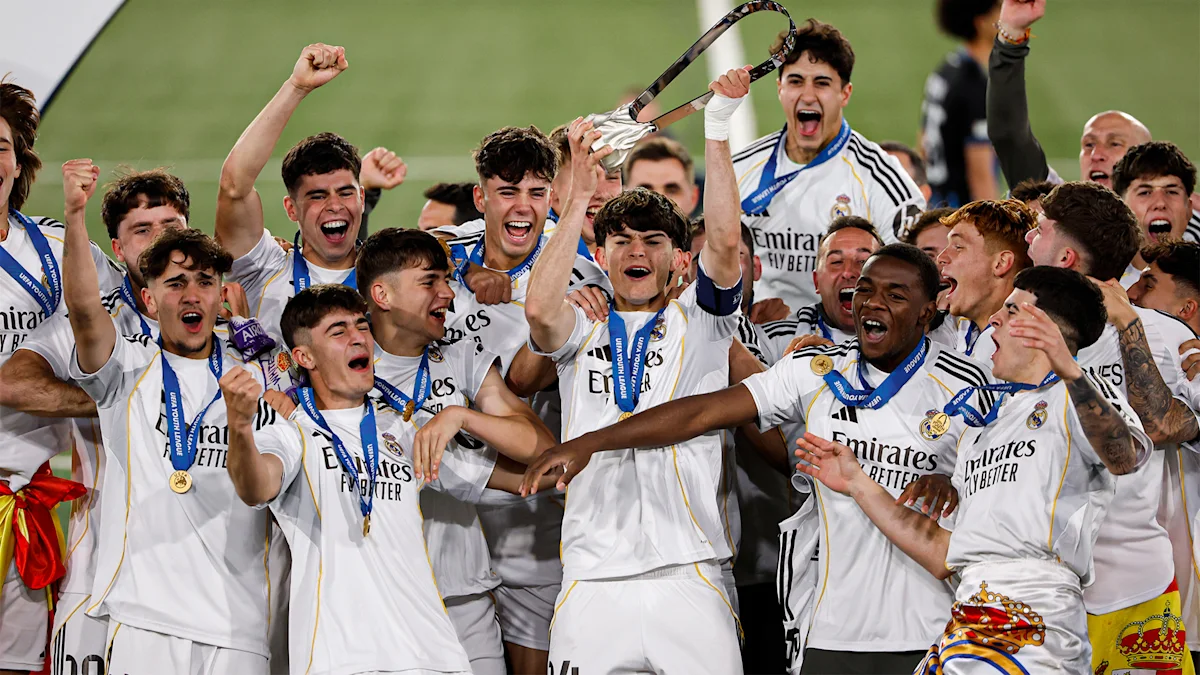
Talent alone gets you scouted, but trophies get you paid. When Alvaro Lopez’s under-19 side conquered Europe by winning the UEFA Youth League against Club Brugge and then hoisted the Under-20 Intercontinental Cup against Santiago Wanderers, the spotlight blazed onto Valdebebas.
Scouts from across the continent were watching every single match. Those continental badges of honor instantly inflated the market value of Madrid's teenagers, allowing them to demand premium prices for players who haven't even played senior La Liga football—such as Strasbourg shelling out €10 million for 20-year-old striker Jacobo Ortega.
5. Real Madrid Reinvest Academy Sales Into the Next Generation
The final secret to Madrid's academy supremacy is simple math: cash fuels the cycle. The €215m generated gets ruthlessly reinvested.
Armed with cash, Madrid's scouts scour Spain and global markets to aggressively poach elite regional talent—like grabbing top-tier prospects from Valladolid, Alaves, and even city rivals Atletico Madrid—while also dropping millions on ready-made Castilla additions like Sergio Martinez.
You feed the machine with top talent, the machine prints millions, and you use those millions to buy even better raw material.
Key Lessons From Real Madrid’s Academy Model
Protect Your Equity: Never sell a youth prospect outright without attaching a hefty sell-on or buy-back clause. Let other clubs develop them while you keep a stake in their future.
Accept Reality: A top-tier academy's primary job is to generate professional-grade assets. If they can't start for your first team, turn them into pure profit to fund players who can.
Reputation Sells: Winning youth tournaments builds global brand trust, making mid-tier European clubs far more willing to gamble multi-million-euro fees on teenagers.