When South Africa lost 2-0 to Mexico in their opening group A clash of the 2026 FIFA World Cup, all looked lost for Bafana Bafana.
This is a team who, 16 years since their last appearance at the continental showpiece as hosts back in 2010, were optimistic they would make the knockout rounds of the newly-expanded tournament, and so they traveled to North America full of confidence and belief.
However, Mexico smashed them, and to make matters worse, they also had to bear the ignominity of seeing two of their key players sent off.
Everyone instantly wrote them off, and you could clearly see it affected them during the opening hour of their second clash against Czech Republic, who took an early lead to put South Africa on the brink of elimination.
However, Teboho Mokoena’s penalty salvaged a point for them, and heading into their last game against South Korea, they dared to dream.
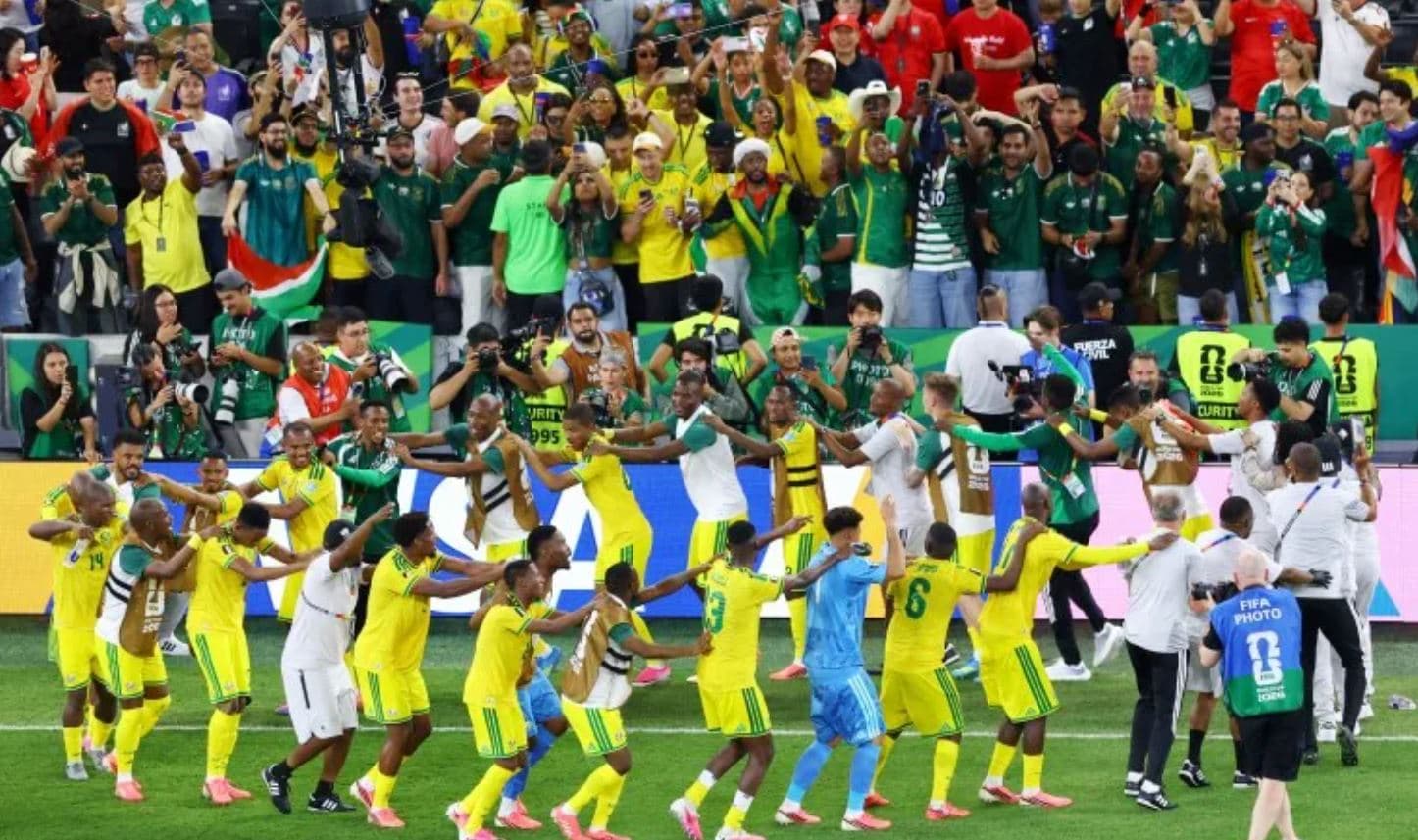
Their dream became a reality, as they tossed aside the Asian nation 1-0 and secure a place in the Round of 32 clash with co-hosts Canada in Los Angeles.
Here is how Bafana Bafana engineered one of the greatest nights in South African football history.
How South Africa Turned Possession Into South Korea's Biggest Weakness
Modern football often equates possession with dominance, but Hugo Broos constructed a game plan that completely inverted that philosophy.
South Africa set a unique World Cup record during this match, maintaining just 31.5% possession, the lowest recorded figure in the nation's tournament history.
Conversely, South Korea was allowed to hold the ball for 68.5% of the match, their highest-ever World Cup share.
Yet, that possession was entirely sterile.
Broos deployed a suffocating, deeply entrenched defensive block that deliberately conceded the middle third of the pitch to South Korea, only to clamp down violently whenever the Asian side entered the final third.
"It was very difficult for South Korea to find space," Broos noted post-match.
By defending narrow and absorbing pressure, South Africa forced South Korea into horizontal, unthreatening passing sequences.
When Bafana Bafana did win the ball, their transition play was lethal, with the side targeting eventual goalscorer Thapelo Maseko’s pace down the right flank in particular as an outlet.
Despite their massive possession deficit, South Africa consistently generated higher-quality chances, amassing a solid 1.12 xG to South Korea’s and forcing South Korea into panicked defensive retreats.
Did South Korea Make a Mistake Benching Son Heung-min?

Before the game kicked off, South Korea coach Hong Myung-bo handed South Africa an advantage psychologically by opting to bench Son Heung-min.
The former Spurs captain, who has amassed 146 international caps, is their focal point. Although he is still not the player he once was, his off the ball movement and elite finishing is still a handful for the opposition.
By benching him, South Africa settled into a comfortable rhythm, and were barely stretched throughout the game.
By the time Son was finally introduced at halftime to try and salvage the game, South Africa had already gathered unstoppable momentum, and completely neutralised his effectiveness.
How Thapelo Maseko Punished South Korea on the Counter
Thapelo Maseko may have been the one who found the back of the net, but he contributed so much more, and his pace down the right flank was actually the reason South Korea got pinned back.
The 23-year-old forward was an absolute thorn in South Korea’s side. Maseko registered more shots and more touches in the opposition penalty area than any other player on the pitch.
His positioning in transition was perfect, constantly exploiting the high line left behind by South Korea’s advancing fullbacks.
The defining moment arrived in the 63rd minute under highly surreal circumstances. As an airport-style announcement echoed through the stadium to alert fans of a goal in the Mexico match, a momentary wave of distraction washed over the South Korean defense.
Maseko did not hesitate. He ruthlessly brought the ball onto his left foot and fired a clinical strike past Kim Seung-gyu, not only booking his country's ticket to the knockouts but becoming the first player from a Cypriot club to score a World Cup goal.
What Next For South Africa?
South Africa's historic triumph sets up a mouth-watering Round of 32 clash against co-hosts Canada at SoFi Stadium in Los Angeles, USA.
Jesse Marsch’s Canadian squad will be facing an incredibly disciplined, battle-tested Bafana Bafana side that will be relishing the chance to thrive as the underdog.
Furthermore, South Africa will be bolstered by the return of their talismanic central midfielder, Teboho Mokoena, from yellow-card suspension. Themba Zwane will also be back after serving a two-game ban after receiving a straight red card against Mexico.
If Canada attempts to dominate the ball the way South Korea did, Broos’ men have already proven they possess the weapon necessary to absorb the pressure, spring the trap, and keep the dream alive.