Uganda wants AFCON 2027 to deliver benefits that extend far beyond the final whistle.
The country on Thursday launched the Sports for National Development Consortium in Kampala, bringing together government ministries, the Federation of Uganda Football Associations (FUFA), development partners and private-sector businesses.
The initiative aims to ensure Uganda's role as a co-host creates lasting economic and social benefits rather than short-term infrastructure gains.
Magogo said the launch marked how far Uganda’s football ambitions had come since he became FUFA president in 2013.
At the time, the country had endured a 39-year wait to return to the AFCON finals, and that ended with qualification for the 2017 tournament.
"Today, we have been to the Africa Cup of Nations. Now the news is when we don't qualify," Magogo said. "It is one thing to qualify for the Africa Cup of Nations. It is a totally different thing to bring the Africa Cup of Nations to Uganda."
Why Uganda Is Planning Beyond AFCON 2027
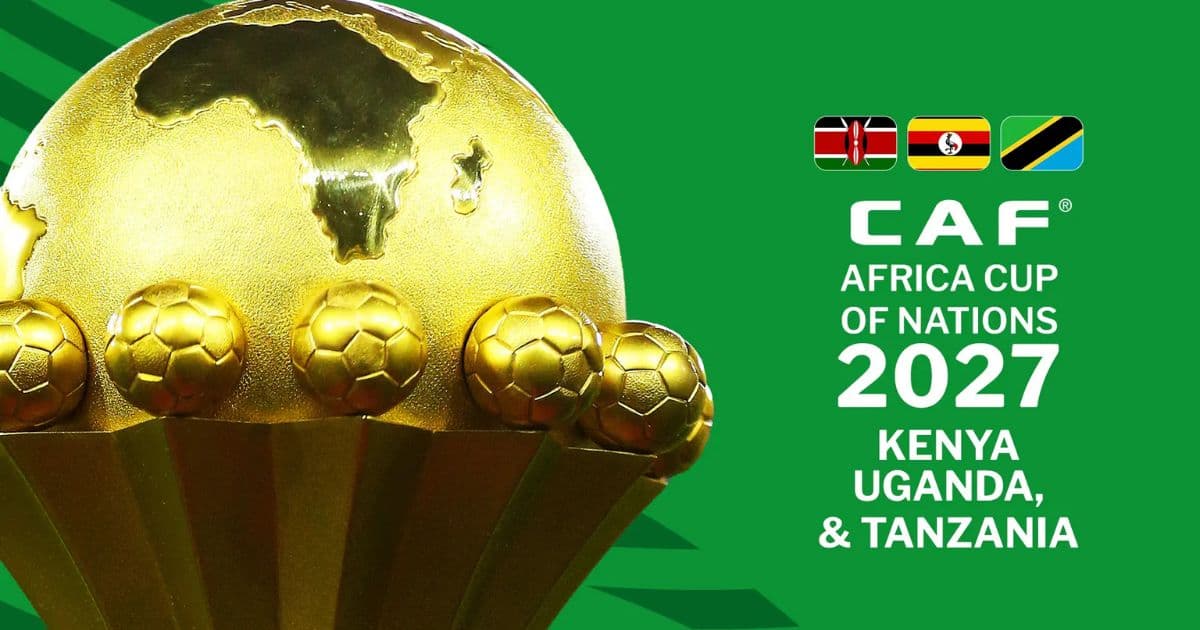
Uganda, Kenya and Tanzania will co-host AFCON 2027 from June 19 to July 18, the first time the tournament has ever been staged jointly across three East African nations. Uganda believes the scale of the tournament requires a dedicated body to maximise its long-term impact.
Magogo said AFCON’s broadcast reaches 165 countries and that gives Uganda an opportunity to promote itself beyond football. He said the tournament could help attract tourists, investors and businesses to the country.
The consortium will try to turn that exposure into measurable results instead of leaving it as an automatic benefit of hosting the competition. Magogo said data would be collected before, during and after AFCON 2027.
This is to assess its impact and demonstrate the economic value of sport to investors and the government.
Magogo also pointed to the 2024 African Nations Championship, which was co-hosted by Uganda, Kenya and Tanzania, as an example of how major tournaments can boost travel and spending across the region.
He said the consortium would build on that experience as preparations for AFCON 2027 continue. The FUFA president also acknowledged the role of the Ugandan government, the Ministry of Education and Sports, and the AFCON 2027 Organising Committee in securing the tournament.
“We did not get this on a silver platter,” he said. “It was a competition. But we needed support, and today we are here because of the cooperation and commitment of many stakeholders.”
What Uganda's AFCON 2027 Sports Consortium Will Do
FUFA’s second vice-president, Dr Azah Taibu, said the consortium would focus on tracking the jobs, investment, tourism and policy benefits linked to AFCON 2027. She distinguished that role from the work of the Local Organising Committee, which is responsible for delivering the tournament itself.
Taibu said hosting a successful AFCON would not, on its own, guarantee lasting economic and social gains. "Hosting a good tournament and generating national development from it are two different jobs, and one does not automatically produce the other."
"Countries can benefit from these events by measuring the success that remains after the final whistle," she said.
Taibu said the consortium would operate separately from the Local Organising Committee.
“While they concentrate on delivering a highly exciting and rich tournament, the consortium ensures that Uganda captures the full development dividends through evidence generation, strategic partnerships, investment intelligence and a long-term legacy,” she said.
AFCON 2027 will return to East Africa for the first time since Ethiopia hosted the tournament in 1976. It will also be the first edition staged across three countries, with Kenya, Uganda and Tanzania sharing hosting duties.
More than 3.2 billion viewers are expected to follow the tournament, according to projections cited by regional organisers.
Read More: CAF Launches Search for AFCON 2027 Host Broadcaster Ahead of East Africa Tournament
How Uganda Wants AFCON 2027 to Leave a Lasting Legacy
Magogo and Taibu said the consortium’s work should extend beyond AFCON 2027 and provide a model for how Uganda manages major sporting events in the future.
Taibu urged government agencies, businesses, researchers and the media to support the initiative, saying it should not be viewed as a FUFA project alone. She said broad participation would be essential to measuring the consortium’s impact.
“When history reflects on AFCON 2027, it should remember not only the football that was played, but also how Uganda transformed sporting events into platforms for economic growth, stronger institutions, better public policy and sustainable development,” she said.
For Magogo, the responsibility now sits with the country collectively, not just the officials who built the bid. "We must speak as a country. We must be positive, and I believe we should organise one of the best competitions," he said.
The qualifying campaign is scheduled to start in September, while CAF inspections and infrastructure checks will continue as the three host countries work to meet the tournament's deadline.