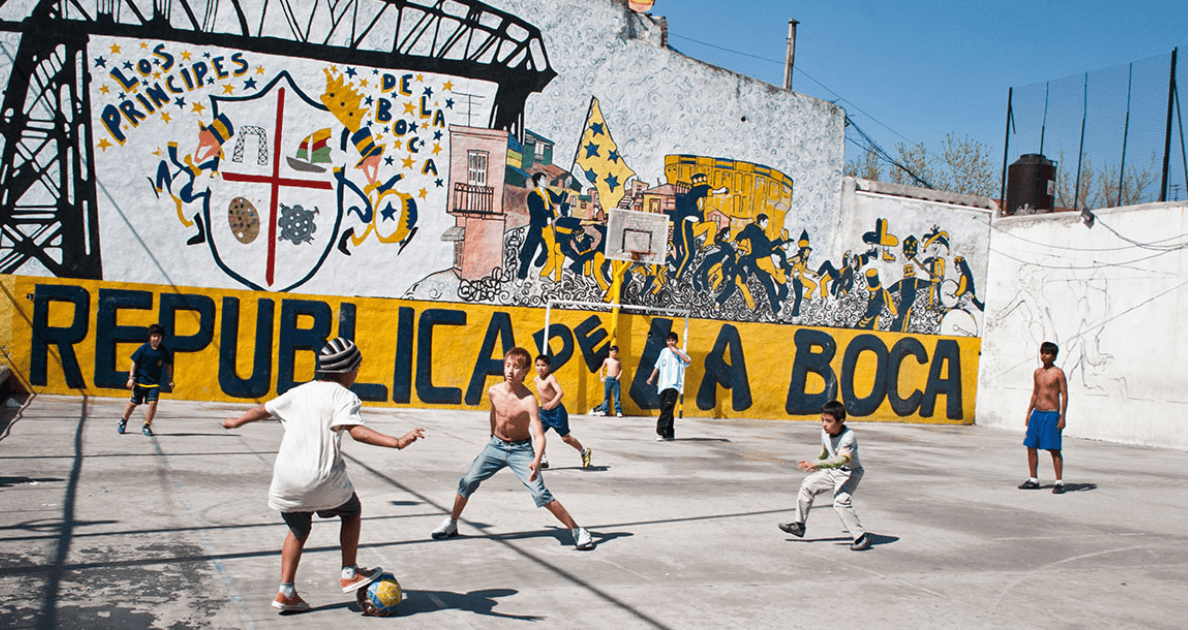
Long before academy scouts arrive, many Argentine footballers learn the game somewhere else entirely, on cracked concrete courts, dusty neighbourhood pitches and crowded futsal cages where space is limited and mistakes are punished instantly.
Argentina’s football identity is often associated with flair and passion, but behind that reputation lies a development system shaped as much by economic struggle and local culture as by professional coaching.
While Europe increasingly relies on structured academy pathways from childhood, Argentina still produces players through a hybrid model where informal football and organised development collide.
Where Football Really Starts
Historically, the potrero, an empty lot or rough local pitch, sat at the centre of Argentine football culture. These environments rewarded technique and adaptability rather than tactical instruction. Although many traditional potreros have disappeared through urban development, their influence remains.
Neighbourhood football and futsal continue to shape young players through repetition and improvisation. Children often play with older opponents, solve problems independently and learn without constant coaching direction. Close control, quick decision-making and creativity become necessities rather than training exercises.
The stories of Diego Maradona and Lionel Messi helped build the mythology of Argentine football emerging from humble beginnings. Their journeys differ, but they reflect a wider truth: development in Argentina often begins with freedom before structure.
Street Football and the Academy
Street football and academy football are frequently portrayed as opposites, but Argentina relies on both.
Informal football develops improvisation and individual problem-solving. Players learn through instinct and repetition, often in competitive environments where mistakes have immediate consequences.
Academies provide something equally important. Professional coaching introduces tactical organisation, positional understanding and physical preparation. Modern football is too demanding for raw talent alone.
Rather than competing, the street and the academy often represent different stages of the same pathway. Many Argentine coaches argue that informal football teaches players how to solve problems, while academies teach them how to function within organised systems.
Read More: What Football Means in Argentina: More Than a Game, It’s Part of the Nation
Read More: Argentina’s Next Generation: 3 Young Players Ready to Shine at the 2026 World Cup
The Pathway and the Challenges
The route to professional football usually follows a recognisable path: local football, youth clubs, academy scouting and eventually reserve or first-team football.
Major clubs such as Boca Juniors and River Plate play a central role, while strong academies across the country continue producing talent. Yet Argentina’s system often feels less predictable than many European models.
Football may appear accessible, but development still involves sacrifice. Travel costs, limited facilities and economic instability place pressure on families, while competition for professional opportunities remains intense. Many talented players never reach the top despite years of commitment.
Argentina vs Europe
Compared with many UK and European systems, Argentina’s approach is often less structured and more heavily influenced by informal football.
European academies typically prioritise long-term planning, sports science and carefully managed progression. Argentina, by contrast, can expose young players to competitive pressure earlier and more consistently.
Neither model is inherently better.
Europe offers infrastructure and stability; Argentina often develops improvisation and adaptability. Modern football increasingly values players who combine both qualities.
Argentina no longer produces footballers solely from the streets, but the country’s football culture still begins in spaces where freedom matters before structure arrives. That balance between instinct and organisation remains central to how Argentina continues producing talent for the world stage.