Since its inception in 1985, the FIFA U-17 World Cup has served as a platform where future global superstars begin their professional journeys.
Future Ballon d'Or winners, UEFA Champions League icons, and senior World Cup winners have all featured at this tournament before going on to achieve success at senior level.
Ahead of the expanded 48-team FIFA U-17 World Cup Qatar 2026, which kicks off at Doha's Aspire Zone on Thursday, 19 November, the next generation of young players are preparing to follow in their predecessors' footsteps.
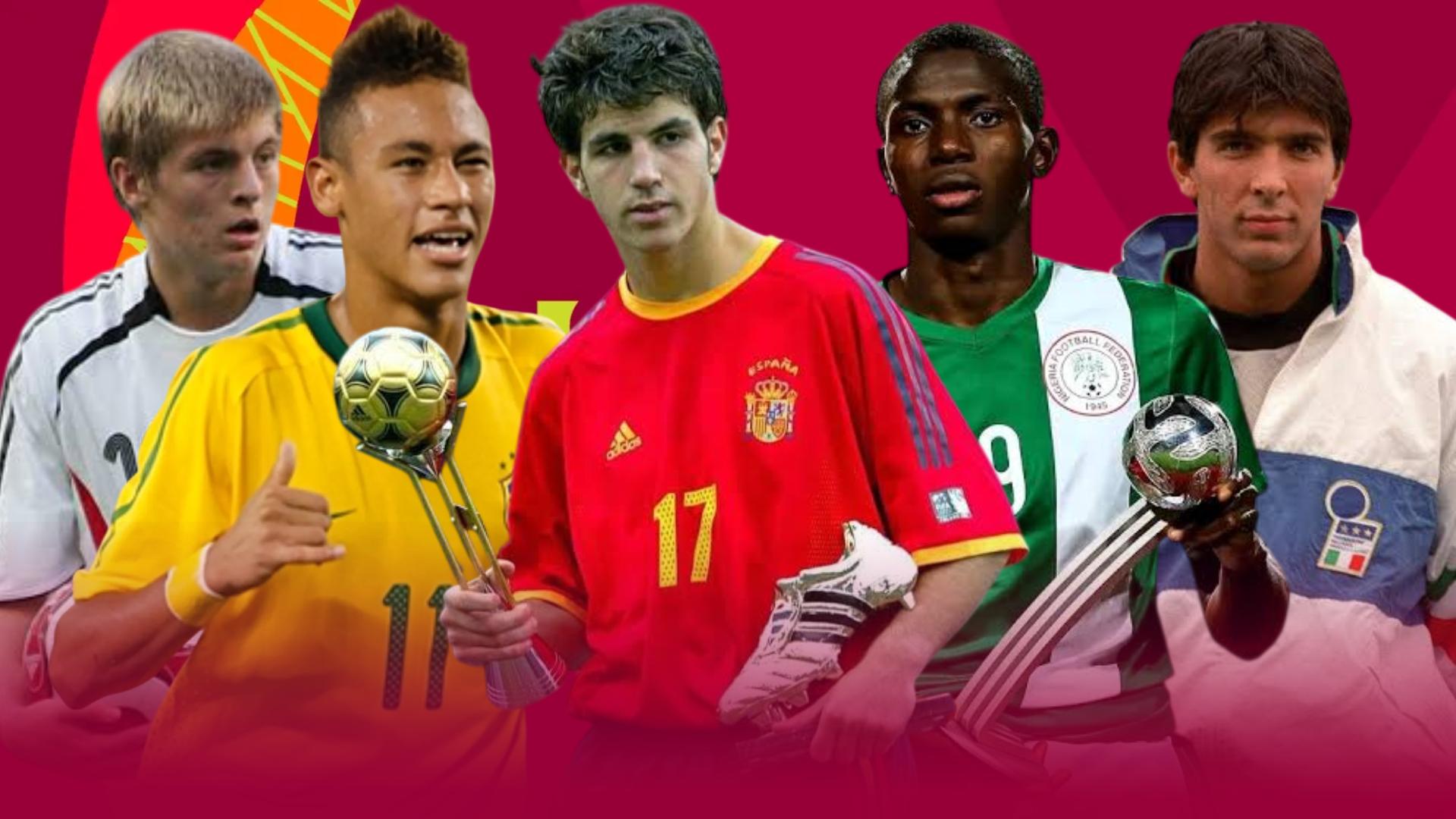
Across four decades of youth football, Striver.Football looks back at 10 players who featured at the U-17 World Cup before going on to build outstanding senior careers.
10. Gianluigi Buffon (Italy - Japan 1993)
Long before he became one of the defining goalkeepers of his generation, a 15-year-old Buffon represented Italy at the 1993 edition in Japan alongside fellow future Roma icon Francesco Totti.
Buffon made his Serie A debut for Parma at 17 before becoming the world's most expensive goalkeeper when he joined Juventus. He went on to win 10 Serie A titles and help Italy lift the 2006 FIFA World Cup.
9. Ronaldinho (Brazil - Egypt 1997)
Before he became the smiling magician of Barcelona, a 17-year-old Ronaldinho wore Brazil's iconic No. 10 shirt in Egypt.
Ronaldinho scored twice during the tournament as Brazil lifted their maiden FIFA U-17 World Cup title, beating defending champions Ghana 2-1 in the final.
Five years later, Ronaldinho lifted the 2002 FIFA World Cup, won back-to-back FIFA World Player of the Year awards and claimed the 2005 Ballon d'Or, establishing himself as one of football's most influential attacking players.
8. Xavi Hernandez (Spain - Egypt 1997)
Competing in the same 1997 tournament as Ronaldinho and Iker Casillas, a young Xavi helped Spain secure third place while displaying the passing range and spatial awareness that would later define his career.
Xavi went on to become a central figure in Pep Guardiola's Barcelona side and Spain's golden generation, winning four UEFA Champions League titles, two UEFA European Championships and the 2010 FIFA World Cup.
7. Cesc Fabregas (Spain - Finland 2003)
Although Spain lost 1-0 to Brazil in the 2003 final, 16-year-old Fabregas was one of the tournament's standout performers from midfield.
He completed a rare individual double, winning the adidas Golden Ball as the tournament's best player and the Golden Boot after scoring five goals.
After the tournament, Fabregas continued his development at Arsenal, where he became the club's youngest-ever first-team goalscorer. He later won the 2010 FIFA World Cup (supplying the assist for Andres Iniesta's winning strike in the final), two European Championships, and domestic league crowns in both England and Spain for Chelsea and Barcelona respectively.
6. Toni Kroos (Germany - South Korea 2007)
Kroos was one of the standout performers at the 2007 tournament in South Korea. Guiding Germany to a third-place finish, he scored five goals, including a memorable free-kick against Ghana, to claim the Golden Ball.
Just 18 days after the tournament concluded, Kroos made his senior Bundesliga debut for Bayern Munich and immediately registered two assists.
He went on to become a midfield leader for Bayern Munich, Real Madrid and Germany, retiring with the 2014 FIFA World Cup, six UEFA Champions League titles and six FIFA Club World Cup trophies.
Read More: FIFA U-17 World Cup winners ranked: Every champion from 1985 to 2025
Read More: 15 wonderkids to watch at the FIFA U-17 World Cup 2026
5. Neymar (Brazil - Nigeria 2009)
Brazil suffered a surprise group-stage exit at the 2009 finals in Nigeria, but 17-year-old Neymar still attracted attention with his performances, including a goal against Japan in the opening match.
Although Brazil went home early, Neymar went on to establish himself at Santos before joining Barcelona, where he formed one of football's most celebrated attacking partnerships with Lionel Messi and Luis Suarez. He won the UEFA Champions League and Olympic gold, later becoming Brazil's all-time leading men's goalscorer.
4. Son Heung-min (South Korea - Nigeria 2009)
Representing South Korea at the 2009 edition, Son scored three goals as his nation reached the quarter-finals, showcasing the two-footed finishing and pace that would become hallmarks of his game.
Son rose through the Bundesliga with Hamburger SV and Bayer Leverkusen before becoming a Tottenham Hotspur legend. He won the 2021/22 Premier League Golden Boot, the 2024/25 UEFA Europa League and the 2020 FIFA Puskás Award, while also captaining South Korea at multiple World Cups.
3. Victor Osimhen (Nigeria - Chile 2015)
Nigeria boast a record five FIFA U-17 World Cup titles, and Osimhen's 2015 campaign in Chile remains one of the most remarkable individual performances in the competition's history.
He shattered the single-tournament scoring record by netting 10 goals in just seven matches, powering the Golden Eaglets to the trophy while claiming the Golden Boot and Silver Ball.
Osimhen carried that goalscoring instinct into European football, helping Napoli win their first Serie A title in 33 years during the 2022/23 season. He finished as the league's top scorer and was named 2023 African Footballer of the Year.
2. Phil Foden (England - India 2017)
Wearing England's No. 7 shirt, Foden electrified the 2017 finals in India. His close control, vision and two-goal performance in England's 5-2 final victory over Spain helped him win the Golden Ball as the Young Lions claimed their first-ever U-17 World Cup title.
Pep Guardiola immediately integrated Foden into Manchester City's first-team setup, where he blossomed into one of Europe's most decorated modern attackers, winning six Premier League titles, the 2022/23 UEFA Champions League, and PFA Players' Player of the Year honors.
1. Aurelien Tchouameni (France - India 2017)
While Phil Foden won the 2017 Golden Ball, Tchouameni featured for France at the tournament in India, displaying the defensive awareness, composure and passing ability that would become important features of his game.
Tchouameni progressed through Bordeaux and AS Monaco before joining Real Madrid, where he has won UEFA Champions League and La Liga titles while establishing himself as an important part of France's midfield.
What young players can learn from these FIFA U-17 World Cup stars
You don't need to win the trophy to attract scouts: Cesc Fabregas losing the 2003 final and Neymar exiting in the 2009 group stage show that strong individual performances can still create important club opportunities.
Carry tournament momentum back to your club: Toni Kroos making his Bayern Munich debut just 18 days after the 2007 tournament and Phil Foden progressing into Manchester City's first team show how strong youth international performances can support the transition to senior football.
Quiet tactical discipline gets noticed alongside goals: While Victor Osimhen grabbed headlines with 10 goals in 2015, Aurelien Tchouameni's journey from the 2017 tournament to Real Madrid shows that scouts also value midfield intelligence, defensive awareness and composure.