

First staged as an under-16 competition in 1985 before becoming an under-17 tournament in 1991, the FIFA U-17 World Cup has been won by just 11 different nations.
The tournament has served as a platform for several future superstars, many of whom have gone on to leave a lasting mark on world football.
With the 2026 edition set to begin in Qatar on November 19, Striver.Football ranks all 11 champions based on their historical achievements, consistency and legacy in youth football.
10. Saudi Arabia (1989)
Why they’re here: Winning a global FIFA trophy is a historic milestone for Asian football, but the Green Falcons had to pull off an incredible escape act to get theirs.
At Hampden Park in 1989, Saudi Arabia faced the tournament hosts and fell 2-0 behind before fighting back to level the final at 2-2. The Green Falcons eventually held their nerve to win the penalty shootout 5-4.
It remains one of the tournament's most memorable underdog triumphs, although Saudi Arabia have not added another title since.
9. Soviet Union (1987)
Why they’re here: The Soviet Union defeated defending champions Nigeria on penalties after a 1-1 draw in the 1987 final in Canada, combining physical strength with tactical discipline throughout the tournament.
Their triumph remains part of the tournament's early history, although the subsequent dissolution of the Soviet Union means the title stands as a unique achievement for a country that no longer exists.
8. Switzerland (2009)
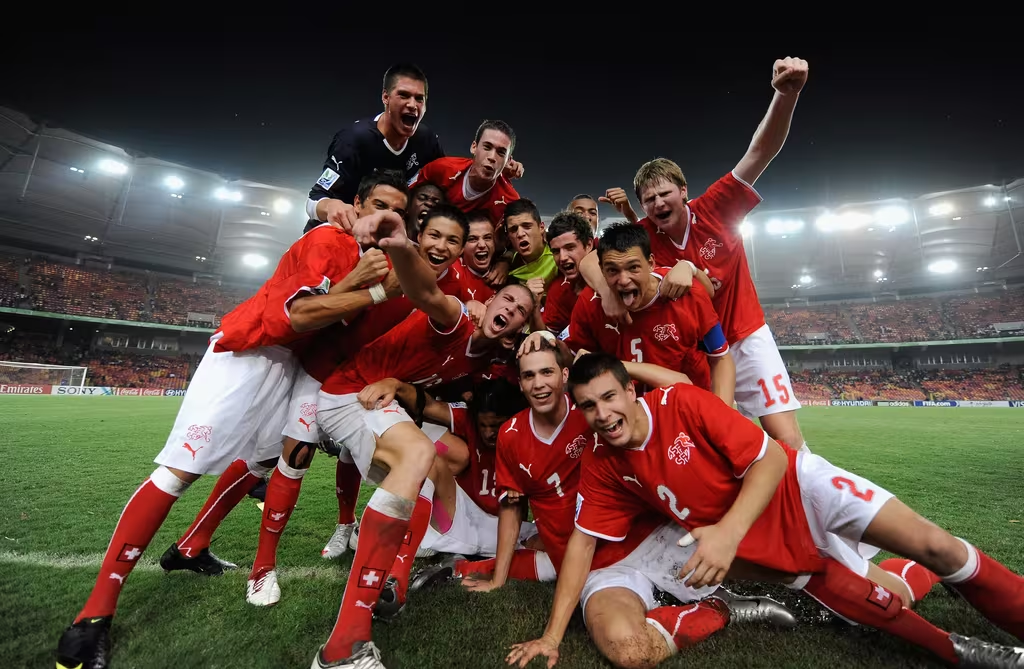
Why they’re here: This remains one of the wildest statistical outliers in football history. Switzerland was not a traditional youth powerhouse, yet coach Dany Ryser's side put on an absolute masterclass in defensive organization when hosting was handed to Nigeria in 2009.
They shut out opponent after opponent, culminating in a stunning 1-0 victory over the host nation in the final. It was brilliant, suffocating tournament execution, but they have not replicated that peak since.
7. Portugal (2025)
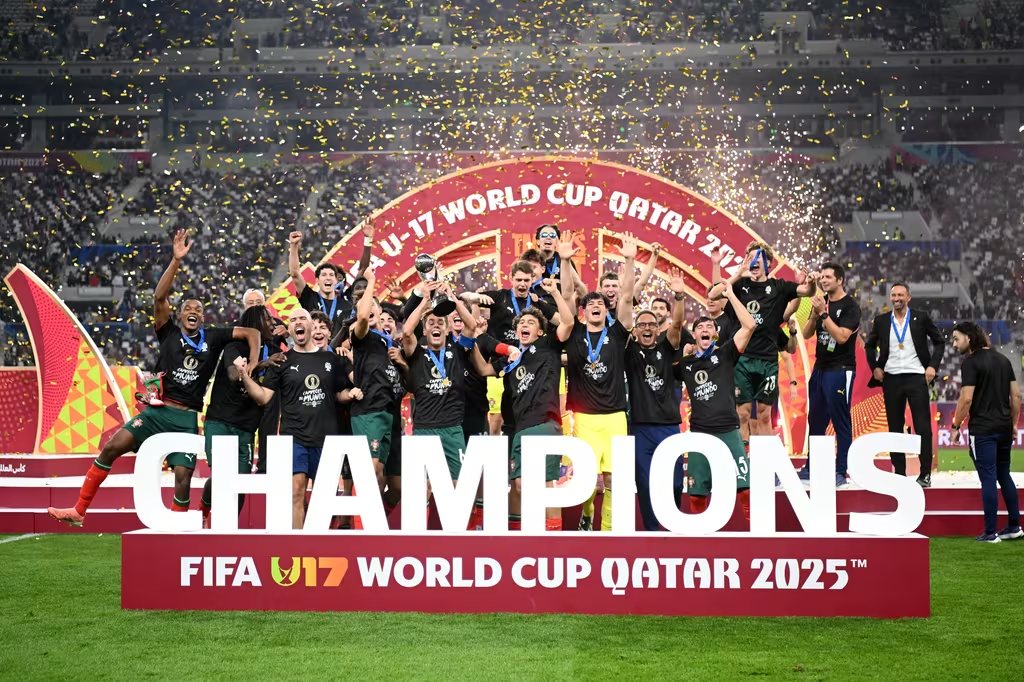
Why they’re here: Portugal is arguably the most famous talent laboratory in Europe, but Seis Quinas only recently added their first official U-17 crown by navigating the expanded Qatar tournament, edging out Austria in the final.
While they historically produced legendary technicians like Luis Figo back in the 1989 precursor tournaments, actually capturing the official U-17 trophy fills a massive gap in their illustrious youth CV. Still, for now, they sit as a one-and-done entity at this specific age group.
6. France (2001)

Why they’re here: France possesses arguably the most terrifying, bottomless talent pipeline in world football, yet they only have one U-17 World Cup to show for it, secured way back in Trinidad and Tobago in 2001 behind a stellar generation led by Golden Shoe winner Florent Sinama Pongolle.
They are perennial contenders who routinely produce world-class pros, coming agonisingly close again as runners-up in 2023, which makes their solitary title feel way too low relative to their sheer footballing output.
5. England (2017)
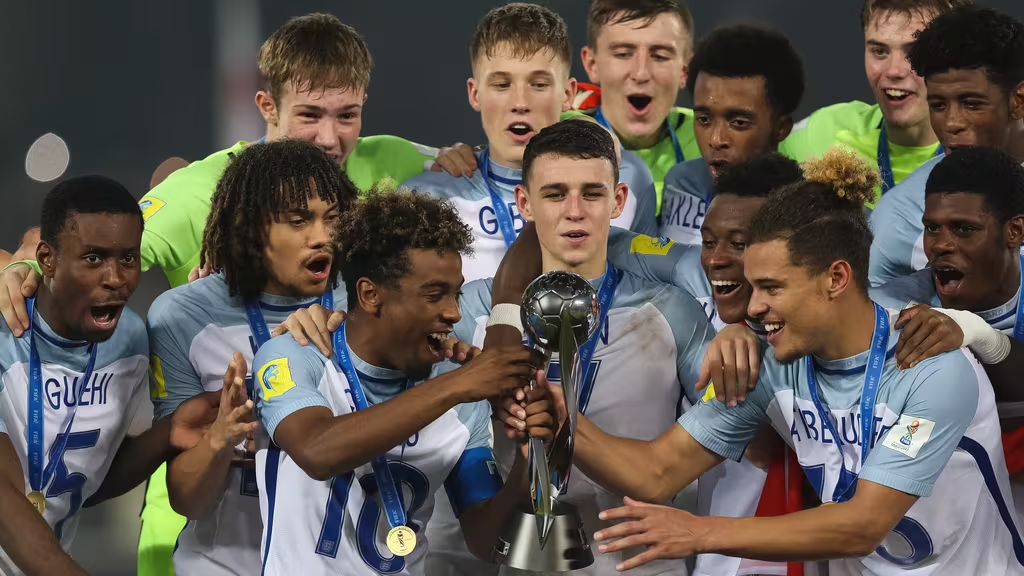
Why they’re here: Steve Cooper’s 2017 squad in India was a total cultural watershed moment for English youth football.
Playing fearless, electric, possession-based attacking football, they bounced back from falling 2-0 down against Spain in the final to ruthlessly hammer them 5-2.
Powered by generational talents like Phil Foden, Jadon Sancho, Conor Gallagher, and Golden Boot winner Rhian Brewster, it showcased a technical and psychological ceiling rarely ever seen from an English youth side.
4. Germany (2023)
Why they’re here: After coming agonizingly close as West Germany runners-up back in the inaugural 1985 tournament, Die Mannschaft finally climbed the mountain in Indonesia in 2023, adding the world crown to their European title earlier that year.
Under Christian Wuck, a brilliant spine featuring Paris Brunner and Noah Darvich played cohesive, high-intensity tournament football, surviving a brutal, dramatic penalty shootout against France in the final to complete a historic double.
3. Ghana (1991, 1995)
Why they’re here: In the 1990s, Ghana’s Black Starlets were an absolute appointment viewing for any global football purist.
Led by exceptional talents like Nii Lamptey, hailed by Pele himself as the next big thing, Ghana reached three consecutive global finals between 1991 and 1995, walking away with two gold medals (1991 and 1995) and a silver in 1993.
Their dynamic, fearless, and technically dizzying style proved that African youth football was setting the standard for the entire planet.
2. Brazil (1997, 1999, 2003, and 2019)
Why they’re here: With four titles (1997, 1999, 2003, and 2019) and two runners-up finishes, Brazil sits just behind the ultimate throne as the gold standard of technical brilliance, swagger, and tournament execution.
When they won it in Egypt in 1997, a teenage Ronaldinho was already showing terrifying glimpses of the global icon he would become.
Whether staging dramatic comebacks or handling the suffocating pressure of lifting the trophy at home in 2019, a Brazilian U-17 side always carries the heavy cultural expectation of playing expressive, beautiful football, and they almost always deliver.
1. Nigeria (1985, 1993, 2007, 2013, and 2015)
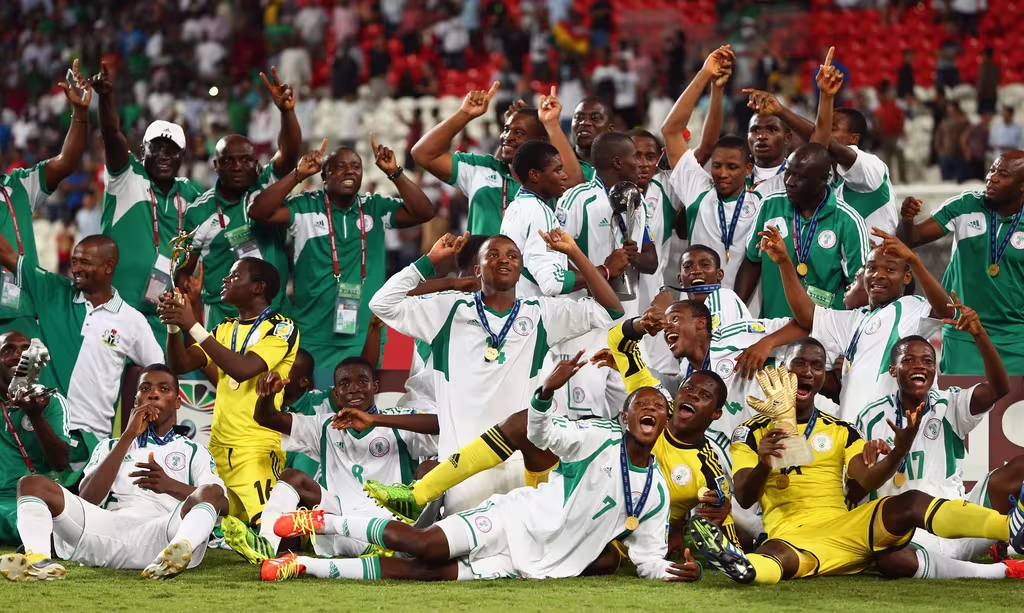
Why they’re here: Nobody touches the Golden Eaglets at the absolute summit of U-17 history. With an unmatched 5 titles (1985, 1993, 2007, 2013, and 2015) and 3 silver medals, Nigeria is woven directly into the DNA of this tournament.
They have historically played with a breathtaking blend of raw physical power, tactical directness, and individual street-wizardry that has terrified global opponents for decades.
More importantly, this is the ultimate production line, serving as the international launchpad for legendary global icons like Nwankwo Kanu, John Obi Mikel, Kelechi Iheanacho, and Victor Osimhen.
What the FIFA U-17 World Cup's history tells us about youth football
When you look at this list, the real story of youth football is just how brutal and unpredictable it truly is.
On one end, you have one-hit wonders like Switzerland or Saudi Arabia proving that a single month of defensive perfection or sheer emotional resilience can make an underdog dare to dream.
On the other, powerhouses like Nigeria and Brazil have shown that staying at the top requires an entire national football ecosystem built to churn out superstars year after year, cementing their legacy long before these kids ever touch a senior pitch.