
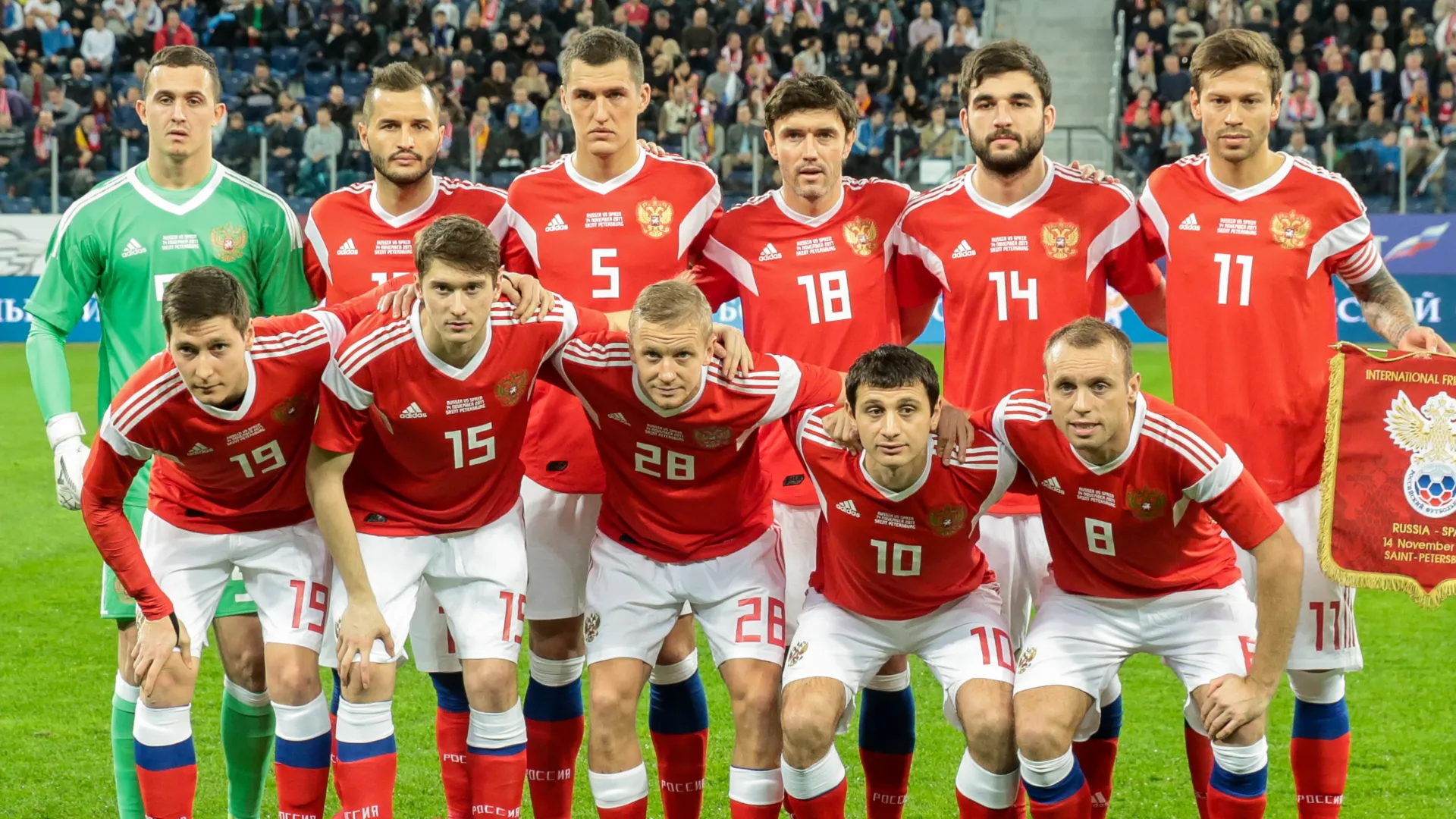
International politics and its interference in football continues to be a source of troubles for global governing bodies.
According to reports, 19 nations have pulled out of the FIFA U-15 World Cup in Azerbaijan over the decision to allow Russia to participate in the competition.
The Europeans have been frozen out of tournaments at every level since their 2022 invasion of Ukraine, but were permitted to feature in Azerbaijan this month.
The decision has led to widespread withdrawals from the competition, with the Ukrainian Association of Football and US Soccer leading the charge.
A total of 17 other countries have boycotted the competition and festival, which was meant to include all the countries under the FIFA banner.
Global boycott coalition pulls out of inaugural FIFA U-15 World Cup
Following FIFA's decision to permit Russian youth team to compete at the inaugural FIFA U-15 World Cup & Festival in Baku, a coordinated boycott has taken shape across international member associations.
The competition is open to all FIFA member nations, and Russia was included in the draw and placed in Group AE with Turkey, Afghanistan, Djibouti, Sierra Leone and Sudan.
They had previously been unable to participate in any competition due to UEFA's strict stance with respect to their participation in any UEFA-coordinated events.
Ukraine are at the forefront of the calls to boycott the tournament, and their stance has attracted 18 other countries to join in the boycott and pull out of the tournament draw.
The USA, Netherlands, Germany, Armenia, Austria, Belgium, Denmark, Faroe Islands, Finland, Iceland, Liechtenstein, Norway, Romania, San Marino, Serbia, Slovenia, Sweden, and Switzerland are the other countries that have boycotted the tournament.
FIFA's reintegration strategy facing geopolitical resistance
Russia have been unable to participate in any competition since their invasion of Ukraine, despite attempts to reintegrate their teams using various strategies.
The latest boycott highlights growing tension between FIFA's administrative leadership and member federations over the handling of their international sports sanction.
While the leadership of football's supreme governing body believes that youth football competitions should transcend geopolitical conflicts, the mass withdrawal of almost 20 associations underlines the refusal of Western nations to compromise on international sporting bans.
The boycott notwithstanding, the competition will proceed as planned in Baku, with teams from across the whole world having converged in Azerbaijan.
Matches are to be played 8v8, with eight players per side including the goalkeeper, in two halves of 20 minutes with a five-minute half-time interval.
Teams will be allowed to have rolling substitutions to foster player participation, and throw-ins will be replaced by kick-ins.
Each team is permitted to register 14 players born in 2011 or 2012, including two goalkeepers, and there will be multiple games each day.