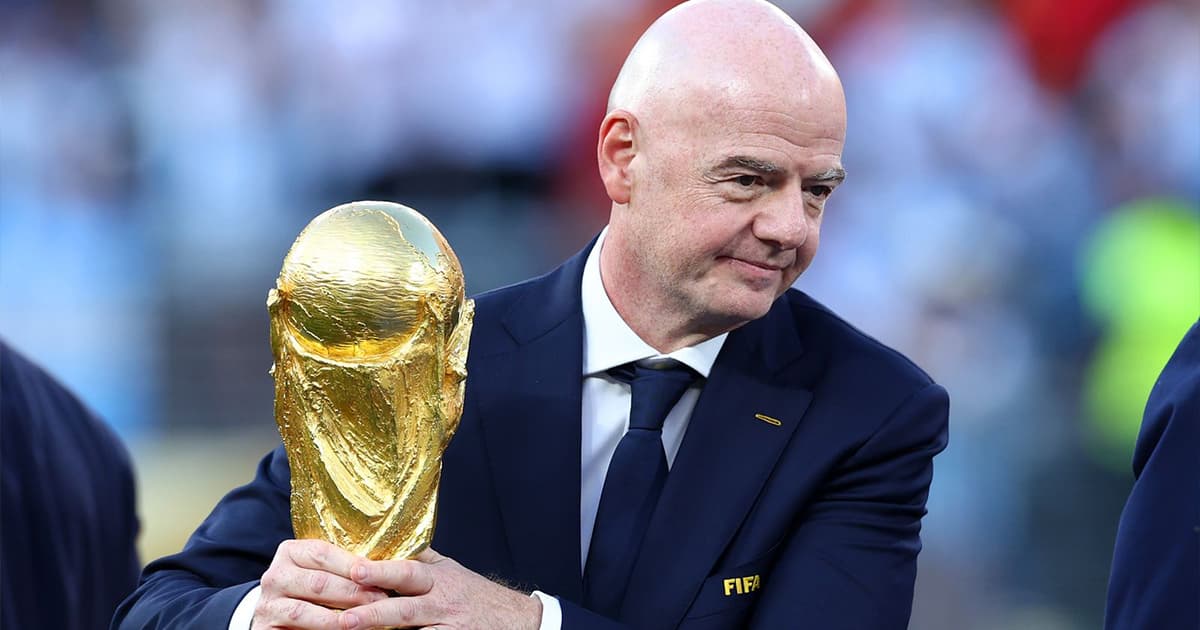

With the 2026 FIFA World Cup approaching its climax, the global football landscape is already turning its attention to the unprecedented spectacle of the FIFA World Cup 2030.
The tournament will see six different countries co-host the tournament across three continents, with centenary matches being played in Uruguay, Argentina and Paraguay before the primary hosts Spain, Morocco and Portugal continue co-hosting the rest of the showdown.
The teams that hoist the trophy will not rely on aging icons, but on a golden generation of current teenage prodigies who will be hitting their absolute physical and mental primes.
By 2030, the exciting wonderkids who tore apart the 2026 World Cup will be 22 to 24 year old superstars, having now gained more experience playing at a high level.
Striver.Football delves into how some of these players performed at the tournament, and how they might fare heading into the next tournament in four-years time.
Europe's Golden Generation Is Just Getting Started
Spain enters the 2030 cycle with arguably the most terrifyingly complete young core in the world, perfectly timed to peak on home soil.
The obvious first pick is Lamine Yamal. The Barcelona winger will still only be 22 years old when the 2030 tournament kicks off. Yes. You heard that right, 22. Given he was already taking part in major European clashes for club and country at just 16, it will have looked as if he has been playing for an eternity.
By that age, we expect Yamal to have evolved even further into an even more mature, dictatorial forward capable of controlling the tempo of entire matches.
Complementing Yamal’s attacking brilliance is his club teammate, Pau Cubarsi. By 2030, the 23-year-old will have evolved into the quintessential modern center-back.
His rare ability to execute line-breaking passes under extreme pressure will allow Spain to bypass midfields entirely. With midfielders like Gavi and Pedri acting as the experienced field generals aged 26 and 27 respectively, Spain's youthful spine looks entirely bulletproof.
France has spent the last decade producing endless depth, and their 2030 blueprint relies on a midfield that blends terrifying athleticism with supreme technical maturity.
We fully expect Warren Zaire-Emery, who has been used very sparingly by Didier Deschamps at both Euro 2024 and the 2026 World Cup, to be the golden standard of box to box midfields.
His ability to anchor the midfield, break up play, and drive transitions makes him the perfect engine for Les Bleus.
Alongside him, Desire Doue and Bradley Barcola will provide France with unmatched tactical flexibility and dangerous width down the left. Both players have shared minutes down that left flank, and are on the back of winning back-to-back UEFA Champions Leagues for PSG, just like their compatriot Zaire-Emery.
Speaking of PSG, Joao Neves of Portugal will be 25 by 2030, indicating he will not even have entered the prime years of his career.
Neves, who is a rare breed of three-in-one midfield generals capable of dictating the tempo of games while working hard without the ball, will lead out a new generation of Portuguese talent preparing for life post Cristiano Ronaldo.
South America's Next World Cup Heroes
Brazil’s quest for a sixth star will lie squarely on the shoulders of Endrick and Estevao Willian. By 2030, Endrick will be a 23-year-old seasoned striker.
He combines the brute physical power of a classic number nine with the lightning-quick feet of a traditional Brazilian forward. On the flank, Estevao, who missed the 2026 World Cup due to injury, will hope to be one of the players eager to revive Brazilian football with his dazzling dribbling and directness that will force opposing defenses to constantly stretch, creating a nightmare scenario for low-block opposition.
Meanwhile, Ecuador is built to disrupt the traditional powerhouse duopoly of South America, spearheaded by Kendry Paez.
The Chelsea-bound playmaker will be 23, operating as a pure, imaginative number ten. Paez possesses the rare capability to unlock elite defenses with a single touch, making Ecuador an incredibly dangerous dark horse.
For Argentina, Nico Paz represents the post-Messi creative evolution, carrying elite ball-transportation skills into the final third.
Emerging Nations Ready To Challenge The Elite
The beauty of the expanded World Cup format is the platform it gives emerging football nations, and several young stars are ready to carry their countries into uncharted territory.
Turkey will boast a terrifying creative tandem in Arda Guler and Kenan Yildiz. Both will be 25 or younger, offering a blend of elite shooting from distance and chaotic, unpredictable dribbling.
In Africa, Senegal looks to have found the natural heir to Sadio Mane in Paris Saint-Germain’s Ibrahim Mbaye, a winger whose explosive first step can destabilize any fullback.
Yan Diomande and Amad Diallo will lead a new golden generation of Ivorian footballers, who have the potential to surpass what the likes of Didier Drogba and Yaya Toure achieved in an Elephants shirt.
Across the Atlantic, Mexico’s hopes rest on Gilberto Mora, a highly versatile playmaker whose spatial awareness allows him to dictate play from both central positions and wide channels.
For Morocco, Ayyoub Bouaddi possesses a calm composure that defies his teenage years. He offers a press-resistant profile that allows to pivot seamlessly between a suffocating high-press and a patient, possession-based style.
Morocco are starting to cement themselves as a football powerhouse, and Bouaddi might just be the leader of a new generation hungry to win Morocco Africa’s first-ever World Cup.
Why World Cup 2030 Could Belong To This Generation
The next generation of players defining this upcoming 2030 World Cup cycle are distinct because they lack positional limitations.
Center-backs like Pau Cubarsi play like midfielders, while attackers like Nico Paz dictate possession like a deep-lying playmaker.
The physical demands of playing across different continents and climates will favor teams that can rotate high-energy talent without losing technical quality. The youth core leading the charge is ready to rewrite football history.