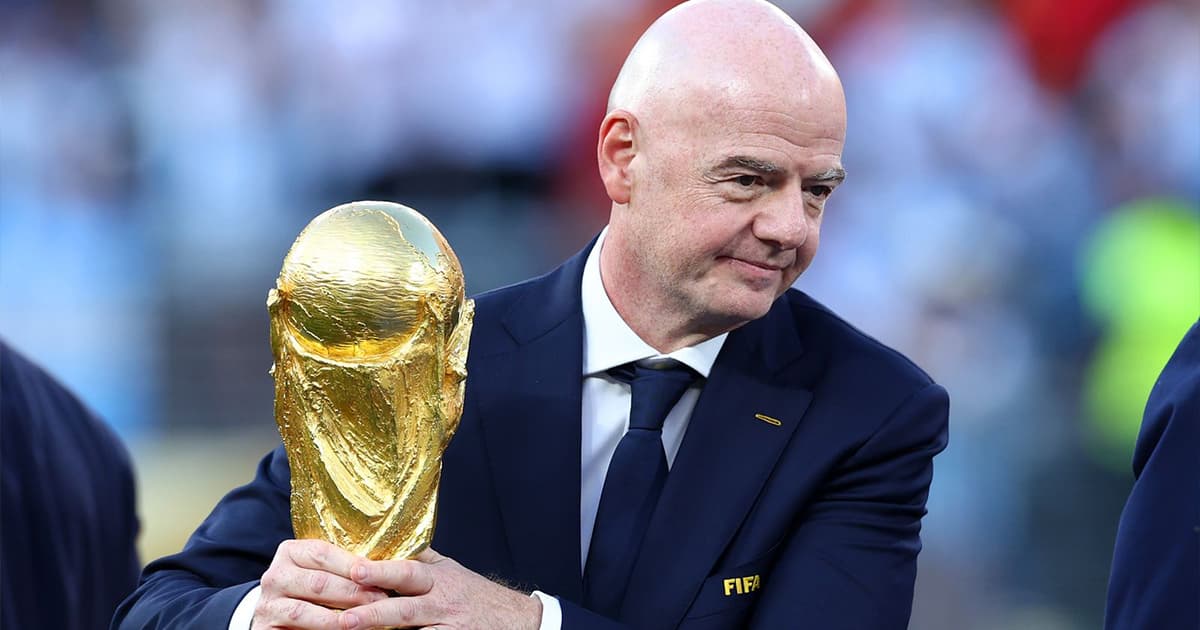

The 2026 FIFA World Cup which has been taking place in North America has been a great litmus test to show which teams have a bright future in football for years to come.
This historic 48-team tournament was a chance for sides to show their capability to perform at a global stage, and for others, it was a chance to prove they have what it takes to sustain their brilliance in the future.
Striver.Football dug deep assessing all 48 nations, and identified five nations whose performances in Canada, Mexico, and the United States proved that their footballing futures are blindingly bright.
5. Switzerland

2026 World Cup Finish: Quarterfinals (3-1 AET defeat to Argentina)
The Blueprint: Stubborn, highly disciplined mid-block and transitions
The Young Catalyst: Johan Manzambi (20, Attacking Midfielder)
Switzerland executed one of the most structurally impressive tournaments of the summer. They comfortably handled Colombia on penalties and pushed reigning champions Argentina to the absolute limit in a 3-1 extra-time quarterfinal thriller.
Historically known for their rigid defensive shape, the Swiss have finally found their missing attacking spark in SC Freiburg starlet Johan Manzambi.
The 20-year-old completely revolutionized Murat Yakin’s midfield transition, racking up three goals and two assists over the campaign.
With Premier League giants Aston Villa set to complete his signature, Manzambi’s creative gravity has elevated Switzerland’s entire tactical ceiling.
4. Ivory Coast

2026 World Cup Finish: Round of 32 (2-1 defeat to Norway)
The Blueprint: High-intensity pressing and explosive 1v1 isolation
The Young Catalyst: Yan Diomande (19, Winger)
The African side brought a highly progressive, modern brand of front-foot football to North America.
Rather than playing a conservative low block, the Elephants suffocated opponents high up the pitch and instantly released their rapid wide weapons.
No player epitomized this fearlessness more than RB Leipzig’s Yan Diomande. The 19-year-old wing wizard paralyzed elite full-backs throughout the tournament with his devastating change of pace and low-center-of-gravity dribbling.
Armed with a new golden generation of exciting stars like Bazoumana Toure, Amad Diallo, Guela Doue and Crist Inao-Oulahi, Ivory Coast perfectly engineered to dominate continental and international transition-based football for the next decade.
3. France

2026 World Cup Finish: Semifinals (2-0 defeat to Spain)
The Blueprint: Overwhelming mechanical squad depth and vertical wing play
The Young Catalysts: Bradley Barcola (23, Winger) & Desire Doue (21, Attacking Midfielder)
France remains the golden standard for elite youth production, boasting a pipeline so deep it borders on the unfair.
Even as the nation transitioned through tactical eras under Didier Deschamps, Les Bleus successfully blooded a frightening array of under-23 masterminds alongside captain Kylian Mbappe.
The left flank belonged to Bradley Barcola, whose terrifying linear acceleration and clinical final-third execution tortured deep blocks all tournament.
Complementing him was the technical elegance of Desire Doue, who routinely unlocked tight defensive zones with central, press-resistant carrying. Players like Michael Olise, who leads the tournament assists charts with five at the time of writing, also have bright futures ahead of them despite being 24.
France’s continuous assembly line of world-class talent ensures they will remain favorites for every major international trophy through 2030 and beyond.
2. Morocco

2026 World Cup Finish: Quarterfinals (2-0 defeat to France)
The Blueprint: High-possession engineering and interior combinations
The Young Catalyst: Ayyoub Bouaddi (18, Central Midfielder)
Morocco proved their historic Qatar 2022 run was no flash in the pan, marching all the way back to the quarterfinals in North America. Crucially, they achieved this success while seamlessly integrating a brilliant new wave of academy-reared teenagers into their veteran core.
The crown jewel of this transition was Lille’s Ayyoub Bouaddi. Having switched his international allegiance just before the tournament, the 18-year-old midfielder made history against France as the youngest African teenage player to ever make five World Cup appearances.
Bouaddi’s press-resistance, physical resilience, and extraordinary passing accuracy—highlighted by a staggering masterclass in deep midfield circulation against Brazil—have made him the most coveted teenage playmaker in world football.
As co-hosts of the 2030 World Cup, Morocco’s elite youth pipeline has put them on a direct collision course with global glory.
1. Norway

2026 World Cup Finish: Quarterfinals (2-1 AET defeat to England)
The Blueprint: Direct attacking transitions and vertical flank wizardry
The Young Catalyst: Andreas Schjelderup (22, Left Winger)
Norway spectacularly shattered their 28-year major tournament drought by marching all the way to the World Cup quarterfinals. In doing so, the Scandinavian outfit emphatically disproved the narrative that they are a one-man show entirely dependent on Erling Haaland.
While Haaland occupied center-backs, Benfica’s Andreas Schjelderup emerged as a world-class vertical threat.
The 22-year-old left winger was an absolute nightmare in isolated 1v1 situations, capping off an outstanding tournament by opening the scoring against England in their dramatic quarterfinal clash.
Ably supported by creative conduits like Antonio Nusa and Oscar Bobb, Norway’s explosive, young vanguard has officially arrived, transforming them into a certified tier-one threat ahead of the next European Championship cycle.
Why These Nations Are Built For The Future
The 2026 World Cup was a great chance for teams to showcase not just their present, but future, and although some did not achieve their ultimate target of hopefully winning the tournament, the ongoing tournament was a great platform for them to build on from.
The raw materials for the future of football have already been refined, and the next World Cup cycle will be interesting to watch for the sides we profiled.