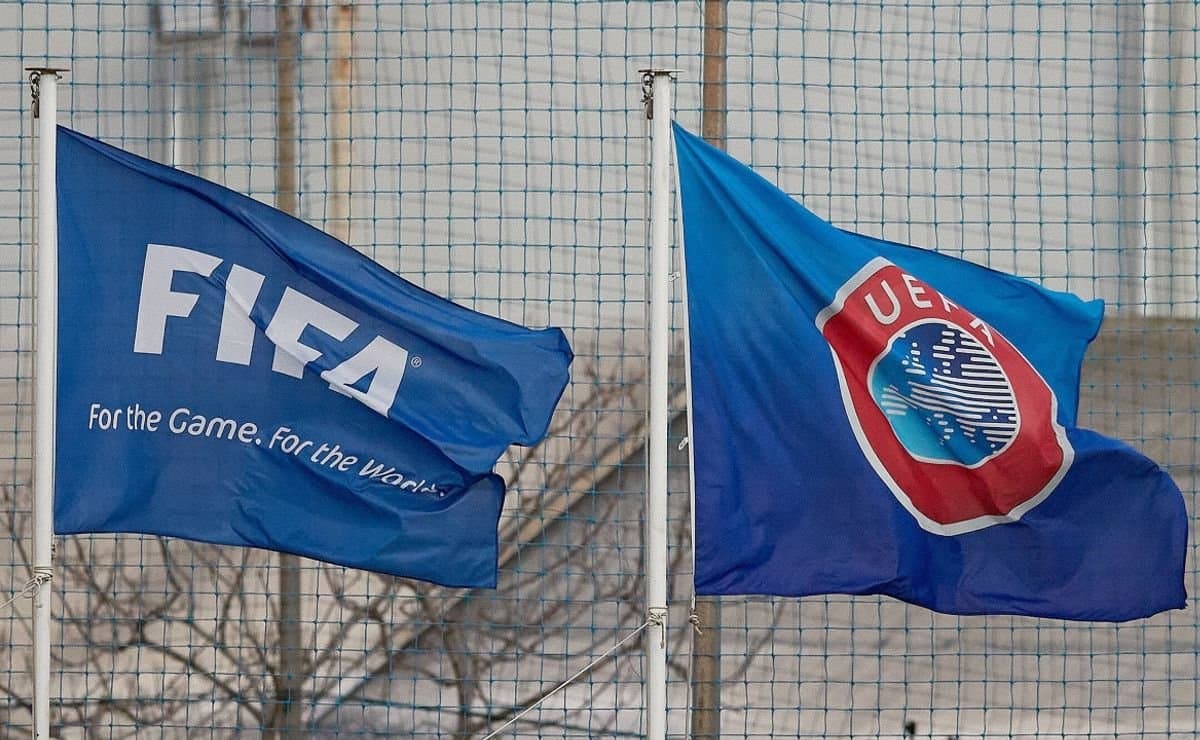
With the FIFA World Cup 2026 set to kick off across the United States, Canada and Mexico, excitement is building for what promises to be the biggest tournament in football history.
However, the build-up has not been without controversy. From concerns over extreme heat to debates around ticket affordability, FIFA has faced criticism on multiple fronts.
The latest talking point came this week when football's governing body was forced into a partial U-turn on its water bottle policy after widespread backlash.
Here are the biggest bottle jobs and controversies surrounding World Cup 2026 ahead of kickoff.
7. Environmental Concerns Around The Tournament
World Cup 2026 will be the largest edition of the tournament ever staged. With 48 teams, 104 matches and venues spread across three countries, environmental groups have questioned the competition's carbon footprint.
The extensive travel required for teams, officials and supporters has led to concerns about the tournament's sustainability credentials.
While FIFA has outlined various environmental initiatives, critics argue that the scale of the event makes reducing its impact a significant challenge.
6. Match Scheduling Questions
Hosting a global event means balancing audiences across multiple time zones. As a result, some kick-off times have raised questions about player welfare and fan convenience.
Broadcasters naturally want matches scheduled for peak viewing audiences, but those decisions do not always align with ideal playing conditions.
With summer temperatures expected to soar in some host cities, scheduling will remain under scrutiny throughout the tournament.
5. Cross-Border Travel Challenges
A World Cup spread across three countries is historic. While the format offers unique opportunities, it also presents logistical hurdles.
Fans following their teams across the United States, Canada and Mexico could face long-distance travel, visa requirements and significant costs.
For supporters planning to attend multiple matches, World Cup 2026 could become one of the most demanding tournaments ever from a travel perspective.
4. The Expanded 48-Team Format
FIFA's decision to increase the World Cup from 32 to 48 teams remains divisive. Supporters of the expansion believe it gives more nations a chance to compete on football's biggest stage. Critics, however, argue that increasing the number of teams risks diluting the quality of the competition.
Although the debate has quietened since qualification concluded, the success or failure of the expanded format will be one of the tournament's defining storylines.
3. FIFA's Water Bottle U-Turn
Few stories have generated as much criticism in recent days as FIFA's water bottle policy.
Earlier this week, tournament organisers confirmed that reusable bottles would not be permitted inside stadiums.
The decision immediately sparked backlash from supporters, politicians and health experts.
After mounting criticism, FIFA partially reversed its position and announced that fans attending matches in the United States and Canada would be allowed to bring one factory-sealed disposable water bottle of up to 590ml into venues.
The episode has become one of the most talked-about pre-tournament controversies and raised wider questions about fan welfare.
2. Extreme Heat Concerns
Many experts believe the biggest challenge facing World Cup 2026 may not come from the football itself.
Several host cities are expected to experience high temperatures during the tournament, prompting concerns for both players and spectators.
Researchers have warned that a number of matches could be played under conditions associated with increased heat stress.
The water bottle debate only amplified those concerns, with many supporters questioning whether adequate measures are in place to ensure safe conditions throughout the competition.
Cooling stations, hydration points and other mitigation measures are expected, but the issue is unlikely to disappear once the tournament begins.
1. Ticket Prices
No issue has generated more frustration among supporters than the cost of attending World Cup 2026. Fans have repeatedly criticised rising ticket prices, with many arguing that football's biggest tournament is becoming increasingly inaccessible to ordinary supporters.
Travel costs, accommodation expenses and match tickets can quickly add up, especially for those hoping to follow their team throughout the competition.
The recent water bottle controversy only added fuel to that debate, with critics arguing that fans were being asked to spend more at a tournament that is already expensive to attend.
Which Controversy Could Shape The Tournament?
The football will ultimately determine how World Cup 2026 is remembered. Yet before a ball has even been kicked, FIFA has already found itself dealing with a series of controversies that extend beyond the pitch.
Whether it is ticket affordability, extreme heat or the now infamous water bottle saga, the tournament arrives with plenty of questions still to answer.
As kickoff approaches, FIFA will hope that the headlines soon return to the football itself.