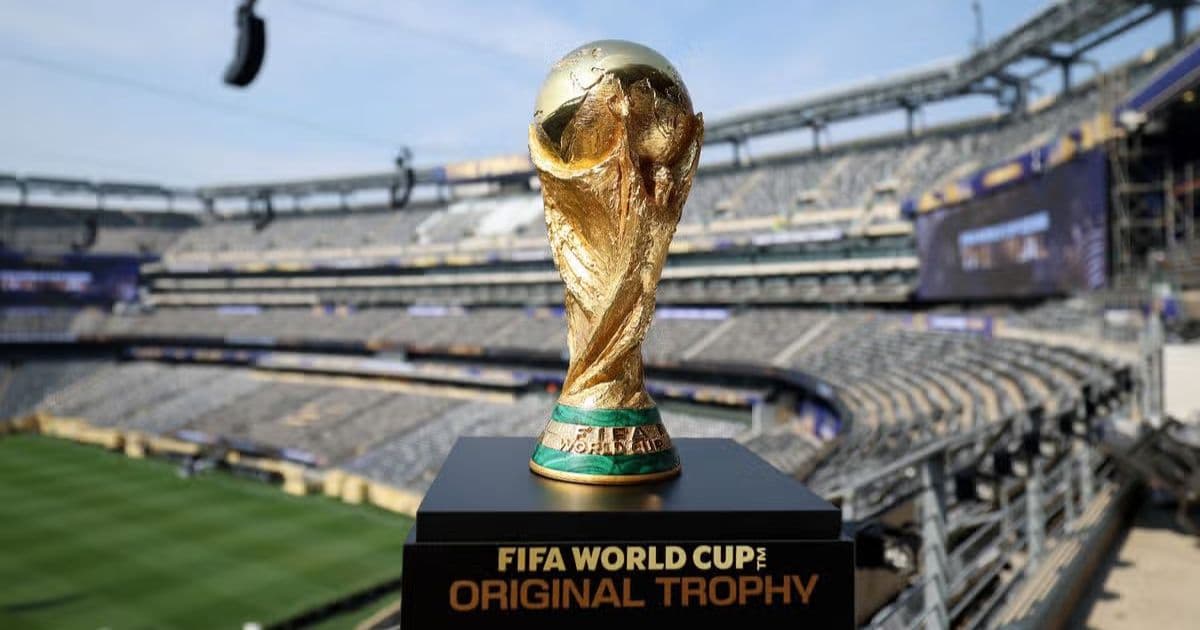
The FIFA World Cup has always been a celebration of national identity, but the 2026 edition also highlights something else: football has become more global than ever.
Of the 1,248 players selected for the tournament, 292 were born in a country different from the one they represent. That is almost one in every four players competing across the United States, Canada and Mexico.
The numbers become even more striking when looking at France. Seventy-six French-born players are representing other nations at this World Cup; up from 50 at the 2018 tournament. When combined with the players in France's own squad, almost 100 World Cup footballers were born on French soil.
Far from being an anomaly, it reflects how migration, family heritage and elite player development are reshaping international football.
Why France Has Become Football's Biggest Talent Exporter
No country better illustrates the global nature of modern international football than France. At the 2026 FIFA World Cup, 75 French-born players are representing nations other than France.
Add Didier Deschamps' 26-man squad and more than 100 players at the tournament were born on French soil, accounting for almost eight per cent of all participants.
The numbers are no coincidence.
For decades, France has built one of football's most successful youth development systems. At the same time, its colonial history and successive waves of migration have created deep cultural and family ties with countries across Africa, the Caribbean and Europe.
Families with roots in Algeria, Morocco, Senegal, Cote d'Ivoire, the Democratic Republic of Congo, Haiti and several other nations have settled in France over multiple generations.
Many of their children grow up in French cities, develop in elite academies such as Clairefontaine or the youth systems of clubs like Paris Saint-Germain, Lyon and Marseille, before eventually choosing to represent the countries of their parents or grandparents.
As a result, national teams across the World Cup are filled with players who were either born or developed in France, highlighting the country's extraordinary influence on the global game.
Rather than suggesting France is "losing" talent, the figures reinforce its position as one of football's greatest exporters of elite players. Its investment in youth development continues to benefit not only Les Bleus, but dozens of national teams competing on the sport's biggest stage.
How FIFA Decides Which Country a Player Can Represent
The answer lies in FIFA's eligibility rules.
Before representing a national team, every player must first hold that country's nationality.
Beyond citizenship, FIFA also requires a genuine connection to the nation.
A player can become eligible if they:
- Were born in the country.
- Have a biological parent born there.
- Have a grandparent born there.
- Have lived there continuously for a specified period under FIFA's residency regulations.
These pathways recognise that identity is often shaped by more than birthplace alone. In an increasingly connected world, many footballers grow up with deep ties to multiple countries through family, culture or migration.
The Different Paths Players Take to International Football
No two international journeys are identical.
Some players represent the country where they were born. Others choose the nation their parents proudly supported throughout their childhood.
Some switch allegiance because another country offers a clearer pathway to senior international football. For many, the decision is deeply personal, shaped by family, identity and a sense of belonging rather than football alone.
Football has even seen members of the same family make different choices. Jerome Boateng represented Germany and went on to win the 2014 FIFA World Cup, while his half-brother Kevin-Prince Boateng chose to play for Ghana, the country of their father's birth.
Their careers remain one of the clearest examples of how heritage and personal identity can lead to different international paths.
The 2026 World Cup features several players with similarly unique stories.
Folarin Balogun was born in New York, raised in England and represented England throughout the youth levels before switching his allegiance to the United States in 2023 through his American citizenship by birth.
Brahim Diaz came through Spain's youth system before deciding to represent Morocco, while Inaki Williams, born in Spain to Ghanaian parents, now plays for Ghana. Interestingly, his younger brother Nico Williams represents Spain, showing that even siblings can make different international choices.
Meanwhile, Declan Rice represented the Republic of Ireland at youth level and in senior friendlies before switching to England, while Jamal Musiala featured for England's youth teams before committing to Germany, the country of his birth.
Every decision tells a different story. Some players follow family heritage, some embrace the nation where they grew up, while others seize an opportunity that aligns with both their footballing ambitions and personal identity.
The modern World Cup is as much a reflection of these individual journeys as it is of the countries competing on the pitch.
How Global Migration Is Changing International Football
The trend extends well beyond France.
One of the most remarkable examples at the 2026 World Cup is Curacao. Twenty-five of its 26-man squad were born in the Netherlands, illustrating the close historical and constitutional relationship between the Caribbean island and the Dutch kingdom.
For smaller footballing nations, dual-nationality players can transform the competitiveness of an international team.
Countries such as Haiti benefit from players who have developed in stronger football environments abroad while maintaining close cultural and family ties to their ancestral homeland.
Instead of building elite academies from scratch, they can welcome players who already possess experience gained in some of Europe's best development systems.
The result is a more competitive World Cup, with emerging nations capable of challenging traditional powers.
Does Dual Nationality Change the Meaning of International Football?
Some supporters argue that international football should only feature players born in the country they represent.
Others see modern squads as an authentic reflection of today's multicultural societies.
The reality is often more nuanced than either viewpoint.
A footballer can be born in Paris, speak Arabic or Wolof at home, spend every summer visiting grandparents in North Africa or West Africa, and feel equally connected to both cultures.
For many players, choosing a national team is not about rejecting one identity in favour of another. It is about embracing every part of who they are.
The World Cup simply brings those personal stories onto the biggest stage.
Modern Football's Global Identity
International football will always be about representing a nation.
But the 2026 FIFA World Cup shows that a player's journey to wearing that shirt is often shaped by multiple countries, cultures and communities.
Whether it is France producing talent for nations across the globe, Curaçao drawing heavily from Dutch-born footballers or players like Folarin Balogun navigating dual eligibility, modern football reflects a world where identity is rarely confined by geography.
The badge on the front of the shirt may represent one nation.
The story behind the player often belongs to many.