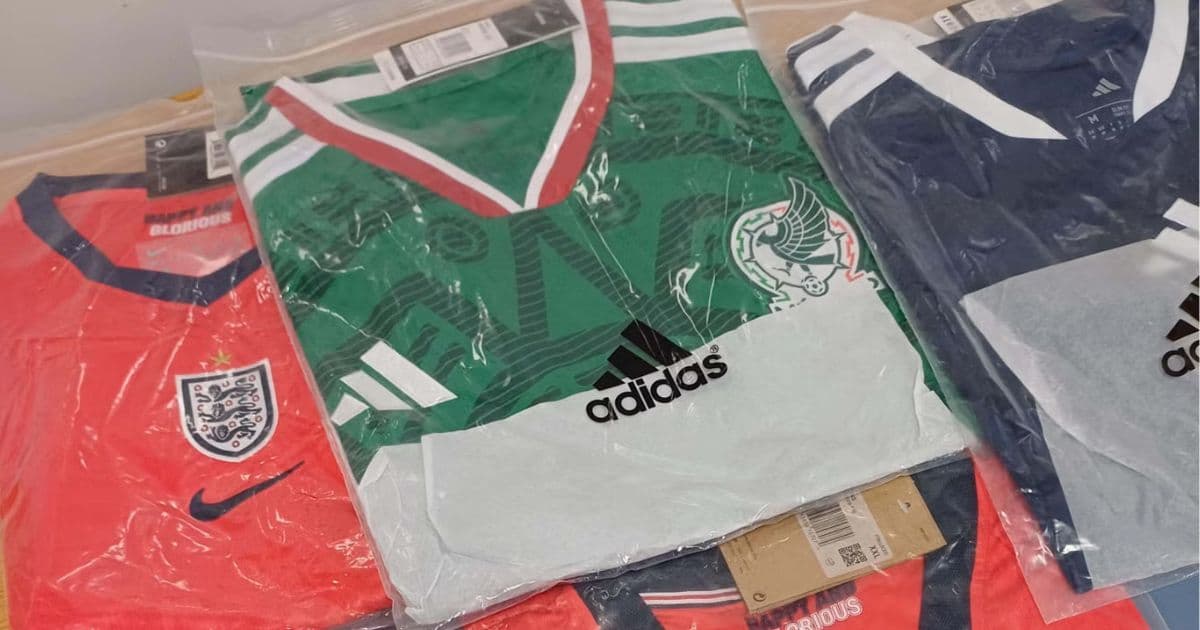
More than 220,000 counterfeit football shirts have been seized across the UK in a nationwide crackdown led by the City of London Police, with officers estimating the fake merchandise had a genuine retail value of £18.5 million.
The operation, which has been running since January 2026, targeted online marketplaces, live shopping apps, market stalls and retail outlets as demand for football shirts surged during the FIFA World Cup.
Police also arrested six people suspected of selling counterfeit kits, warning supporters that fake shirts are far from a harmless bargain.
Why Counterfeit Football Shirts Are A Serious Problem
According to the City of London Police's Police Intellectual Property Crime Unit (PIPCU), counterfeit football shirts are often produced in unsafe and unregulated conditions, with some containing harmful materials that fail to meet safety standards.
Detective Chief Inspector Amanda Lowe, Head of PIPCU, said organised criminal groups continue to profit from counterfeit merchandise.
"Counterfeit football shirts aren't a harmless bargain, they are a key revenue stream for organised crime groups, helping to mask and fund the criminality happening behind the scenes.
"Our aim was simple; to ensure fans enjoyed the tournament and supported their team in a shirt that's safe and legitimate."
Police added that counterfeit goods can also expose buyers to financial fraud while depriving clubs, manufacturers and football organisations of vital revenue.
Why More Fans Are Looking For Cheaper Alternatives
The latest crackdown comes as the cost of official football shirts continues to rise.
This summer, several Premier League clubs increased the price of replica kits sold through their official stores, with some adult shirts now costing up to £90.
Among the most notable increases:
Tottenham Hotspur now charge £90 for an adult home shirt, an increase of £5 from last season.
Coventry City increased adult replica shirts by £10 to £70.
Coventry's children's shirts now cost £60, while baby kits are priced at £55.
With official kits becoming increasingly expensive, many supporters are turning to cheaper alternatives online, particularly through social media marketplaces and overseas websites.
However, police say those purchases often support organised criminal networks while offering products that may not meet basic safety standards.
How To Spot A Fake Shirt
Authorities are encouraging supporters to purchase shirts from official club stores or authorised retailers wherever possible.
Warning signs include:
- Prices that appear significantly cheaper than official retailers.
- Poor stitching around badges or collars. Low-quality material or incorrect sizing.
- Missing or inaccurate manufacturer tags.
- Care labels with handwritten numbers.
- Websites using official product images without clear retailer information.
- Checking for secure websites and official product codes can also help supporters avoid counterfeit products.
What Rising Kit Prices Mean For Football Fans
Replica football shirts have become an important part of football culture, allowing supporters to show their loyalty both on matchdays and beyond.
However, as prices continue to rise, many fans—particularly families buying multiple shirts each season—face increasingly difficult decisions.
While the latest police operation highlights the risks associated with counterfeit merchandise, it also raises wider questions about affordability in football, with official replica shirts now representing a significant expense for many households.
For supporters, balancing the desire to wear their club's colours with the rising cost of official merchandise is becoming an increasingly common challenge.