In recent years, Brighton & Hove Albion have become a leading example of player development, smart recruitment and how an underdog can compete with the world's best, both on and off the pitch.
After achieving promotion to the Premier League for the first time in 2017, the Seagulls have remained in the top flight ever since, an impressive achievement given the club's difficult recent history.
Just over 25 years ago, Brighton were struggling in the modern equivalent of League Two, the old Third Division, while facing financial turmoil, the threat of extinction and effectively being homeless after groundsharing with Gillingham FC more than 70 miles away.
Incredibly, Brighton's present is almost unrecognisable. Premier League and European football, a modern stadium, a youthful and promising squad, and a club capable of developing talent, competing at the highest level and selling key assets for huge profits.
So, how have Brighton built such a successful footballing and business model from such difficult beginnings? Striver.Football take a look at how they did this.
The Genius of Tony Bloom and Brighton's Transformation
Born in Brighton in 1970, Anthony Grant Bloom grew up in an Albion-supporting family, some of whom had previously acted within the board of directors.
After graduating from university with a mathematics degree and a few formative years in accountancy, Bloom's financial rise was interesting.
Using his mathematical and statistical approach, Bloom first made his name in Asia's emerging football betting market, specialising in Asian handicap betting while also becoming a highly successful professional poker player.
Bloom returned in the early 2000s to invest in his boyhood Brighton & Hove Albion, eventually becoming the majority investor and chairman of the then-League One club in 2009.
Under Bloom's ownership, Brighton's fortunes changed dramatically. The club reached the Championship in 2011, the same year they moved into the newly-developed Falmer Stadium, now known as the American Express Stadium, before reaching the Premier League for the first time in 2017.
The chairman has invested millions of his own money into the club without relying on excessive spending., without excessive spending, while also taking minority stakes in Hearts of Midlothian, Union Saint-Gilloise and Melbourne Victory.
However, the central aspect of Bloom's success harks back to his analytical, statistical and mathematical background, which has helped revolutionise the modern football recruitment landscape.
Read More: How Sunderland Returned to the Premier League and Built a Blueprint for Sustainable Growth
How Data-Led Recruitment Became Brighton's Competitive Advantage
Through his private data company, Starlizard, Brighton have developed a recruitment model built around analytics, targeting players with the potential to develop and generate significant returns based on specific statistical evidence.
Starlizard is where Bloom made his fortune. The betting advisory and data company looks for situations where statistical analysis suggests a player or outcome may be undervalued.
That same principle has been transferred into Brighton's recruitment, helping identify players whose performances suggest they could be worth significantly more than their current market value.
The company analyses huge amounts of data from leagues around the world, helping Brighton put detailed valuations on players.
If the data suggests a player is undervalued, the club can move for them before other teams recognise the same opportunity.
Speaking to The Observer, Bloom said: “Without that it would be really tough. We’ve got superb analytics. And our valuation of players across the world in huge amounts of leagues – that breadth gives us a significant advantage.”
In essence, Bloom has taken the principles that made him successful in betting – identifying value before the wider market – and applied them to football recruitment, giving Brighton a competitive advantage that does not rely on outspending their rivals.
How Brighton Buy Low, Sell High and Reinvest
Another key part of the model has been their ability to reinvest intelligently, rather than simply spend the money generated from player sales.
Since 2022, Brighton have spent around £586 million on transfers while generating roughly £529 million from player sales, leaving them with a net spend of around £57 million.
In that period, Chelsea have had a net spend of approximately £880 million, with Brighton's own Marc Cucurella (£56.3 million), Robert Sanchez (£20 million), Moises Caicedo (£115 million), Joao Pedro (£55 million) and Facundo Buonanotte (£2 million loan fee) all making the move to Stamford Bridge, making the combined value of those deals more than £248 million.
Nevertheless, the relatively low net spend demonstrates that Brighton's model is not simply geared towards generating profit. Instead, transfer income is recycled into further squad additions, creating a gradual cycle of selling high and reinvesting in new talent.
This summer, the Seagulls have once again invested significantly but without abandoning their disciplined approach, replacing Jan Paul van Hecke with the younger Luka Vuskovic by exchanging big sums with Tottenham, while adding further defensive strength in Premier League-proven Pascal Struijk from Leeds for around £20 million.
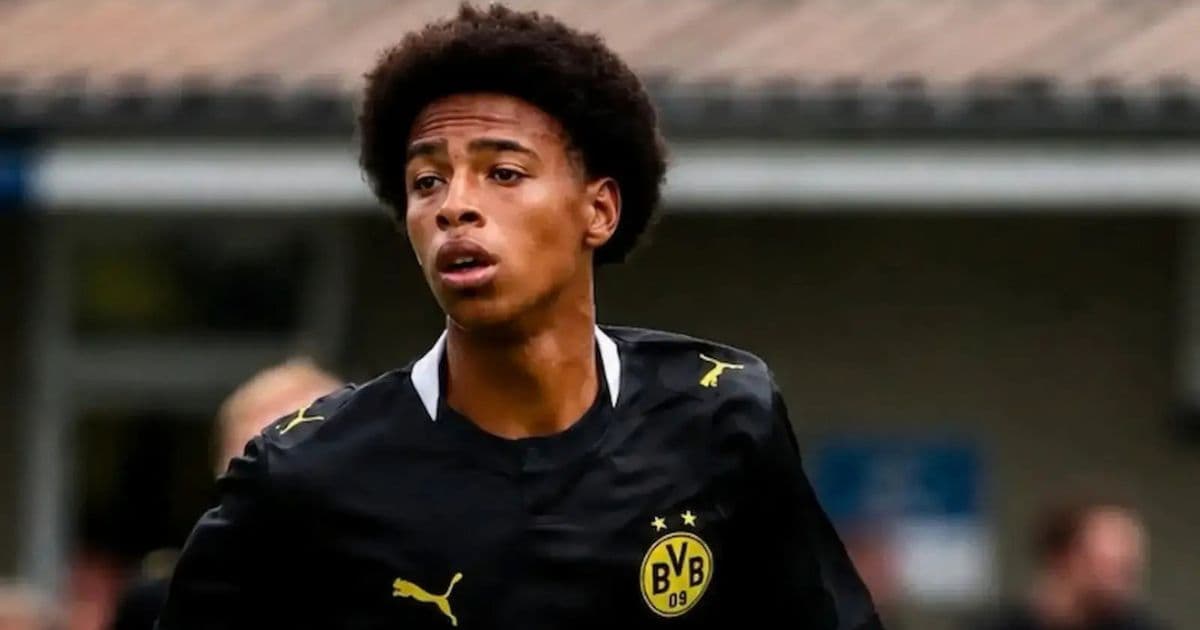
However, perhaps the most interesting addition is 19-year-old Nigerian Zadok Yohanna from AIK Stockholm for a Swedish transfer-record £21.5 million, despite having made just 13 senior appearances.
Such a fee for a player with limited senior experience may appear surprising, but Brighton's reputation as smart buyers has been built on exactly these calculated risks, identifying players for what they could become rather than what they are worth today.
How Brighton's Model Survives Players, Managers and Staff Departures
No matter how successful any football club is, the nature of football means that players, coaches and staff come and go, particularly when opportunities arise to join bigger clubs.
Despite the Seagulls' progress, Brighton still operate on a very different financial and commercial scale from clubs such as Liverpool, Arsenal and Manchester United.
However, what has set the Seagulls apart is their ability to achieve so much with relatively little. Even when forced change occurs, the club has maintained its identity, project and ideology, continuing to identify undervalued players before developing and improving them within the club's structure.
The departure of head coaches such as Roberto De Zerbi and Graham Potter, key recruitment figures including Dan Ashworth, Paul Winstanley and David Weir, and multi-million-pound players such as Moises Caicedo, Marc Cucurella, Joao Pedro and Alexis Mac Allister has not significantly disrupted the quality maintained both on and off the pitch.
Brighton's structure has remained remarkably resilient despite the revolving door of football.
Another stumbling block for any club is that a player can underperform or simply fail to adapt to a new environment.
Although Brighton's recruitment successes outweigh their failures, signings such as Alireza Jahanbakhsh, Jurgen Locadia and Florin Andone demonstrate that no recruitment model is flawless.
Regardless, Brighton & Hove Albion continue to excel at identifying undervalued players from all corners of the globe, offering them first-team opportunities that many other Premier League clubs may not.
In doing so, Brighton can continually rebuild their squad while remaining competitive at Premier League and European level under Fabian Hurzeler.