
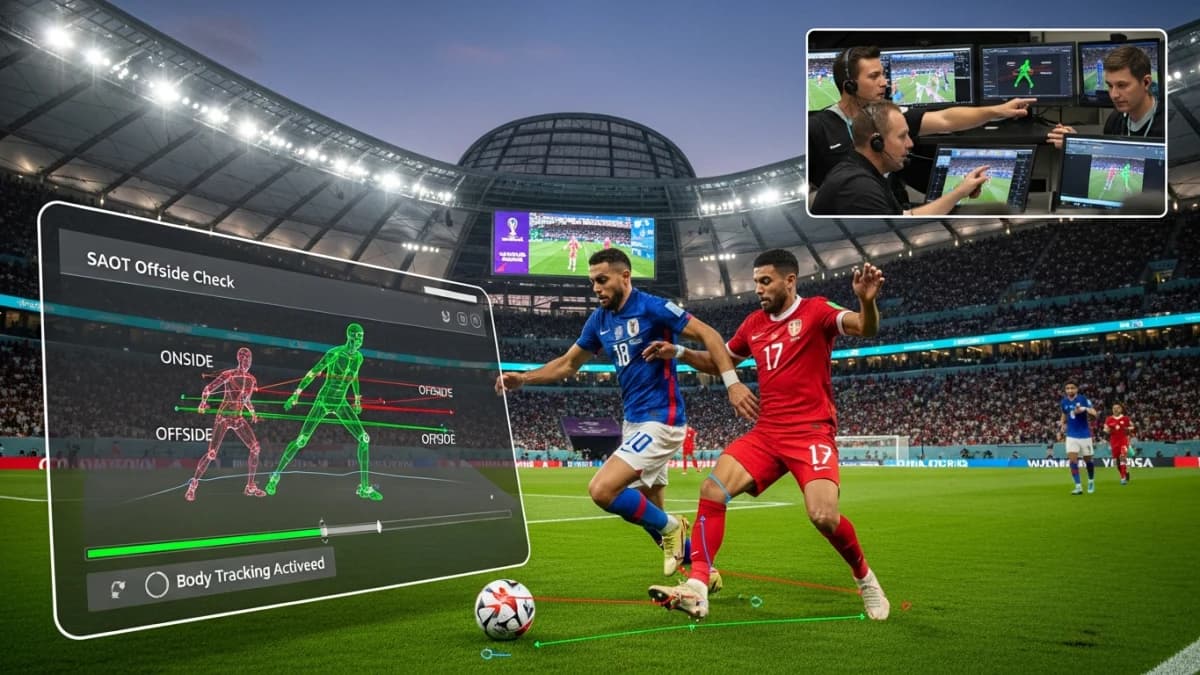
The way fans experience the World Cup has changed since four years ago. From offside decisions to highlight clips delivered seconds after a goal, much of the content now passes through AI systems before it reaches viewers.
This isn’t about robots replacing footballers. It’s about a quieter shift in how the game is experienced. AI is increasingly shaping how fans follow the World Cup, from highlights to statistics, often without them realising it.
What Is Football AI Pro And How Does It Work?
FIFA’s new tool, Football AI Pro, is at the center of this shift. Built on a Football Language Model trained on hundreds of millions of data points, it allows coaching staff to ask tactical questions, such as how an opponent’s defence reacts under pressure, and receive instant, evidence-backed answers supported by video and 3D simulation.
All 48 teams at this World Cup have access to the system. But for fans, the key difference isn’t access, it’s interpretation. Coaches can ask the same question and receive the same data, but the advantage comes from how well they turn those insights into a workable game plan.
The real difference may come down to how teams interpret the data. Those who understand it better than their opponents could gain an edge that isn’t visible on the pitch, but shapes the game before and during matches.
How AI Is Powering Modern Offside Decisions
At this World Cup, players have been digitally modelled to assist officiating decisions. When offsides are checked, the system uses 3D positional data to determine the exact moment and location of contact before sending the result to the referee.
For defenders, it means margins are now measured at centimetre level, and monitored in real time.
Why More Fans Are Turning To AI For Football Information
Big media outlets have largely missed this shift. Fans aren’t just watching football differently, they’re learning about it differently. Many now bypass long reads and opinion pieces, instead asking AI tools directly about form, tactics, and match events.
These systems draw on a mix of news, fan discussions, and other sources, then present a single consolidated explanation. For younger fans especially, football is increasingly being understood through that filtered lens.
It marks a clear break from how older generations followed the game, through radio, matchday programmes, and post-match debates.
How AI Is Changing Player Scouting And Recruitment
AI is also changing how players are scouted, valued, and signed. Clubs and agencies now build detailed data profiles that go far beyond goals and assists, tracking metrics like off-ball movement, defensive positioning, and overall efficiency.
For a 17-year-old academy player hoping to get noticed, this means the eye test alone isn't enough anymore. Performance data can be just as influential as the moments that stand out to fans.
The Technology Running The World Cup Behind The Scenes
FIFA has developed an AI system to help manage crowd movement, transport, and broadcast operations across the United States, Canada, and Mexico, coordinating logistics for millions of fans throughout the tournament.
The bigger question isn’t whether the technology works, it does, but what it changes about the sport itself. Football has always thrived on instinct, unpredictability, and chaos, qualities that don’t always align with systems designed for efficiency and control.
For now, fans are mostly focused on the action on the pitch. But the moment a goal appears on your phone before the stadium has finished reacting, it raises a simple question: who decided you should see it first?