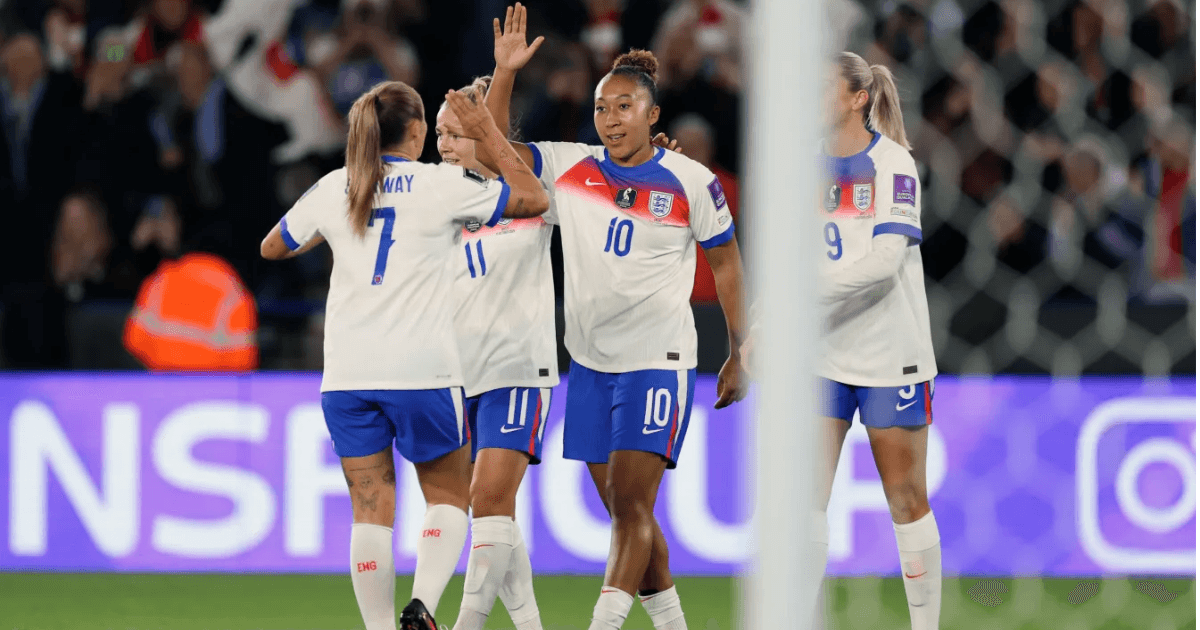
England’s 4-0 defeat to Spain on Friday night was a shock to the system. Sarina Wiegman’s biggest thrashing as England boss so far meant the Lionesses missed their first chance to qualify for the World Cup 2027.
Besides the characteristic brilliance of Alexia Putellas, who snagged a brace, Spain’s constant attacking threat meant England did not register a single shot on target.
It was hard to watch 19-year-old Vicky Lopez and 22-year-old Salma Paralluelo running rings around experienced defenders Alex Greenwood and Lucy Bronze.
Was it just a bad day at the office, or does this match expose a weakness in England’s game?
The current Lionesses’ average age is 26.48, while Spain’s average age is 25.04. While this figure seems minor, it is the effect of a significant difference in the English pathway compared to their European counterparts.
Youth internationals from Spain, the Netherlands and France typically play far more top-flight football in their teens than English players in the WSL. According to FBref, English teenagers played 4322 minutes in the WSL this season whereas homegrown Spanish teenagers played 39,888 minutes in Liga F.

This struggle for minutes at the top level means young English players do not have a genuine route into the team.
Spain's Young Stars Highlight England's Growing Concern
Wiegman has made relatively few changes from her winning Euros squad in 2025. While youngsters Freya Godfrey (21), Lucia Kendall (22), and Laura Blindkilde Brown (22) have been called up for the 25-player World Cup Qualifiers squad, none featured in the game against Spain.
Godfrey’s absence was notable. The London City Lionesses forward has six WSL goals this season, more than Beth Mead and Lauren James, yet she is still waiting for her first senior cap.
Others have faced a similar problem. Brighton’s Maisie Symonds and 17-year-old Erica Meg Parkinson were both given the nod by Wiegman this season, but have not played any minutes for England.
In comparison, Sonia Bermudez has made 11 changes to the Spain squad that lost the Euros 2025 final against England, four of which are under 23. Both Lucia Corrales (20), who plays her football in England at London City Lionesses, and Barcelona product Clara Serrajordi (18) were trusted in the crunch game against England.
The replacement of friendlies with the Nations League means there are less opportunities for national teams to experiment with young players.
Is Bermudez more of a risk-taker than Wiegman? Or are the young English players simply not good enough to break into the squad?
Is England's Talent Pathway Holding Back The Lionesses?
The Women’s Super League, widely regarded as the most professional women’s league in Europe, attracts players from all over the world. WSL clubs can sign the best overseas talent, and there are more foreign players in the WSL than any other women’s league.
In 2017-18, 60 per cent of WSL players were eligible to play for England. This season, only 30 per cent of players are from England, much like the Premier League.
There is a concerning lack of young players coming through from WSL academies because of the challenge of competing with seasoned internationals.
Chelsea manager Sonia Bompastor spoke of the “huge gap” between academy football and first-team level, and said that only one Chelsea academy player, 16-year-old Chloe Sarwie, was good enough to be called up to the first team this year.
There is plenty of talent in England, as back-to-back Euros trophies will attest, but these players are not given the opportunity to develop at the top level.
In May, the FA announced a plan for the top four WSL academies to join tier three of the Women’s National League starting in 2027 to help bridge this gap.
These academy sides, referred to as Professional Game Academies (PGAs), would join on a three-year license and compete every week to improve development pathways for young English players. The effect this will have on current tier three sides remains to be seen.
Spain have a similar set up, as big clubs such as Real Madrid, Barcelona and Atletico have “B” teams made up of young players who compete in regional divisions.
The restructuring of the Women’s National League is a possible start to an accessible route between grassroots and elite levels. However, more investment at home is needed to build a sustainable model and compete against the likes of Spain on the international stage.