Neymar’s return to Brazilian football has taken another difficult turn, with the Santos captain facing a further disciplinary setback following a heated exchange during a league fixture.
The former Brazil international was involved in an altercation during his side’s meeting with Bahia, which ended in a 1-1 draw on Saturday. The incident led to his dismissal and subsequently came under scrutiny from Brazil’s football disciplinary authorities.
The decision could have a significant impact on Santos’ upcoming fixtures, with the club now having to manage the absence of one of its most recognisable players during a crucial stage of the campaign.
Why Neymar has been suspended
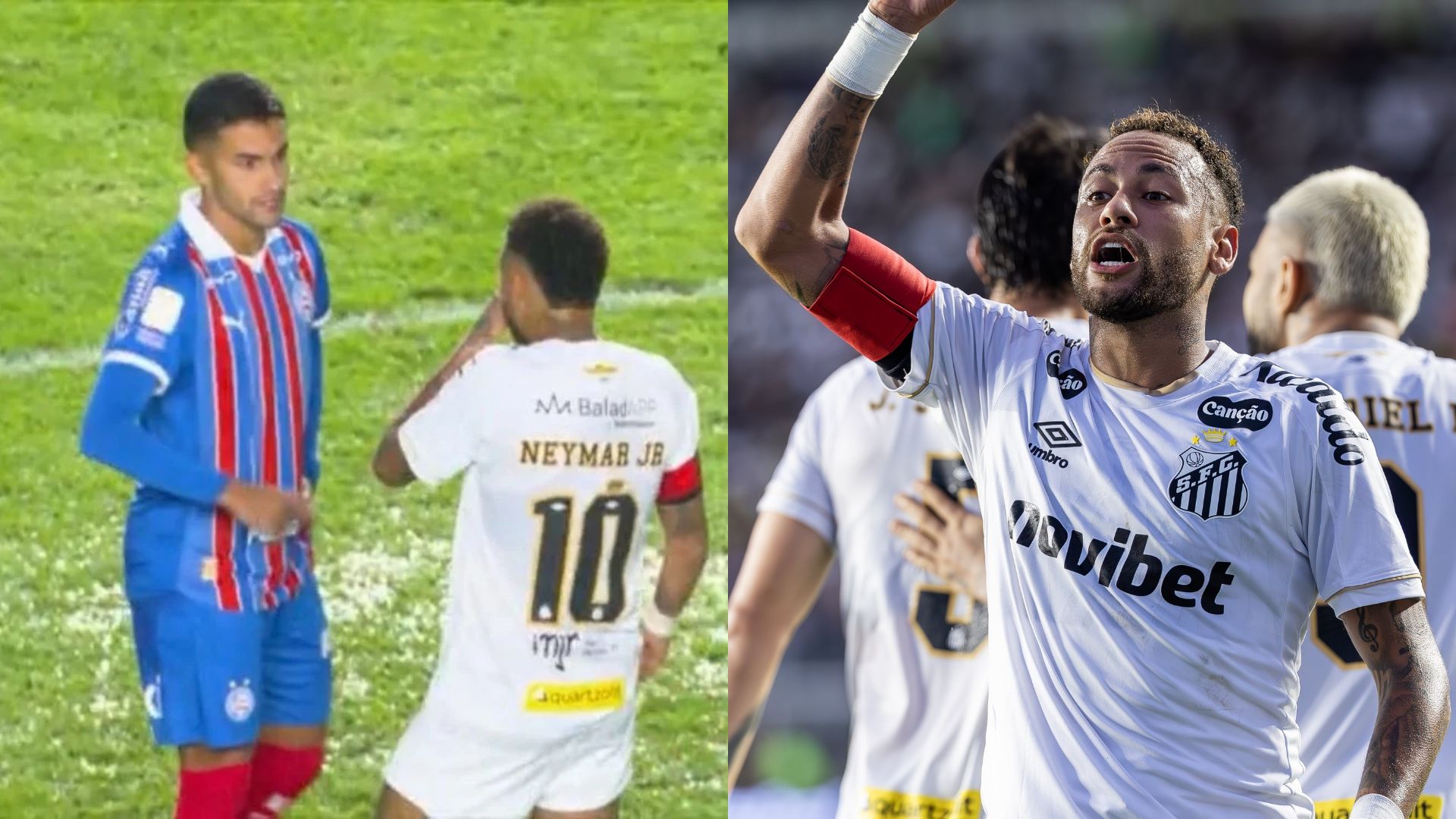
Brazil’s Superior Court of Sports Justice (STJD) has handed Neymar a two-match suspension for covering his mouth while arguing with Bahia midfielder Rodrigo Nestor.
The 34-year-old was sent off following the confrontation during Santos’ 1-1 draw with Bahia, with the tribunal ruling that his actions violated the protocol introduced to address players concealing potentially inappropriate comments during on-field disputes.
According to the referee’s report, Neymar also ran towards the visiting team’s bench after receiving his red card in an apparent attempt to confront Nestor. He reportedly had to be restrained by his teammates.
The disciplinary ruling adds to an already complicated situation for the Santos captain. Neymar had accumulated three yellow cards and was therefore due to miss Wednesday’s Brazilian Serie A fixture against Palmeiras.
His two-match suspension for the protocol violation means he will miss three Santos matches in total. He is not expected to return to action until later in November, although Neymar and Santos retain the right to appeal the ruling.
The decision comes at a time when the rules surrounding players covering their mouths during confrontations are receiving increased attention across football.
What is the rule on covering mouths?
The protocol is designed to deter players from concealing discriminatory, abusive or otherwise inappropriate remarks during confrontations on the pitch.
In April, the International Football Association Board (IFAB) approved a change to the Laws of the Game allowing competition organisers to sanction players with a red card if they cover their mouths during confrontational situations with opponents.
The amendment followed an incident involving Real Madrid forward Vinícius Júnior and Benfica’s Gianluca Prestianni during a UEFA Champions League match earlier in 2026. Vinícius alleged that Prestianni directed racist abuse towards him while covering his mouth with his shirt.
The incident prompted renewed debate about how football authorities can identify and address discriminatory behaviour when players attempt to conceal what they are saying.
The rule does not mean that every instance of a player covering their mouth automatically results in a red card across every competition. Under the IFAB amendment, its application is at the discretion of the competition organiser, with the provision specifically addressing confrontational situations.
In Neymar’s case, the STJD subsequently ruled that his conduct breached the relevant protocol, resulting in the additional two-match suspension.
Another setback for Neymar and Santos
The latest punishment adds to a turbulent period for Neymar, who has faced disciplinary attention in Brazilian football in recent months.
Three months ago, he became the first player in Brazil’s top flight to be temporarily removed from the field under a trial measure aimed at reducing time-wasting by goalkeepers.
His latest absence will be a concern for Santos as the club navigates the closing stages of the league campaign. Missing three consecutive fixtures could limit Neymar’s opportunity to influence results before his expected return later in November.
However, the disciplinary process may not yet be over. Neymar and Santos can appeal the two-match ruling, leaving open the possibility of a change to the suspension.
For now, the club must prepare for its next fixtures without its captain, while the case provides another prominent example of football authorities taking action over conduct during on-field confrontations.