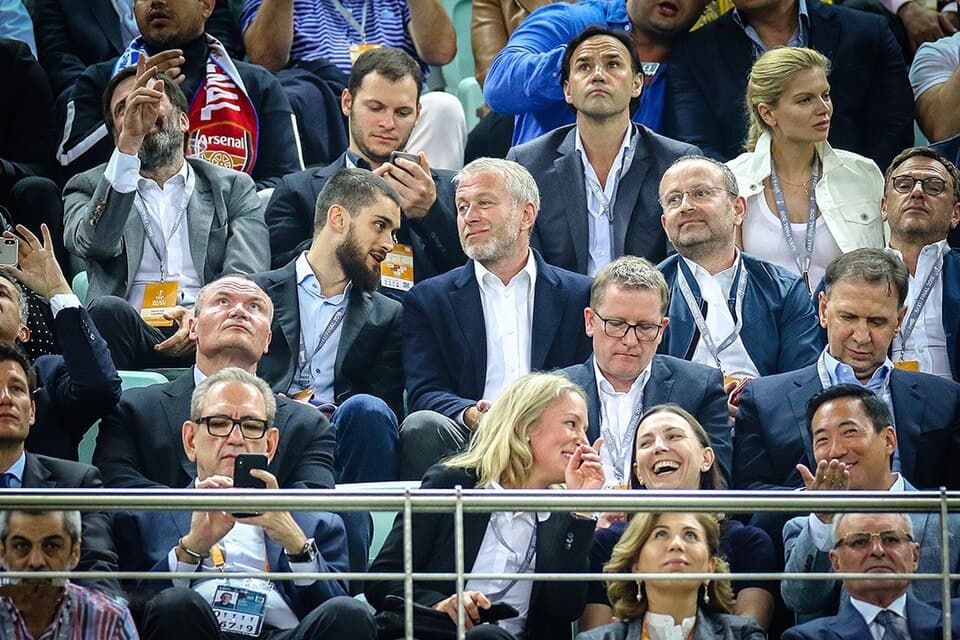
In the UK, Roman Abramovich is best known as the former owner of Premier League club Chelsea, which he bought in 2003 for a reported £140 million.
During his 19-year tenure, the Russian billionaire transformed the club into a European powerhouse, but his wealth, links to Vladimir Putin and business dealings have also attracted controversy, with an upcoming BBC investigative documentary set to examine his background.
Abramovich’s ownership ended in 2022 after the UK government sanctioned him following Russia’s invasion of Ukraine. He was forced to sell Chelsea, with a consortium led by Todd Boehly and Clearlake Capital completing the £4.25 billion takeover on May 30, 2022.
More than £2.5 billion from the sale remains frozen in a UK bank account. Abramovich pledged the proceeds would support victims of the war in Ukraine, but the funds have yet to be transferred. The UK government is seeking to ensure the money reaches humanitarian causes in Ukraine, leaving the future of the proceeds uncertain.
Despite his forced exit from English football, the now 59-year-old remains a billionaire, with his net worth and future in the game continuing to attract attention.
A return to English club ownership appears nigh-on impossible while UK sanctions remain in place, but Abramovich has recently hinted at the possibility of returning to European football in some capacity, leaving questions over what his next move could be.
Roman Abramovich's Chelsea ownership: Trophies and controversy
Abramovich’s Chelsea era is best described as a period of extraordinary success accompanied by serious controversy.
During his almost 20-year spell with the London club, the Blues won five Premier League titles, five FA Cups, two Champions League crowns, two Europa League titles and three League Cups.
Abramovich revolutionised Chelsea, but his ownership also had wider implications for English football’s financial landscape. His unprecedented investment helped fuel an increasingly expensive arms race between wealthy owners, forcing rivals to spend more to keep pace.
Chelsea spent around £230 million in his first two seasons alone, more than Manchester United, Real Madrid and Juventus combined over the same period.
While other clubs, particularly Manchester City, later followed a similar model of heavy investment, Abramovich helped accelerate the shift towards a Premier League increasingly shaped by owners’ financial power.
By the time he was forced to sell Chelsea in 2022, Abramovich had transformed the club into one of the biggest forces in English and European football. However, the methods behind that success have continued to attract scrutiny.
In March 2026, Chelsea received a £10.75 million Premier League fine and a suspended first-team transfer ban over historical rule breaches, including undisclosed payments to agents and third parties between 2011 and 2018.
The payments were linked to transfers during Abramovich’s ownership, raising further questions about how the club operated during its rise to the top.
Roman Abramovich's net worth and assets after Chelsea
Since being forced to sell Chelsea in 2022, Abramovich has largely kept a low public profile, reportedly spending time between Turkey, Dubai and Moscow.
Forbes estimated his net worth at around £6.9 billion in 2026, down from a peak of approximately £10.8 billion in 2021. However, these figures remain estimates, and his wealth is not all readily accessible. Many of his assets remain frozen or restricted by sanctions and legal proceedings, with no clear indication of when he might regain access to them.
Abramovich made much of his fortune through the Russian oil company Sibneft, which he sold to state-owned Gazprom in 2005 for around £9.7 billion. He has also held stakes in major steel and mining firms, while offshore investments, hedge funds and trusts have further contributed to his wealth.
His luxury assets include two superyachts, Eclipse and Solaris, estimated to be worth around £530 million and £450 million respectively.
He has also been linked to a private Boeing 787 reportedly worth around £260 million, a French Riviera mansion and an art collection valued at approximately £720 million. His former London property portfolio included a 15-bedroom mansion in Kensington, although its current ownership status is unclear.
Meanwhile, almost £2.5 billion from Chelsea’s sale remains frozen in a UK bank account, with the government insisting the money must go towards humanitarian aid for Ukraine. A further £5.4 billion in assets linked to Abramovich was frozen by Jersey’s Royal Court in 2022 amid a criminal investigation.
No criminal charges have been brought, and Abramovich’s legal team has challenged the investigation, describing it as "unfair and abusive". He continues to deny wrongdoing
Could Roman Abramovich return to football?
Although Abramovich has largely stayed out of the public eye since 2022, he has not completely ruled out remaining involved in football in some capacity.
Last year, reports linked the former Chelsea owner with a potential investment in Turkish giants Galatasaray, although the rumours were subsequently dismissed and no deal materialised.
In Sanctioned: The Inside Story of the Sale of Chelsea FC, published in 2025, journalist Nick Purewal detailed his interviews with Abramovich, conducted in Istanbul and Abu Dhabi. Abramovich made it clear that returning to club ownership was not part of his plans.
"I don't have any interest in any role in a football club, certainly not a professional role," he said.
However, he touched upon a potential avenue into a return to football, adding: "There might be something where I could help with academies and youngsters, giving greater opportunities to people from difficult backgrounds, if there were an initiative that could make a difference.
"But as for ownership or a professional role at a club, I am done with that in this lifetime."
Taken together, Abramovich's comments suggest that a return to club ownership or a professional football role is unlikely. His suggestion that he might support academies or initiatives for young people remains conditional rather than a confirmed project.
For now, his football legacy is tied to Chelsea's success under his ownership, while the frozen sale proceeds and continuing sanctions-related scrutiny remain central to his post-Chelsea story.