
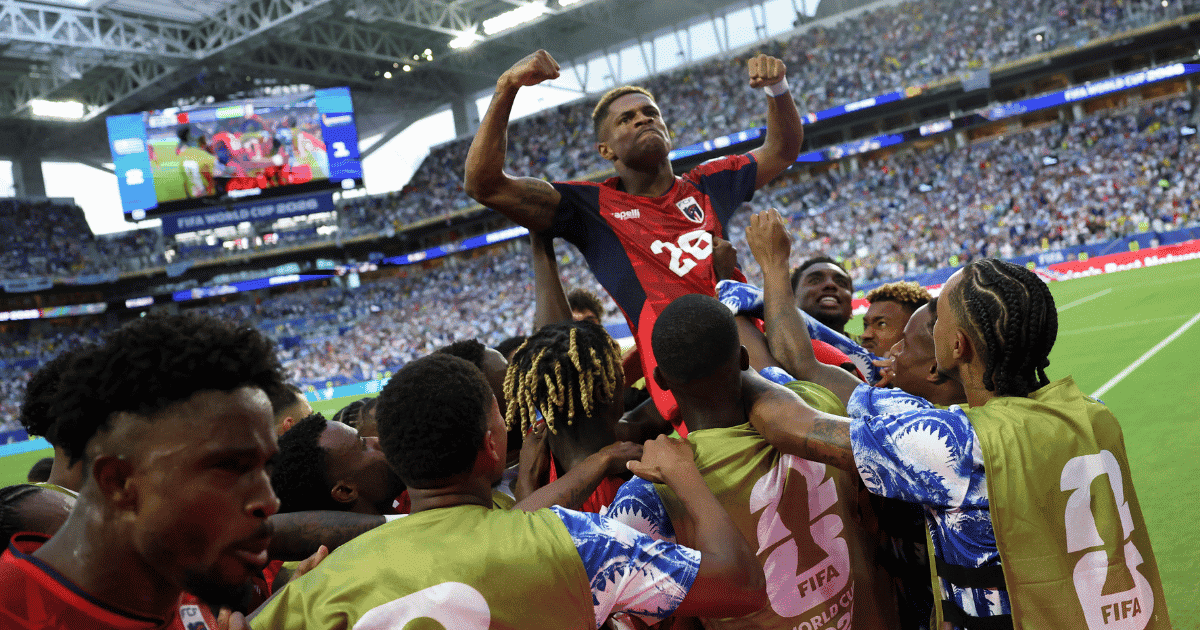
Before FIFA World Cup 2026 began, Cabo Verde were largely viewed as outsiders in a group containing Spain and Uruguay. Few expected the tournament debutants to become one of the stories of the opening week.
Two matches later, the picture looks very different.
A goalless draw against Spain was followed by a thrilling 2-2 draw against Uruguay, transforming Cabo Verde from one of the competition's longest shots into genuine contenders for the knockout stages.
According to Opta's latest projections, the island nation now has a 68.24% chance of reaching the Round of 32.
Remarkably, the same model still gives them only a 3.50% chance of topping the group, a reminder of how difficult the challenge remains despite their impressive start.
Whatever happens next, Cabo Verde have already achieved something significant.
They have become the latest reminder that every World Cup needs an underdog story.
Not because underdogs always win. But because they make people believe.
The Underdogs Who Changed World Cup History
World Cups are remembered for champions. They are also remembered for the teams that expanded the limits of what seemed possible.
In 1990, Cameroon arrived in Italy with little fanfare and left as pioneers. Inspired by Roger Milla, they became the first African nation to reach a World Cup quarter-final, defeating defending champions Argentina along the way.
Then came one of the greatest tournaments for underdogs in World Cup history.
The 2002 World Cup, hosted by South Korea and Japan, proved that football's traditional hierarchy could be challenged from every corner of the globe.
Senegal stunned reigning champions France in the opening match and rode that momentum all the way to the quarter-finals. Led by a fearless generation of players, they introduced themselves to the world and inspired countless young footballers across Africa.
Turkey, appearing at their first World Cup in nearly half a century, reached the semi-finals after navigating a difficult route through the tournament. Their run remains one of the greatest achievements in the country's football history.
South Korea went even further. Backed by passionate home support, they became the first Asian nation to reach a World Cup semi-final and changed perceptions of what teams from the continent could achieve on football's biggest stage.
More than two decades later, many supporters still remember 2002 not for the champions alone, but for the belief those teams created.
Costa Rica produced another unforgettable underdog story in 2014. Drawn alongside England, Italy and Uruguay, they were expected by many to finish bottom of the group. Instead, they topped it before reaching the quarter-finals.
Then came Morocco in 2022. The Atlas Lions defeated Spain and Portugal to become the first African nation to reach a World Cup semi-final. Their run resonated far beyond Morocco, inspiring supporters across Africa and the Arab world.
Different countries. Different generations. The same message.
Football's established order is never quite as permanent as it appears.
Read More: 10 Things You Need To Know About Cape Verde Before The 2026 FIFA World Cup
Read More: World Cup 2026: The New Nations Making History On Football’s Biggest Stage
Cabo Verde's Story Is About More Than Results
What makes Cabo Verde's run compelling is not simply the results. It is the pathway behind them.
This is not a squad assembled from global superstars or players developed exclusively at the world's most famous academies. Many members of the squad built their careers across Portugal, France, Belgium and other European leagues, taking less celebrated routes to the top of the game.
For young footballers, that matters. Not every pathway looks like Barcelona's La Masia. Not every future international breaks through at 17. Some careers develop gradually through smaller clubs, lower divisions and opportunities earned over time.
Cabo Verde's rise is a reminder that there is more than one route to football's biggest stage. That message can be just as powerful as any result.
What Young Players Can Learn From Cabo Verde
Every World Cup produces moments that inspire. The best stories also teach something. Cabo Verde's journey offers several lessons for the next generation.
Development Happens At Different Speeds
Many members of this squad were not teenage sensations. Their careers progressed steadily, season after season, until they found themselves representing their country at a World Cup.
Young players often compare themselves to the most famous prodigies in football. Cabo Verde's squad is a reminder that development rarely follows the same timeline for everyone.
The Team Matters More Than The Individual
Most underdog stories are built on collective strength rather than individual stardom. Cabo Verde's success has come through organisation, resilience and belief in each other.
That lesson applies at every level of football.
The best teams are rarely just collections of talented individuals. They are groups that understand how to work together.
Progress Creates Possibility
Before qualifying for the World Cup, this tournament felt out of reach. Before facing Spain, earning a point against one of the favourites felt unlikely.
Each achievement created belief for the next challenge. That is often how football careers develop too. One opportunity leads to another. One breakthrough creates the confidence to pursue the next.
Why Cabo Verde's World Cup Already Matters
The numbers tell one story.
A nation making its World Cup debut now has a 68.24% chance of reaching the Round of 32.
But some impacts cannot be measured by probabilities.
Children across Cabo Verde are watching their national team compete with some of the biggest names in football.
Coaches have fresh examples to point towards.
Young players have proof that countries of any size can belong on the world's biggest stage.
Years from now, very few people will remember the exact probabilities.
They will remember the feeling.
The feeling that something unexpected was possible.
The Legacy Cabo Verde Could Leave Behind
Perhaps Cabo Verde will continue their remarkable run. Perhaps another emerging nation will become the next surprise package of FIFA World Cup 2026.
That uncertainty is one of the tournament's greatest strengths.
Every four years, a team arrives carrying the hopes of a nation and leaves having inspired far more than its own supporters.
One day, a child watching Cabo Verde's run in 2026 may become the player who takes them even further.
That is the hidden power of every underdog story.
Cameroon inspired generations across Africa. Senegal did the same. Morocco expanded what seemed possible.
Now Cabo Verde has its chance to leave a similar legacy.
Whether they reach the Round of 32 or not, they have already achieved something difficult to measure. They have given the next generation another reason to believe.