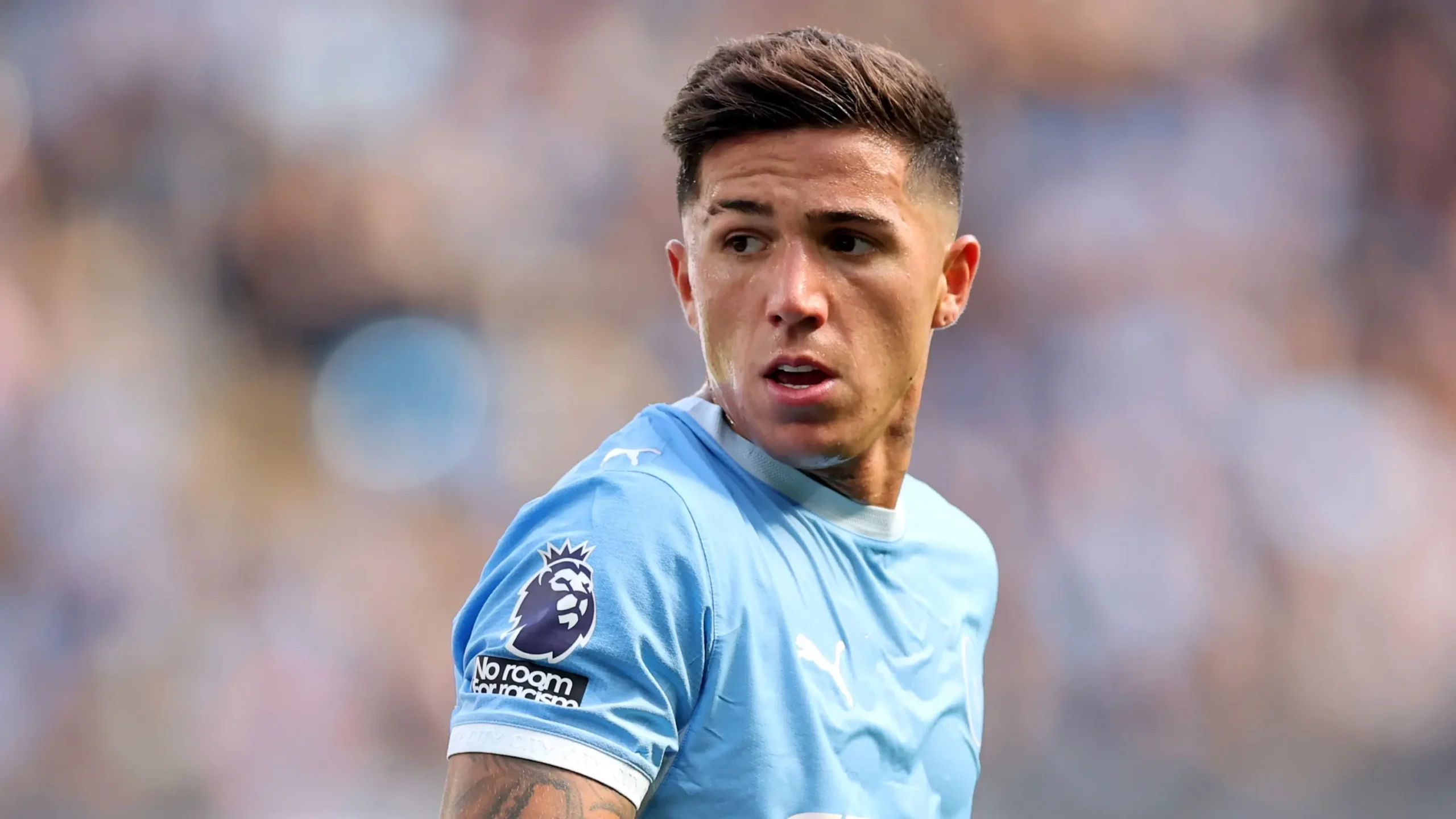

Premier League champions Arsenal will kick off their title defence against Coventry City on August 21 with a new midfielder within their ranks, with the club close to completing a £75 million deal to bring Newcastle United captain Bruno Guimaraes to the Emirates Stadium at the time of writing.
Having initially tested the waters with an offer under £60 million, the Gunners met Newcastle in the middle to secure an elite operator. Mikel Arteta’s interest in Guimaraes dates back to January 2020 when Edu Gaspar first inquired about the Brazilian prior to his move to Lyon.
At the time, his former coach Tiago Nunes praised Guimaraes' spatial awareness and ability to retain possession under duress, qualities that have made him one of Europe's premier midfielders.
He would be joining a team that already has Declan Rice, Martin Zubimendi and Myles Lewis-Skelly as the other midfield options following Christian Norgaard’s departure to Everton. But what will he bring to the array of options already at the club?
Striver.Football breaks down what the 28-year-old Brazilian will bring to Arsenal’s central engine room.
Read More: Bruno Guimaraes Sets Arsenal Transfer Deadline Before Pre-Season Return
How Guimaraes Solves Arsenal’s Midfield Workload Issue
Arsenal’s successful 2025-26 title run pushed their central unit to extreme limits. Declan Rice (4,454 minutes) and Martin Zubimendi (4,292 minutes) logged massive workloads across all competitions.
Furthermore, five key Arsenal midfielders, Zubimendi, Rice, Eberechi Eze, and Martin Odegaard reached the final stages of the World Cup this summer, staggering their pre-season returns and increasing the risk of early-season fatigue.
By contrast, Guimaraes exited the World Cup earlier in July, allowing him ample time to complete a full recovery cycle. His arrival gives Arteta the necessary depth to rotate his high-usage stars without dropping the baseline tactical quality.
He will feature significantly more than Nogaard, who was restricted to 101 minutes of Premier League football throughout his solitary season at Arsenal, with Arteta’s decisions clearly indicating he was not a part of his plans.
Tactical Role: Where Guimaraes Fits in Arsenal’s Midfield
Guimaraes’ ability to play as a lone hub, on the right side of a two-man midfield pivot or on the right of a three-man midfield axis means Mikel Arteta will have the luxury to deploy him in different situations depending on game state.
The Brazilian provides a secondary ball-winner who can drive forward into the right half-space, releasing Rice to push higher or cover transitions. Alternatively, he can push further up when Rice drops back and influence games in attack as he showed during the World Cup with his four assists.
As a lone hub, he can do what Zubimendi was signed to do, be the primary pivot player, using his press-resistant passing to orchestrate build-up play from the defensive third, something Zubimendi struggled with during his debut campaign.

Key Metrics: Progression, Press Resistance and Goal Threat
Data compiled by The Athletic shows Guimaraes was the central axis of the Magpies' build-up phase last season. His underlying performance data highlights exceptional press resistance and progressive range.

In addition to deep build-up duties, Guimaraes produced a career-best 9 Premier League goals for Newcastle in 2025-26 season.
His ability to pull away from crowded defensive boxes or initiate third-man runs gives Arsenal an added goalscoring dimension from midfield when facing compact low blocks.
Leadership and Experience: What Guimaraes Adds
Much like the previous acquisitions of Leandro Trossard and Jorginho, adding a 28-year-old team captain injects immediate leadership and Premier League reliability into Arteta's core.
Guimaraes’ importance to Newcastle was paramount. The Tyneside club managed only two Premier League victories without him in the starting XI following his debut in February 2022.
His physical durability, technical composure, and edge make him a transformative addition to Arsenal's squad as they pursue continuous evolution at the summit of European football.