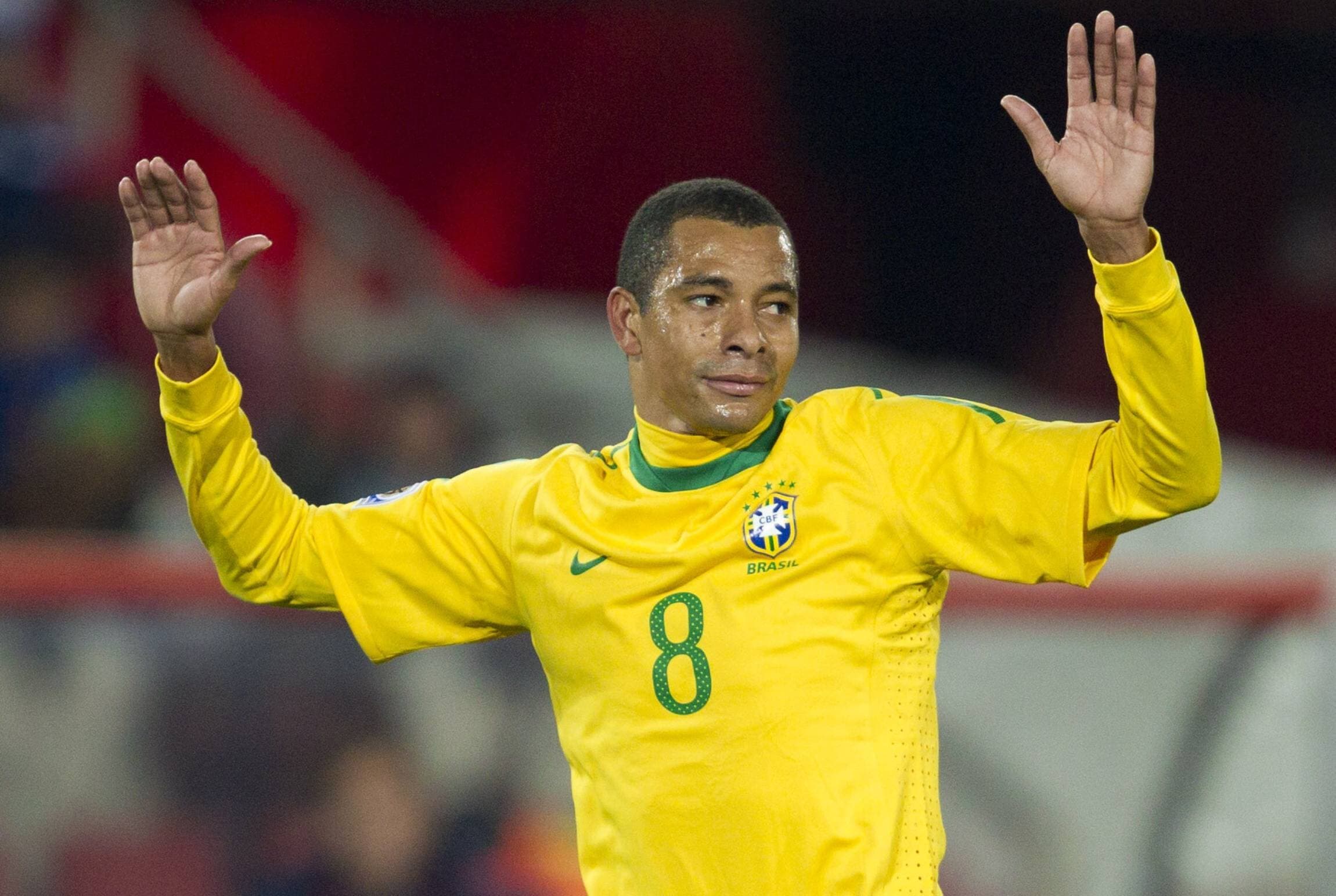
Before the World Cup.
Before Arsenal.
Before the Premier League.
Before the Invincibles.
Gilberto Silva was working in a factory in Brazil.
His route to the top of football was anything but conventional.
While many professional footballers begin their journeys in academies as children, Gilberto didn't follow that path.
He was working to support his family.
And at one point, he had even walked away from football altogether.
"Nowadays, it's considered too old"
Gilberto didn't have an academy pathway from a young age.
Until he was 16, his focus was on working and helping his family.
"I was working to support my family. I worked in upholstery and later in construction."
His first opportunity in football came when he was 16, when he earned a trial at Atlético Mineiro.
It didn't work out.
Two months later, another opportunity arrived at América in Belo Horizonte.
This time, he was accepted.
But just five months later, financial circumstances forced him to return home.
"My parents' financial situation was not the best. My mum was not in very good condition, so I decided to quit football at that time."
Gilberto returned home.
He started working at a sweet factory.
And for the next two and a half years, football was no longer his career.
The last opportunity
Gilberto eventually left the factory at 19.
And when the opportunity to return to football came, he knew exactly what it meant.
"I knew that was my last opportunity. I would not have another one if I failed."
There was no professional fitness coach preparing him.
No academy staff.
No specialist tactical sessions.
No elite equipment.
"I didn't have a fitness coach. I didn't have a coach to prepare me. I didn't have anyone."
What he did have was determination.
And for a month before returning to the club, he prepared himself alone.
His thinking was simple.
"I need to be in good physical condition to support the amount of training."
He knew that if he could handle the physical demands, he would give himself a chance.
"As long as I support the physicality, I have a chance."
That opportunity eventually changed his life.
Starting again
Even after becoming a World Cup winner, arriving in Europe presented another challenge.
Gilberto moved to London without speaking the language and had to adapt to an entirely new environment.
But rather than seeing those differences as obstacles, he embraced them.
"I just embraced everything. I embraced the challenge."
The language.
The weather.
The culture.
The football.
Everything was new.
And despite arriving in England as a World Cup winner, Gilberto understood that his previous achievements meant little once he entered a new environment.
"Despite the fact I arrived here as a world champion, it was like a new beginning. A new start."
He had to build himself again.
Learn again.
Adapt again.
Survive again.
"I had to start from scratch again. I had to build up in a new club, learning everything new to survive and to be successful."
No Pressure from home
Perhaps one of the most important parts of Gilberto's story was the support he received from his family.
Despite their financial struggles, his parents never placed the burden of success on him.
"They never put pressure on me."
Instead, they told him that his happiness mattered.
"As long as you are happy there, we are happy."
That support gave Gilberto the freedom to pursue football without feeling that failure would disappoint his family.
But when he eventually left home at 19, his motivation changed.
"I wanted to succeed not only for me, but for them too."
Breaking the pathway
Gilberto's journey challenges one of the biggest assumptions in modern football: that there is only one route to becoming a professional.
He didn't come through an elite academy as a child.
He didn't have access to the best facilities.
He didn't have specialist coaches preparing him from an early age.
He worked in a factory.
He left football.
He came back.
And eventually, he reached the very top of the game.
"Nowadays it's considered too old to start football, but I don't believe in this kind of statistic."
Gilberto didn't follow the common pathway.
He broke it.
And that's perhaps what makes his story so powerful for young players today.
There is no guarantee that every player who starts late will reach the professional game.
But Gilberto's story proves that development doesn't always happen on the same timeline.
Your pathway doesn't have to look like everyone else's
From a factory in Brazil to Arsenal's midfield.
From working to support his family to lifting the World Cup.
From starting again at 19 to becoming an Invincible.
Gilberto Silva's journey was never straightforward.
But perhaps that's exactly the point.
Football doesn't always follow a script.
Sometimes the opportunity comes later.
Sometimes you have to leave before you can return.
Sometimes you have to start again.
And sometimes, the biggest thing standing between a player and their dream isn't their age or their pathway.
It's whether they're willing to take their opportunity when it finally comes.
For Gilberto, when that opportunity arrived at 19, he knew there might not be another.
So he made sure he was ready.