When FIFA announced that the 2026 World Cup would expand from 32 to 48 teams, criticism arrived almost immediately.
Would there be too many one-sided matches? Would the tournament lose its prestige? Would the quality suffer with more nations qualifying than ever before?
Those questions dominated football conversations long before a ball was kicked in North America.
Now, with the semi-finals set, the football itself has delivered a compelling response.
The first 48-team FIFA World Cup has produced record-breaking goals, historic upsets, unforgettable individual performances and new nations writing their own World Cup stories.
Rather than diluting football's biggest tournament, the expanded format has arguably made it even more unpredictable.
The Underdogs Have Finally Had Their Moment
Every World Cup creates one or two surprise packages.
This one produced several.
Cape Verde reached the knockout stage in their first-ever World Cup appearance. South Africa advanced beyond the group stage for the first time, while Bosnia and Herzegovina enjoyed only the second World Cup campaign in their history. DR Congo also reached the knockout rounds under their current identity.
Then came the knockouts.
Paraguay stunned four-time world champions Germany in one of the biggest upsets of the tournament before Norway eliminated five-time champions Brazil.
Morocco, building on their remarkable run to the semi-finals in Qatar four years ago, once again proved they belonged among the world's elite by reaching the quarter-finals.
The expanded format has not simply added more teams.
It has created more opportunities for nations that rarely receive the global spotlight.
Football's Biggest Stars Still Stole the Show
One concern surrounding expansion was that football's biggest stars would simply feast on weaker opposition before disappearing once the tournament reached the latter rounds.
Instead, many of the game's biggest names have produced some of the finest football of the competition.
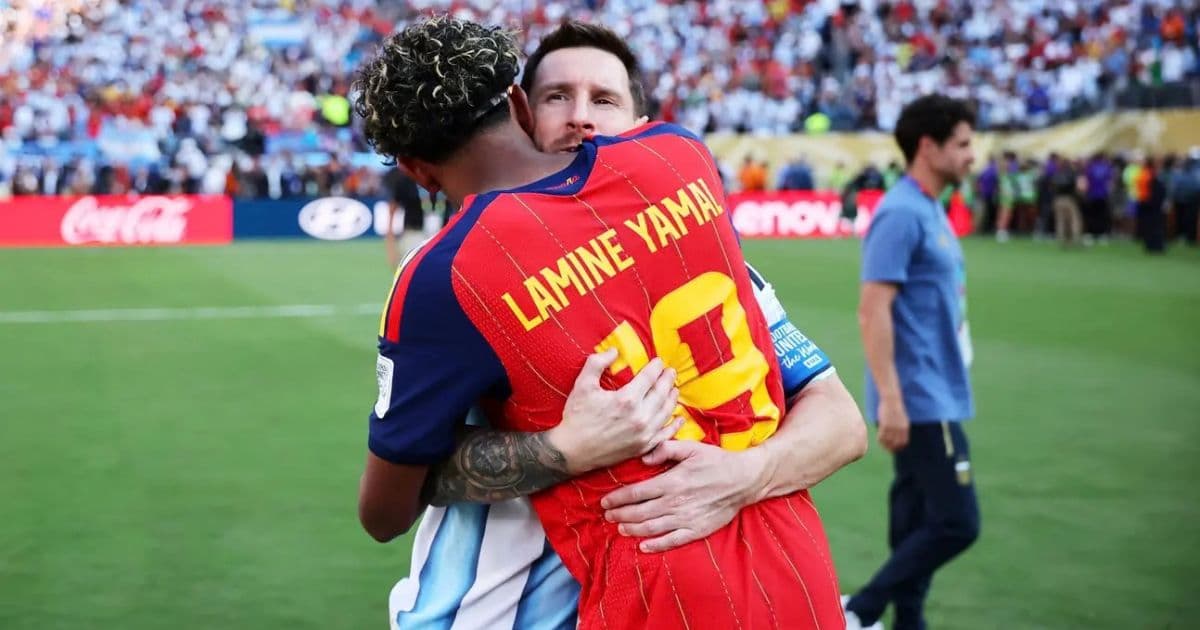
Lionel Messi became the FIFA World Cup's all-time leading goalscorer and continues to lead the Golden Boot race.
Kylian Mbappe, Erling Haaland, Vinicius Junior and Ousmane Dembele have all delivered memorable performances, while Cristiano Ronaldo became the first player in history to score at six different men's World Cups.
The biggest stars have remained exactly that.
Expansion has given emerging nations greater opportunities without taking the spotlight away from football's established icons.
Goals, Upsets and World Cup Drama
The football itself has arguably been the tournament's biggest winner.
The group stage produced 215 goals, the highest total ever recorded before the knockout rounds of a FIFA World Cup. The tournament also produced three hat-tricks before the Round of 32 - Messi against Algeria, Jonathan David against Qatar and Ousmane Dembele against Norway - the most at a World Cup since 1986.
There has been no shortage of drama either.
Austria's stoppage-time equaliser against Algeria dramatically altered the qualification picture. The Netherlands suffered yet another penalty shootout heartbreak, Germany were stunned by Paraguay, while Norway produced one of the biggest results of the tournament by knocking out Brazil.
Knockout football has once again reminded everyone that reputations count for very little once the margins become razor thin.
Africa's Historic World Cup
Perhaps no continent has benefited more from expansion than Africa.
Nine of the continent's ten representatives progressed beyond the group stage - the best collective performance by African nations in FIFA World Cup history.
Morocco once again led the way by reaching the quarter-finals, while Senegal, Egypt, Ghana, DR Congo, South Africa, Algeria, Ivory Coast and Cape Verde all reached the knockout rounds.
For years, African football has argued it deserved greater representation at the World Cup.
The performances in 2026 have only strengthened that argument.
The Traditional Powers Still Rose to the Top
While new nations enjoyed breakthrough moments, the business end of the tournament still belongs to football's traditional heavyweights.
France, Spain, England and defending champions Argentina have all reached the semi-finals.
That balance may be the biggest success of the expanded format.
The favourites have still found a way through, but they have had to work considerably harder to get there.
Several of the world's biggest nations have already gone home, proving that the gap between international football's established powers and emerging challengers continues to narrow.
The Verdict on FIFA's Biggest Gamble
No tournament format will ever satisfy everyone.
There will always be debates around scheduling, player workload, travel and the sheer number of matches.
But one criticism has largely disappeared.
The fear that a 48-team World Cup would dilute football's greatest tournament has simply not materialised.
Instead, it has produced more nations capable of dreaming, more unforgettable stories and more opportunities for football to grow across every continent.
The semi-final line-up may feature four familiar names, but the road there has been anything but predictable.
Germany are out. Brazil are out. The Netherlands are out.
Paraguay produced one of the biggest upsets in modern World Cup history. Norway eliminated five-time champions Brazil. Cape Verde, South Africa and DR Congo created moments their supporters will remember forever.
That may ultimately become the legacy of the first 48-team FIFA World Cup.
It has not replaced the giants.
It has simply given more nations the opportunity to challenge them.
One tournament cannot settle every debate surrounding expansion.
But if the objective was to create more stories, more drama and more meaningful opportunities without sacrificing quality, the first expanded FIFA World Cup has made a remarkably strong case for itself.