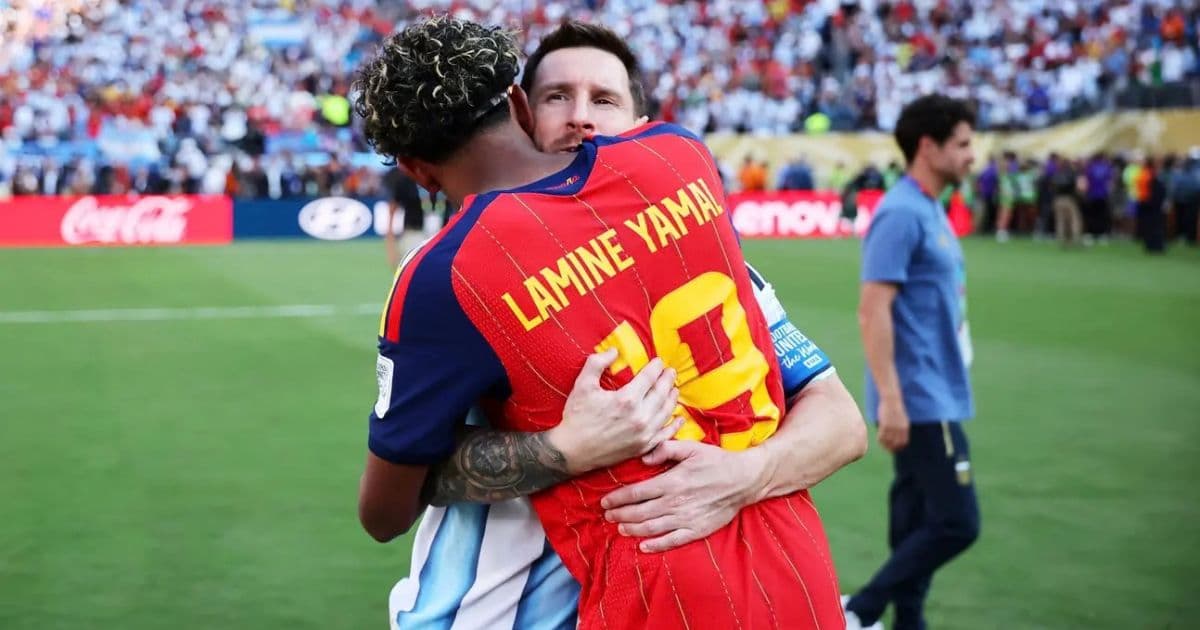
When Spain lifted the 2026 FIFA World Cup trophy at MetLife Stadium, they preserved one of international football's most staggering records.
Across 23 World Cup tournaments spanning 96 years, no nation has ever won the World Cup under a foreign manager.
Every single World Cup winning coach, from Mario Zagallo of Brazil in 1994, to Marcello Lippi with Italy in 2006 to Lionel Scaloni with Argentina in 2022 and now Luis de la Fuente, was a citizen of the nation they led to World Cup glory.
Meanwhile, England watched another tournament campaign unravel in semi-final disappointment, prompting widespread criticism from supporters and the media.
While Spain triumphed using an organic, home-grown pipeline built over a decade, England, just like in 2010 under Fabio Capello, came to the painful realisation that European club tacticians cannot buy international synergy.
Tuchel even went as far as to question England’s DNA after Argentina knocked them out in the semis in a game where his side took the lead before sitting back, inviting the Le Albiceleste, buoyed by a certain Lionel Messi, into mounting a famous comeback.
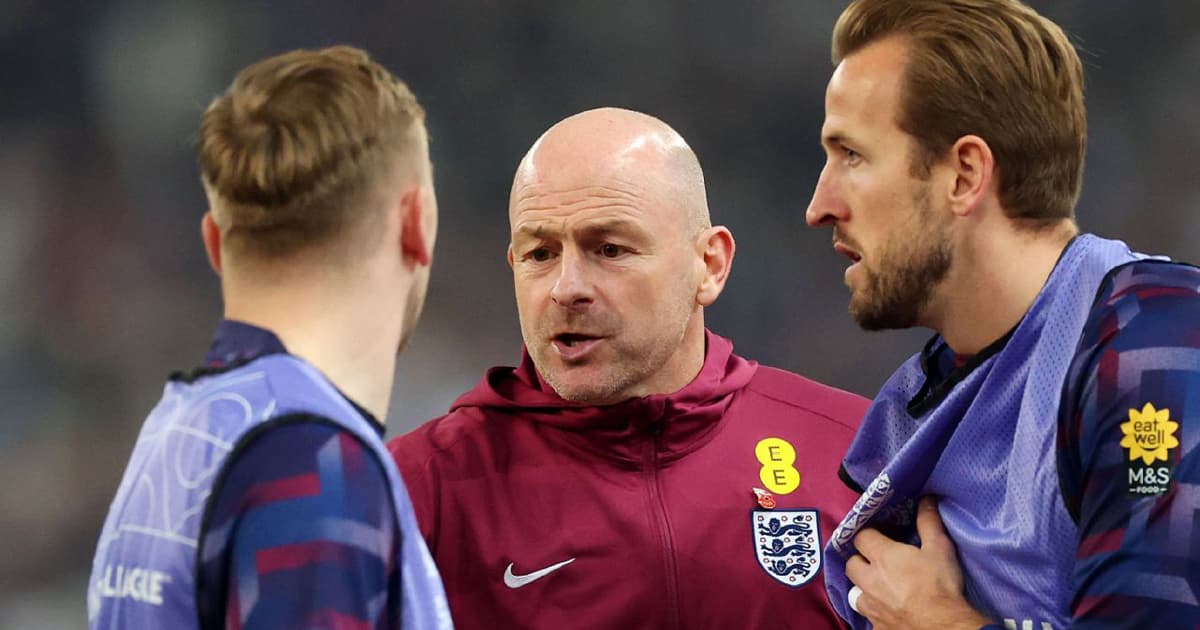
As the post-mortem of 2026 shifts to the horizon of 2030, the FA must ask a fundamental question: Is it time to abandon the foreign savior complex and entrust the national team to Lee Carsley?
StriverOfficial account
Lee Carsley England manager?
Why Luis De La Fuente Is England's Blueprint
To understand why Striver.Football is trying to make a case for Lee Carsley (born, raised and educated in England, but represented Ireland internationally, which technically still makes him English) one only needs to look at Spain as a blueprint.
When Luis de la Fuente replaced Luis Enrique in late 2022, critics scoffed at his lack of elite club pedigree. But De la Fuente possessed something far more valuable: a decade-long relationship with Spain's emerging squad.
Having coached Spain’s youth setups to glory at the 2015 UEFA U19 Euros and the 2019 UEFA U21 Euros, De la Fuente already spoke the tactical dialect of his core players.
When players like Rodri, Unai Simon, Fabian Ruiz, Dani Olmo, Mikel Merino and Mikel Oyarzabal played a key role helping their nation secure victories at both Euro 2024 and the 2026 World Cup, their successful exploits at youth level under De la Fuente back when they were teenagers meant they were already well versed with the collective philosophy they had practiced under De la Fuente coming through the ranks.
Tuchel, by contrast, attempted to impose a rigid, high-concept positional structure during micro-international breaks.
Without natural cultural cohesion or long-term trust, England looked disjointed during key knockout games. This angered a lot of fans, as well as the media, who have all been calling for his immediate sacking.
However, it looks like Tuchel is set to carry on as manager heading into Euro 2028, a tournament England will be hosting.
The Case For Lee Carsley
When Gareth Southgate stepped down following Euro 2024, the FA appointed Lee Carsley as interim head coach for England’s autumn UEFA Nations League campaign.
What was intended to be a temporary holding operation turned into a masterclass in modern international integration.
Over six matches in charge, Carsley produced dynamic, high-volume attacking football that saw the Three Lions record five wins and a solitary loss. During his six-game spell in charge, the side netted 16 goals, and kept four clean sheets.
Crucially, Carsley is still the man who guided England to back-to-back UEFA U21 Euro titles in 2023 and 2025. He never hesitated to integrate the technical talent he developed in the youth ranks.
In just three squad announcements, he handed senior debuts to eight players he coached at U21 level in Angel Gomes, Morgan Gibbs-White, Noni Madueke, Curtis Jones, Lewis Hall, Taylor Harwood-Bellis, Tino Livramento and Rico Lewis.
His spell in charge showed that England have technical quality in abundance, but they lack the right structural environment that trusted technical players to retain possession in tight spaces, which contrasts strongly to Tuchel’s suggestion that it was not in England’s DNA to control games and keep things ticking while trying to see out a lead against a side like Argentina.
Why England Keeps Turning To Foreign Managers
Why has the FA repeatedly turned to foreign big-name coaches like Sven-Goran Eriksson, Fabio Capello, and Thomas Tuchel? You would expect they have learnt from previous failed experiments. However, if you look at the English Premier League, you will then understand why the FA has tended to resort to hiring foreigners.
No English manager has ever won the Premier League since the competition’s inception in 1992. Howard Wilkinson’s 1991-92 title with Leeds United remains the last top-flight league title won by an Englishman.
Because domestic English coaches rarely manage elite Champions League clubs, a perception formed that an English manager lacks the tactical sophistication to win international trophies.
Yet international football is not club football. It does not reward complex 80-page tactical playbooks that require nine months of daily training ground repetition.
As Lionel Scaloni has proved while managing Argentina since taking charge in 2018, International football rewards clarity of roles, emotional cohesion and ability to adapt to tournament knockout states. It also rewards deep familiarity with the youth talent pipeline.
Scaloni had never managed a single senior club match before leading La Albiceleste to two back-to-back Copa Americas and a World Cup. Luis de la Fuente was a career federation youth coach.
The international game belongs to system builders who know their nation's footballing DNA from the grassroots up.
Why Lee Carsley Could Lead England To The 2030 FIFA World Cup
By the time the 2030 World Cup arrives, England’s golden generation of technical prodigies will be entering their prime.
Four of Tuchel’s 26 players who represented England at the 2026 World Cup— Anthony Gordon (2023), James Trafford (2023), Noni Madueke (2023) and Eliott Anderson (2025)— were part of Carsley’s back-to-back U21 Euros winning sides.
By 2030, we highly anticipate that more of those players will have transitioned to the senior team. What they need is a national team manager who trusts them, understands their personal development curves, and builds an environment devoid of media friction. Carsley has already proven he can do precisely that.
History does not lie. 96 years and 23 World Cups have proved that international glory cannot be imported.
If England wants to end a drought that will reach 64 years by 2030, the FA must break its own psychological barrier, trust the domestic pathway, and hand the keys to Lee Carsley.