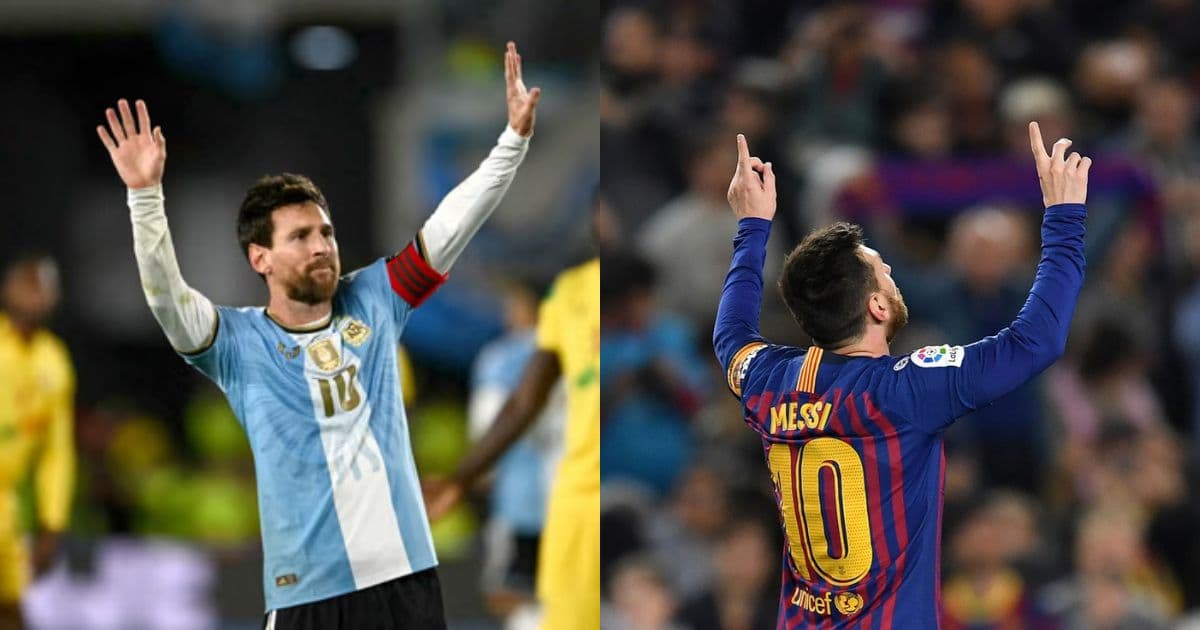
For years, Argentina fans criticised Lionel Messi, scorned him, rejected him, and even booed him, which came before he announced an emotional international retirement after the 2016 Copa América final.
But as soon as he made that initial decision, something seismic shifted in the national psyche. A huge public campaign quickly emerged to persuade him to reverse his decision, including a letter from a teenage Enzo Fernandez pleading with Messi to return and urgent pleas from football icon Diego Maradona.
Argentina's then-President Mauricio Macri personally phoned Messi to ask him to stay, while the Mayor of Buenos Aires even unveiled a bronze statue of the star to show the city's love.
Across the country, thousands of fans braved torrential rain to hold massive rallies, schoolteachers wrote emotional letters, and street signs everywhere were changed to display a single message: "No Te Vayas, Leo" (Don't Go, Leo).
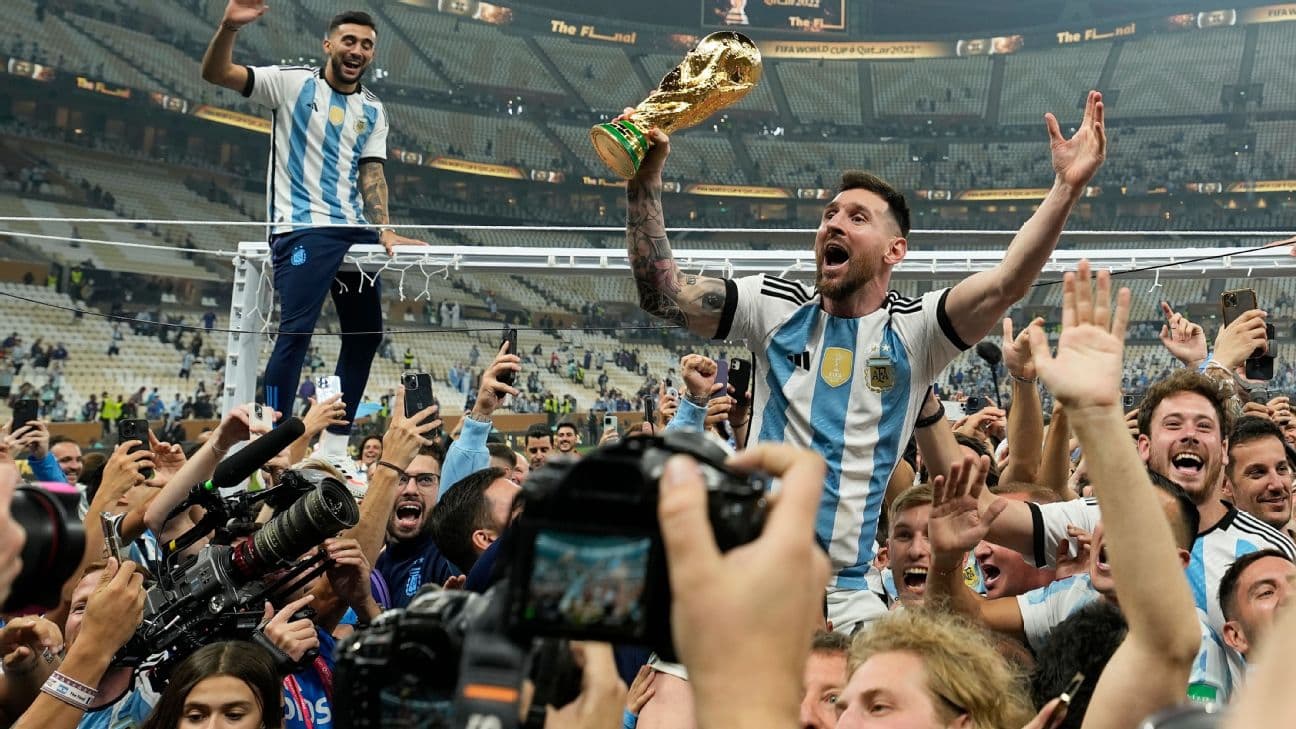
The decision to reverse his decision turned out to be one of the greatest decisions of his entire life. Two Copa America titles, a FIFA World Cup and a 2022 Finallisima title later.
Messi ended his Argentina career in Buenos Aires by scoring once and assisting the other two goals in a 3-0 win over Benin.
With reference to reporting by The Athletic, we sought to make an expanded deep-dive into how a skeptical nation completely flipped the script to worship their greatest son, followed by the lessons that can be drawn from his remarkable journey with Argentina.
1. How Messi’s 2016 Retirement Changed Argentina’s View of Him
The Detail: When a devastated Messi walked out of the MetLife Stadium tunnel in East Rutherford after losing a third consecutive final (the 2016 Copa America Centenario against Chile on penalties), he dropped a bombshell: "For me, the national team is over."
The Shift: The reaction in Argentina was immediate terror. For a decade, critics had taken his presence for granted, assuming he owed them his allegiance regardless of the toxic pressure.
Suddenly facing the possibility of an Argentina team without Messi prompted a remarkable public campaign for him to return.
Billboards flashed "#NoTeVayasLeo," fans flooded the Obelisk in Buenos Aires, and figures ranging from Mauricio Macri (then-president) to Diego Maradona himself begged him to reconsider.
That brief existential threat forced Argentina to realise that greatness is finite.
2. How Messi Escaped the Shadow of Diego Maradona
The Detail: Culturally, Argentina’s football identity had long been tied to the fiery, rebellious, and larger-than-life persona of Diego Maradona.
Maradona wore his political opinions on his sleeve, fought the establishment, and played with an overt, tortured anguish that resonated with a nation frequently battling economic turmoil.
The Shift: Messi was the complete antithesis—quiet, polite, moved to Barcelona from Rosario at 13 to join Barcelona's academy, speaking in the soft dialect of Rosario rather than Porteno Spanish, and refusing to engage in political grandstanding.
For years, critics weaponized this against him, calling him cold and un-Argentine. The healing began when society stopped measuring Messi against a dead ghost and accepted that genius does not need to conform to a specific cultural archetype.
Read More: Lionel Messi Completes Eldense Takeover Pending Final CSD Approval
Read More: Adidas Planning Messi and Lamine Yamal Collaboration for 2027
3. How Messi Endured Argentina’s Harshest Criticism
The Detail: The friction between Messi and his compatriots reached its absolute nadir during the 2011 Copa America hosted in Argentina.
Following a sluggish quarter-final exit to eventual champions Uruguay, fans inside the stadium in Santa Fe—Messi’s home province—subjected him to a deafening chorus of boos.
The Shift: It was a treatment usually reserved for rival players in hostile European stadiums. Yet, Messi never retaliated in the press or burned bridges.
He absorbed the hostility, kept his head down, and continued answering his critics on the pitch. Surviving that crucible earned him a begrudging respect from everyday fans who watched him endure heartbreak after heartbreak, including the 2014 World Cup final loss in Brazil without ever abandoning the shirt.
4. How the 2021 Copa América Changed Messi’s Argentina Story
The Detail: For 28 agonising years, Argentina’s senior men’s team failed to win a single major trophy. The media and public frequently scapegoated Messi for this drought, adding to the pressure surrounding a team that repeatedly fell short in major finals.
The Shift: Under Lionel Scaloni, Argentina developed a more settled team environment around Messi and finally ended their major-trophy drought.
When Argentina marched into the Maracana in 2021 and beat arch-rivals Brazil to lift the Copa America, the psychological dam broke.
The narrative instantly flipped: the country stopped demanding what Messi owed them and started celebrating the sheer privilege of witnessing his art.
5. How Messi’s Later Years Strengthened His Connection With Argentina
The Detail: In his final active years—spanning the glorious 2022 World Cup triumph in Qatar, intense family grief, and grueling late-career tournaments—Messi shed his robotic, media-trained veneer.
The Shift: Through candid social media reflections, raw emotional transparency during family milestones, and public displays of vulnerability, fans stopped seeing an untouchable footballing deity and finally saw a fellow Argentine who cared deeply about his people.
By then, the relationship had changed dramatically, with Messi celebrated as one of Argentina's most important sporting figures.
What Messi’s Journey With Argentina Can Teach the Next Generation
Never Take Generational Talent for Granted: Public institutions and fans often punish excellence by setting impossible standards, only appreciating a legend's true value once the threat of loss is real.
Resilience Outlasts Rhetoric: In a world obsessed with loud opinions and performative passion (the Maradona archetype), quiet, consistent, unyielding hard work (the Messi blueprint) ultimately commands the deepest respect.
Culture Eats Pressure: Individual brilliance cannot thrive in a toxic environment; true success requires leadership (like Scaloni's) that protects its stars and fosters collective unity over scapegoating.
Vulnerability Builds Connection: True legacy is built on shared human experiences—surviving failure together, processing grief, and showing genuine emotional investment in the community.