Spain had just won the World Cup. Ferran Torres had scored in the 105th minute of extra time. Enzo Fernandez had already been dismissed for a second yellow card.
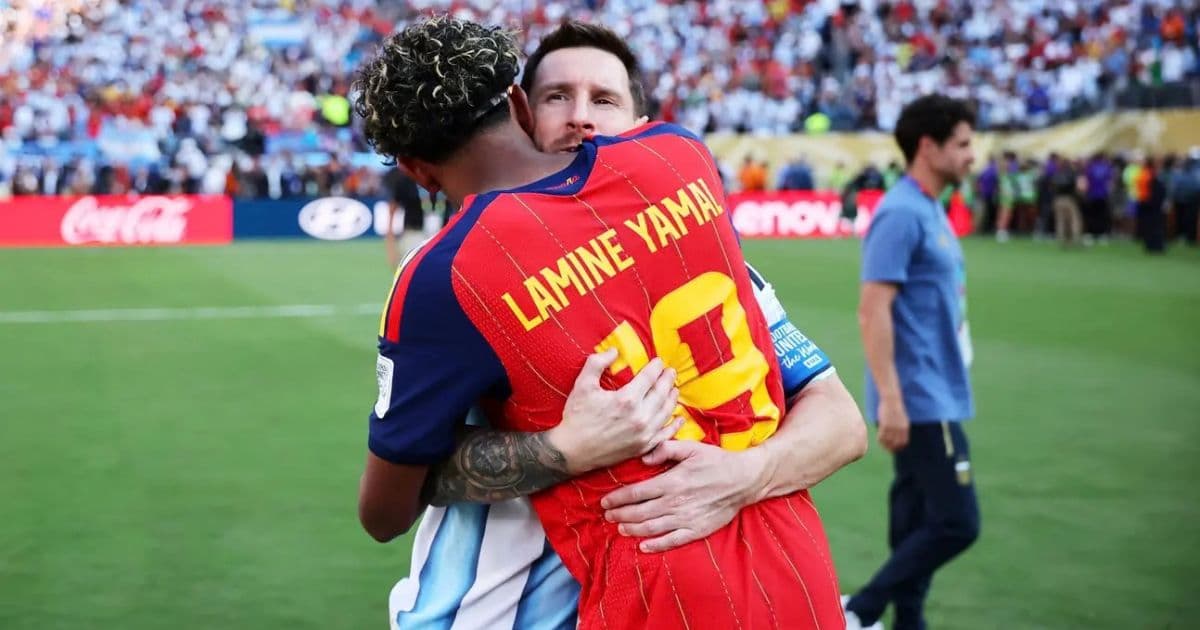
And in the middle of all that, Lionel Messi was pointing furiously at Marc Cucurella, demanding that the Spanish left-back be sent off for briefly covering his mouth. Cucurella stayed on the pitch. The decision immediately split opinion online.
Many were questioning why the Spanish defender escaped punishment. A day later, former FIFA referee Mark Halsey explained why the officials got the call right.
What FIFA's Mouth-Covering Rule Actually Says
The FIFA mouth-covering rule, which Striver.Football has previously covered in detail, states that any player caught concealing their mouth during an aggressive confrontation with an opponent must be immediately dismissed.
The rule was designed to prevent players from directing discriminatory or abusive language without detection. During the final at MetLife Stadium in New Jersey, Cucurella briefly placed his hand over his mouth while talking to Messi.
He then removed it within seconds, appearing to realise what he had done. Messi immediately turned to the referee and demanded action. The key word in the rule, however, is "aggressive." It does not apply to every instance of mouth-covering.
It applies only when the gesture occurs during a confrontational exchange between players. Halsey, who officiated in the Premier League for more than a decade, addressed that distinction directly.
"We know it's not a red card if you're not being aggressive towards an opponent," Halsey said. "So that is poor from Messi."
Why Cucurella Escaped A Red Card Against Argentina
For a red card to be issued under the mouth-covering law, referees are instructed to assess the full context of the situation, not just the physical act of covering the mouth. The confrontation must involve some degree of aggression before the rule is triggered.
Cucurella's interaction with Messi at that moment did not meet that threshold. The Spanish defender was not in a heated face-to-face dispute.
He briefly covered his mouth, moved his hand away almost immediately, and the exchange did not carry the combative nature the rule was written to address. This is not the first time the regulation has produced inconsistent optics.
Earlier in the tournament, Striver.Football reported that Miguel Almiron became the first player sent off under the rule after a VAR review confirmed he had covered his mouth during a confrontation with a Turkish opponent.
In Cucurella's case, the context was different, and the referee, supported by the VAR team, agreed. Wayne Rooney, speaking on BBC coverage after the final, was less focused on the technicality and more on Argentina's overall conduct throughout the tournament.
"Argentina play like that, we know that's what they do," Rooney said. "The one thing you want is good sportsmanship. That was sad to see, Lionel Messi doing that."
How FIFA Officials Interpret The Mouth-Covering Rule
The Cucurella incident is useful precisely because it tests the edges of a rule that is still relatively new in competitive football.
FIFA introduced the regulation before the 2026 World Cup following Benfica's Champions League match against Real Madrid, after Gianluca Prestianni covered his mouth during an exchange with Vinicius Jr, making it impossible for Vinicius to pursue a racism complaint without lip-readable evidence.
The challenge has always been consistent application. Referees must make a live judgement call on whether an act of mouth-covering occurred during an aggressive confrontation. This determination will inevitably yield different outcomes across situations, as this World Cup demonstrated.