For Paulina "Pau" Hernandez, football is about more than what happens on the pitch.
It is a place where she feels free.
Where she can trust her teammates, find the ball and compete without fear.
And next month, she will have the chance to represent her country on an international stage.
Hernandez is part of Chilangas FC, Mexico’s first dedicated women’s blind football team, who are preparing to make history at the Women's Blind Football American Championship in Brazil.
For the players involved, the tournament represents far more than a football competition.
It is proof of what can happen when women are given the opportunity to play.
Why Chilangas FC Was Created for Women in Blind Football
Blind football has been around for almost a century, but the women's game is still developing.
The sport first emerged in schools for children with visual impairments before becoming formally recognised by the International Blind Sports Federation in 1996.
While men's blind football has featured at the Paralympic Games since 2004, the women's game is yet to receive the same recognition.
That has created barriers for female players around the world.
In Mexico, coach Wendy del Rio saw that gap first-hand.
After spending seven years working with Mexico City's men's blind football team, she repeatedly encountered women who wanted to play but had nowhere to go.
"They kept asking if there was a team they could join, but there wasn't one," Del Rio told in an interview with Al Jazeera.
So, in 2020, Del Rio decided to create one herself.
Chilangas FC was born.
The COVID-19 pandemic delayed its development, but by 2023 a group of players had come together to form the team.
Today, Mexico has just six women's blind football teams.
For Chilangas FC, simply having somewhere to play has been a victory in itself.
"They were excited to have a space just for women," del Rio said. "Somewhere they could feel safe, meet other women with disabilities and simply play football."
How Blind Football Works and Why Communication Matters
Blind football may look different from the game most supporters are used to watching, but the fundamentals remain familiar.
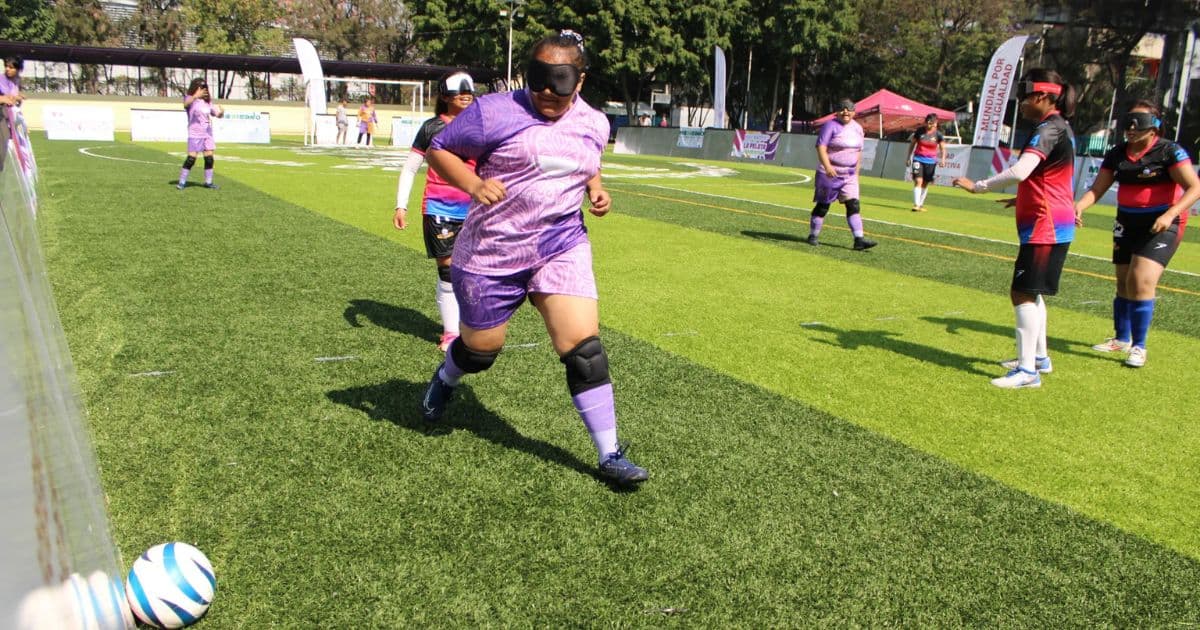
Five players compete on each team, with the ball containing metal rattles so players can track its movement through sound.
Outfield players wear eye masks to ensure everyone competes without sight, while the goalkeeper can be sighted and helps guide teammates.
Communication becomes everything.
Players call for the ball, warn teammates when opponents are approaching and use sound to understand where they are on the pitch.
The pitch itself also has enclosed barriers, allowing the ball to remain in play while creating additional sounds that players can use to understand their surroundings.
And there is one important rule for everyone watching.
Silence.
With players relying so heavily on sound, spectators must remain quiet during play.
What might initially seem like a limitation instead creates a completely different relationship with the game.
Players have to trust their teammates, their memory and their ability to interpret the sounds around them.
Paulina Hernandez: “It’s as if I can see”
For Hernandez, that feeling is what makes blind football so powerful.
She was diagnosed with retinitis pigmentosa as a child and gradually lost her sight before becoming completely blind four years ago.
Football had always been part of her life.
As a child, she played in the schoolyard despite struggling to track the ball with her limited vision.
Later, she discovered goalball, another sport designed for athletes with visual impairments.
But it wasn't football.
When she was introduced to Chilangas FC, everything changed.
"When I'm on the pitch, it's as if I can see," Hernandez said. "I know where my teammates are. I know where the ball is. I'm not afraid."
Football gave her a renewed sense of purpose.
"I’ve pushed myself harder as an athlete, and the changes have all been for the better. I feel much more grown-up. I feel more fulfilled. I feel happier."
For someone who had spent years adapting to a world that often wasn't designed with her needs in mind, the pitch became a place where those assumptions disappeared.
The Challenges Blind Women Face Beyond Football
The challenges facing blind women in Mexico extend far beyond football.
Getting to training can be difficult.
Hernandez navigates Mexico City using her white cane, dealing with broken pavements, crowded public transport and unpredictable journeys.
She also faces something less visible: other people's assumptions.
She says strangers will sometimes grab her arm without asking because they believe they are helping.
For Hernandez, that can feel invasive.
But she believes the biggest barriers aren't created by blindness itself.
They are created by what society assumes blind women are capable of doing.
Hernandez works as a massage therapist and is a mother to her six-year-old son, Noel.
She cooks, cares for her family and has built an independent life.
"There are many things we can do as people with visual impairments."
That same mentality is reflected in her football.
She refuses to let fear prevent her from experiencing life.
"We can't put ourselves in a little bubble and stay at home."
How Chilangas FC Became a Community for Blind Women
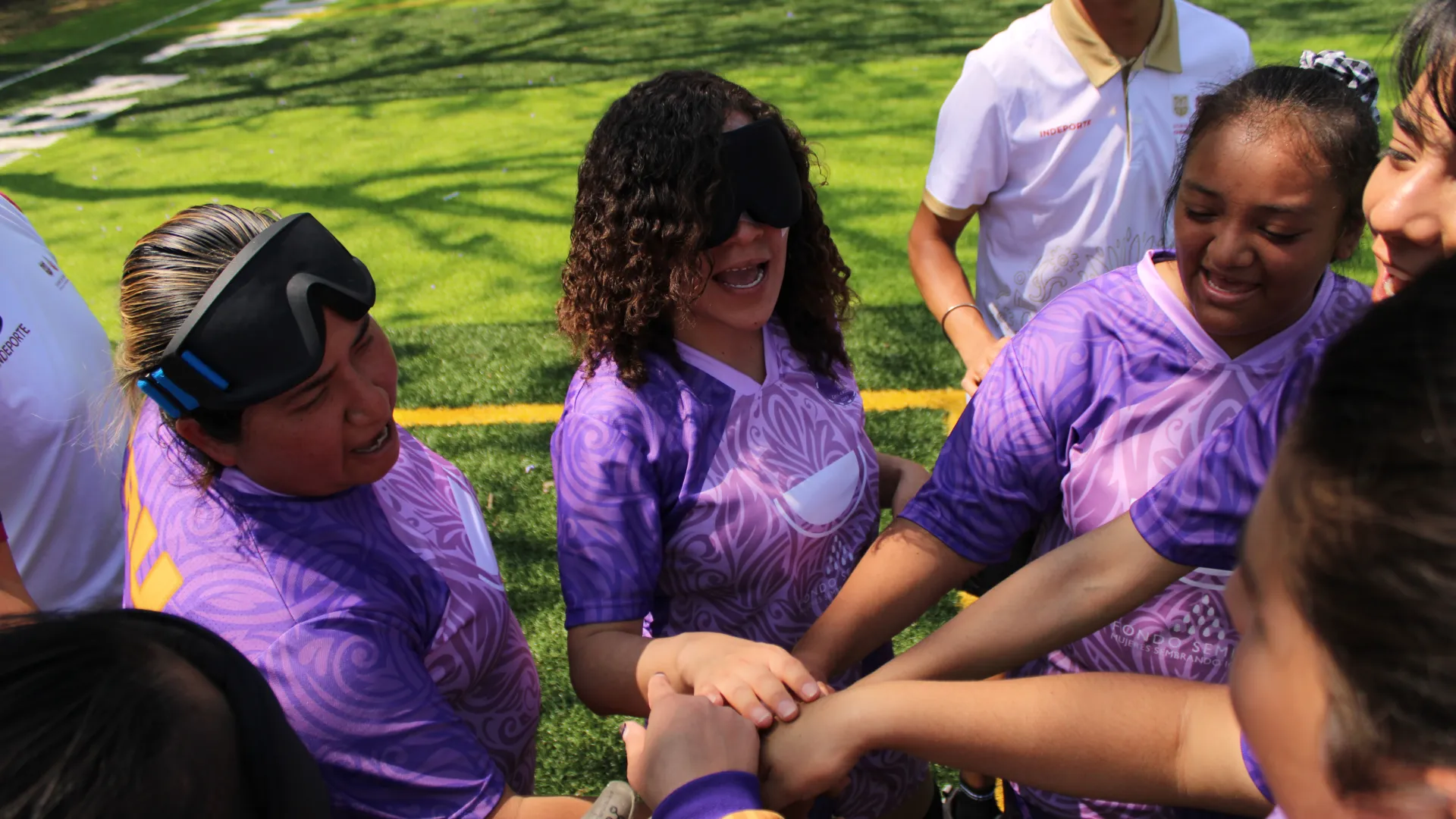
For 20-year-old Alexandra Ramirez, Chilangas FC has become more than a place to play football.
It has become a community.
One of the youngest members of the squad, Ramirez had never imagined blind football could become such an important part of her life.
Now, she sees a future in the sport.
"Right now, football is a huge dream for me. I want to keep growing as a player."
But perhaps most importantly, she has found somewhere she belongs.
"Being here feels like having a family."
That sense of belonging is at the heart of what Chilangas FC is trying to create.
The team isn't simply developing footballers.
It is creating an environment where women with visual impairments can meet one another, build confidence and discover what they are capable of.
Chilangas FC Prepare to Make History in Brazil
Now that work is about to reach another level.
In September, Chilangas FC will travel to Brazil to compete in the Women's Blind Football American Championship.
It will be Mexico's first women's blind football team to compete at the tournament.
For the players, the opportunity represents years of work.
For del Rio, it is also a chance to show other women that there is a place for them in football.
And for Hernandez, there is an even more personal motivation.
She wants her son to see her play for Mexico.
"One of my biggest dreams is for my son to see me play in the Copa America."
She imagines walking off the pitch after the final whistle and having Noel waiting for her.
"I want to come off the field and have him hug me and say, 'Congratulations, Mum.'"
That moment would mean more than a result.
Because Chilangas FC's journey is ultimately about creating opportunities where none existed before.
And for women who have spent years being told, directly or indirectly, what they cannot do, football is giving them somewhere to prove exactly what they can.