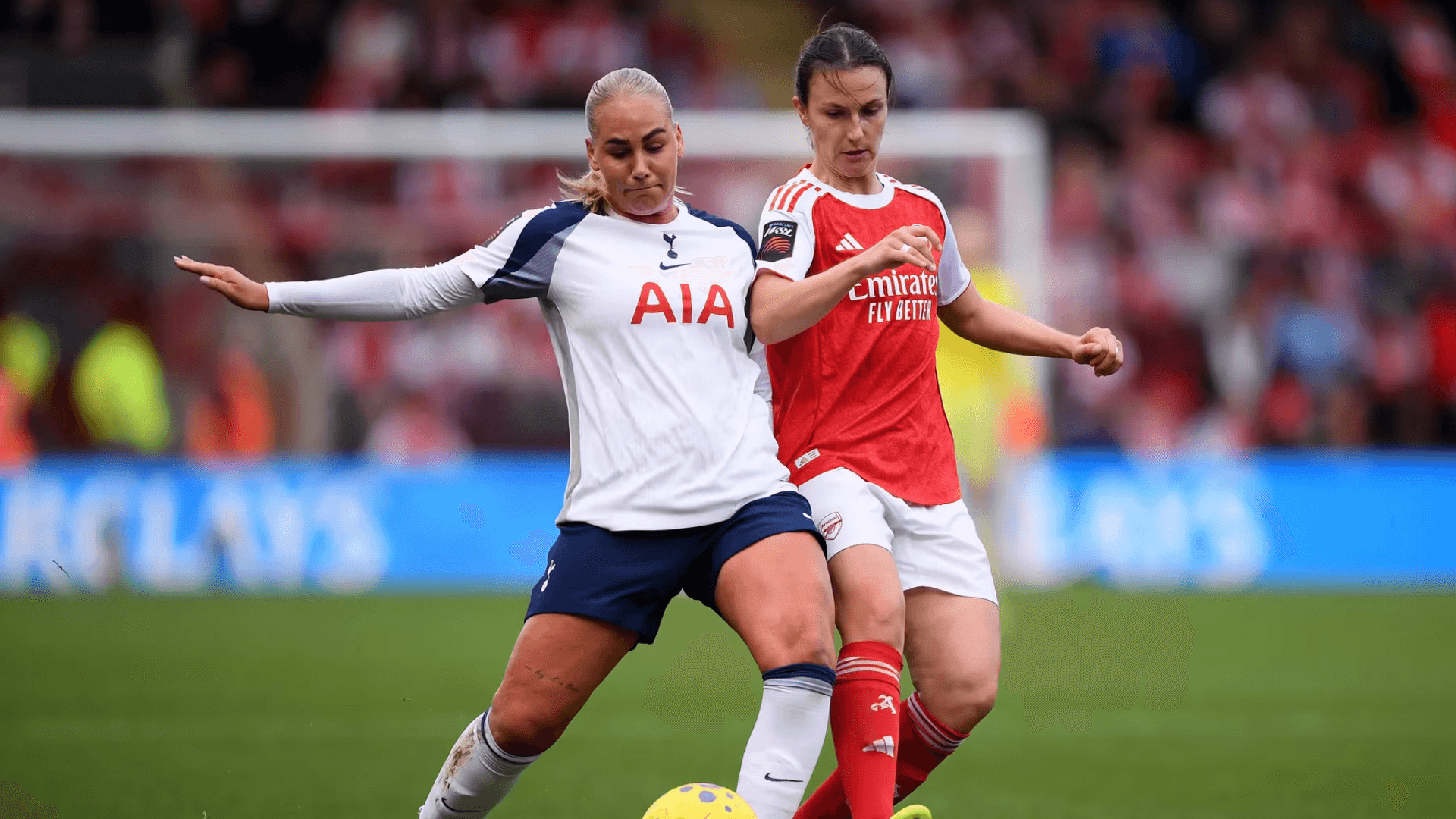

Renee Slegers has taken a different approach to squad building this summer, with Arsenal Women determined not to carry the same gaps into the 2026/27 season.
Arsenal Women have entered the new season with a clear message from Renee Slegers: squad depth matters.
After a summer of significant recruitment, the Gunners appear to have taken steps to eliminate the vulnerabilities that can emerge when injuries or absences leave certain positions exposed.
The approach was summed up by Slegers during pre-season when discussing the decision to sign Selina Cerci.
"We think it is a crucial position, there are a couple of positions in the team we think are crucial where you need to have quality, so if someone is not there due to illness or injury, we need the back up."
That philosophy has been evident throughout Arsenal's summer business.
Rather than accepting short-term gaps and hoping existing players can cover them, Slegers has repeatedly looked to strengthen the squad before those problems become emergencies.
Arsenal Add Selina Cerci to Strengthen Their Attack
One of the clearest examples is in attack.
Arsenal already had England international Alessia Russo and Swedish International Stina Blackstenius competing for the central striker position, but still added Germany international Selina Cerci.
That gives Slegers three forwards with significant international experience competing for one of the most important positions on the pitch.
The depth is particularly important given the demands of a season that includes the Barclays Women's Super League, domestic cup competitions and the Women's Champions League.
There will inevitably be injuries, rotation and periods when players are unavailable.
Slegers appears determined to make sure those situations do not leave Arsenal short.
It is a notable change in approach.
Rather than simply filling every position for the sake of numbers, Arsenal have targeted players capable of genuinely competing for places.
Misa Rodriguez Gives Arsenal Greater Security in Goal
The same thinking can be seen in goal.
Daphne van Domselaar underwent knee surgery in May, creating uncertainty over how quickly she would be able to return to competitive football.
Arsenal could have opted to wait for her recovery.
Instead, they signed Spanish international goalkeeper Misa Rodriguez.
The result is an impressive group of three senior goalkeepers alongside Anneke Borbe, giving Slegers considerably more security in one of the most important positions on the pitch.
The timing of van Domselaar's rehabilitation means Arsenal now have greater flexibility rather than being forced to rush her return or rely on an inexperienced alternative.
For a team competing on multiple fronts, that insurance could prove invaluable.
Elisa De Almeida Addresses Arsenal’s Centre-Back Depth
Centre-back was arguably the position where Arsenal had the biggest question mark heading into the final weeks of the transfer window.
Katie Reid's rehabilitation has progressed, but her return remains part of a longer process. Arsenal therefore had to balance her eventual comeback with the need for immediate defensive depth.
The club eventually moved for France international Elisa De Almeida on deadline day.
At 28, De Almeida brings considerable experience and gives Slegers another established option in defence while Reid continues her recovery.
It may not have been the perfect long-term recruitment solution Arsenal originally wanted, but it prevented the club from entering the season with an obvious numerical weakness.
That distinction is important.
Arsenal did not simply rush into the market for the sake of making a signing. They waited, assessed the available options and ultimately decided that adding De Almeida was preferable to carrying the risk into the season.
Arsenal Take a More Calculated Approach to Recruitment
That patience has been one of the defining features of Arsenal's summer.
The club secured several additions early, particularly players arriving from overseas when their contracts had expired.
Ona Batlle and Cerci were among the players who arrived without transfer fees, while Misa and De Almeida strengthened key areas where Arsenal needed additional security.
There is also a clear sense that Arsenal have been willing to wait for the right opportunity rather than forcing a deal.
Last summer, some targets were unavailable, meaning the club had to accept gaps in certain areas of the squad.
This time, the approach appears to be different.
The Gunners have been more willing to plan for potential problems before they become immediate ones.
Renee Slegers Is Building Competition, Not Just Cover
Perhaps the most significant aspect of Arsenal's recruitment is that the club has not simply been searching for players who can sit on the bench.
The likes of Misa, Cerci and De Almeida arrive with substantial experience and ambitions of their own.
That creates competition throughout the squad.
For Slegers, that can be just as important as having a replacement available.
If one player is injured, another can step in. But even when everyone is fit, players know their position is not guaranteed.
That can raise standards across the squad and give Arsenal more tactical options throughout a long campaign.
It also means the Gunners should be better equipped to deal with the inevitable periods of fixture congestion that come with competing for multiple trophies.
Why Arsenal’s Squad Depth Could Be Crucial in 2026/27
There is, of course, no guarantee that every recruitment decision will work.
Signing experienced players does not automatically translate into trophies, and Arsenal will still have to integrate several new faces into a squad that is expected to compete at the very highest level.
But the philosophy is clear.
Slegers appears unwilling to enter important matches knowing that one injury could leave the team significantly weaker in a particular position.
That could prove especially valuable as Arsenal attempt to challenge for the Barclays Women's Super League title while also competing in Europe.
The club's summer recruitment has therefore been about more than adding names.
It has been about removing weaknesses.
And after a season in which Arsenal sometimes had to manage around missing pieces, Slegers appears determined that squad gaps will not be an excuse this time around.