Sixty years after England's greatest footballing achievement, the stories people remember aren't just about goals and trophies. They're about a generation of players who remained remarkably grounded, even after becoming national heroes.
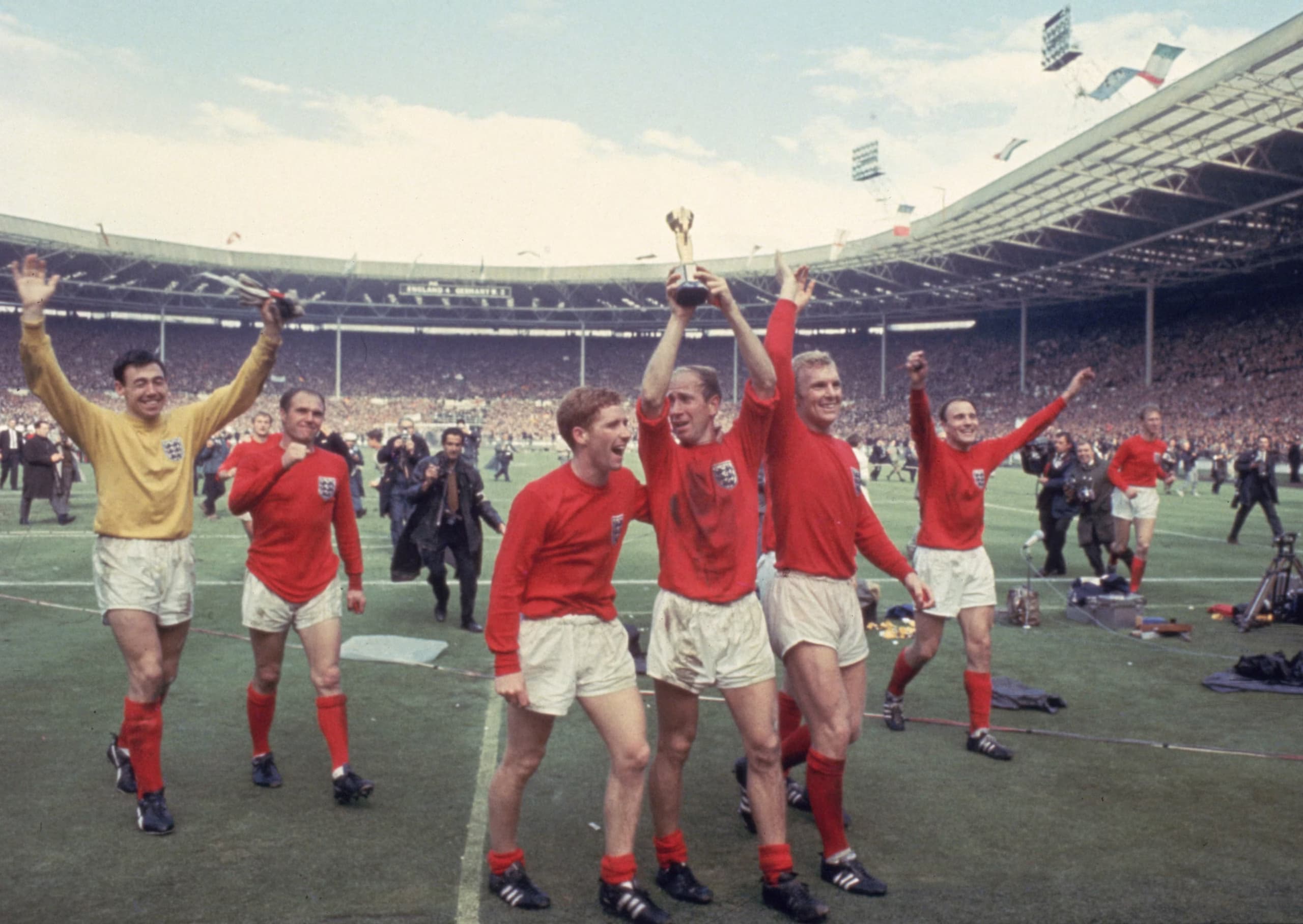
When England beat West Germany 4-2 after extra time on July 30, 1966, Bobby Moore lifted the Jules Rimet Trophy and Geoff Hurst became the only man to score a hat-trick in a World Cup final. It remains the greatest day in English football history.
Yet, six decades later, some of the most memorable stories surrounding that famous squad have little to do with what happened on the pitch.
Instead, they reveal a group of players who never allowed success to change who they were. In an era before football became a global billion-pound industry, England's World Cup heroes remained approachable, humble and surprisingly ordinary.
Football Before The Billion-Pound Era
It's almost impossible to imagine today, but many members of England's World Cup-winning squad supplemented their income long after lifting football's biggest prize.
While today's elite players earn hundreds of thousands of pounds every week through contracts and commercial deals, the stars of 1966 regularly appeared at working men's clubs and sports dinners, sharing stories from their careers as after-dinner speakers.
Veteran broadcaster Garry Richardson, who spent years hosting these events, recalled how the World Cup winners happily mixed with supporters, local comedians and tribute acts. Some evenings even began with a game of bingo before England's greatest footballers took to the stage.
Even Sir Alf Ramsey, the manager who guided England to World Cup glory, earned a reported salary of between £4,500 and £5,000 a year and even requested assistance from the Football Association to buy a house.
The financial gap between football then and now couldn't be more striking.
Why The Boys Of '66 Captured The Nation's Hearts
Richardson's memories also paint a picture of a squad that never lost its sense of humour.
Geoff Hurst, England's hat-trick hero, became a popular speaker on the after-dinner circuit, often entertaining audiences with stories from his career. One of his favourites involved a supporter telling him he remembered exactly where he was when Hurst scored in the 1966 final.
"Pentonville Prison," the fan joked. "We were so happy we smashed the cell up."
Former midfielder Nobby Stiles had his own famous routine.
Before England's World Cup quarter-final against Argentina, Ramsey reportedly told his combative midfielder to mark Argentina captain Antonio Rattin.
"Do you want me to mark him for the match," Stiles replied, "or for the rest of his life?"
Jack Charlton was equally quick with a punchline. Asked how his brother Bobby was doing, Jack famously quipped that Bobby had been banned from his local pub because the landlord didn't want him there during happy hour.
They were stories that consistently made audiences laugh, but they also reflected something deeper. These were football legends who never seemed to take themselves too seriously.
How England Prepared For The 1966 World Cup Final
Modern players spend the hours before major matches following carefully planned routines, monitored by nutritionists, sports scientists and analysts.
England's preparation for the 1966 World Cup final looked rather different.
Martin Peters later revealed that, with time dragging on before kick-off, several players simply headed into Hendon High Street to do a bit of shopping.
That level of normality feels almost unimaginable today.
The celebrations afterwards also reflected a different era. While the Football Association organised an official banquet following England's victory, the players' wives were not invited.
Unhappy with the arrangement, several members of the squad, including Hurst, left after the dinner to celebrate properly with their families at entertainer Danny La Rue's famous cabaret club.
It's a small detail, but one that perfectly captures the personalities of that squad. Family came first.
Why England's 1966 Heroes Still Matter Today
Perhaps the biggest difference between the heroes of 1966 and modern footballers wasn't their salaries or lifestyles. It was their accessibility.
Richardson recalled how if he left a message on one of the players' answering machines, they would often ring him back personally. There were no media managers, no PR teams and no carefully managed interview requests.
Despite achieving something no England men's team has managed since, they never behaved like untouchable celebrities.
Football has changed dramatically over the last 60 years. Players today operate under relentless scrutiny, with social media, commercial obligations and global fame making everyday interactions far more complicated than they once were.
But that's exactly why the stories of England's 1966 heroes continue to resonate.
They weren't just remembered for winning the World Cup. They were remembered for remaining themselves afterwards.
Sixty years on, that may be just as remarkable as lifting the Jules Rimet Trophy.